
Best First Cars for New Drivers in 2026: A Strategic Guide for Families and Young Drivers
Introduction: Why This Decision Matters in 2026
For readers of usa-update.com, the choice of a first car in 2026 is no longer a simple question of finding basic transportation at the lowest possible cost. It has become a strategic decision that blends safety, financial planning, technology, lifestyle, and long-term economic considerations. In the United States, where personal mobility still underpins access to education, employment, and social opportunity, the first car continues to represent a powerful symbol of independence, but it is also a complex financial asset that must be evaluated with the same rigor as any other household investment.
The automotive market has shifted dramatically since the early 2020s. Elevated vehicle prices, higher interest rates, rapid advances in safety and connectivity, and accelerating electrification have reshaped what parents, guardians, and new drivers expect from an entry-level vehicle. At the same time, regulatory changes, evolving insurance models, and the growth of digital retail platforms have transformed how Americans research, finance, and purchase their first cars. For a business-focused audience tracking broader economic dynamics, the first-car segment offers a revealing lens into consumer confidence, generational behavior, and the trajectory of the mobility sector.
This article examines the best first cars for new drivers in the United States in 2026, but it does so from a perspective grounded in experience, expertise, authoritativeness, and trustworthiness. It looks beyond simple "top ten" lists and explores how safety ratings, ownership costs, technology, regional differences, and global supply chains come together to shape the real-world decisions families are making today. It also connects these choices to the wider context of regulation, energy policy, employment patterns, and consumer expectations that usa-update.com readers follow daily across sections such as business, finance, jobs, and consumer trends.
Safety First: The Non-Negotiable Foundation
In 2026, safety remains the single most important criterion when selecting a first car, and the data is unambiguous. Young and inexperienced drivers continue to be overrepresented in serious crashes, which makes the structural integrity of the vehicle, the presence of advanced driver-assistance systems, and the quality of crash-avoidance technology absolutely central to any responsible decision.
Two institutions still anchor the safety conversation. The National Highway Traffic Safety Administration (NHTSA) publishes its well-known 5-Star Safety Ratings, accessible through its official site at nhtsa.gov, measuring frontal, side, and rollover performance. The Insurance Institute for Highway Safety (IIHS) offers complementary and, in many cases, more demanding tests, including small overlap crash tests and evaluations of headlight and crash-prevention systems, with results available at iihs.org. For parents and guardians, cross-referencing both sources has become a standard due-diligence step before even shortlisting a model.
What has changed since the early 2020s is that advanced driver-assistance systems-automatic emergency braking, lane-keeping assistance, blind-spot monitoring, and adaptive cruise control-are no longer optional extras on many of the most suitable first cars; instead, they are integrated into standard safety suites. Honda Sensing, Toyota Safety Sense, Hyundai SmartSense, and Subaru EyeSight are examples of branded systems that now appear even on base trims of models frequently recommended for new drivers. These technologies do not replace driver responsibility, but they significantly reduce the likelihood and severity of common novice-driver errors, which in turn influences insurance pricing and long-term ownership costs.
For readers of usa-update.com, who often approach this issue with a strong focus on risk management and financial prudence, the key takeaway is that the safest first cars are not necessarily the most expensive; rather, they are the models that combine high crash-test scores, robust active safety technology, and predictable handling characteristics in real-world conditions.
Affordability, Financing, and Total Cost of Ownership
The financial dimension of a first car has become more complex in 2026. Vehicle prices remain historically elevated compared with pre-pandemic levels, and while supply-chain constraints have eased, the average transaction price for a new car in the United States still hovers in the mid-to-high $40,000 range, according to data regularly reported by Kelley Blue Book on kbb.com. Most families shopping for a first car, however, continue to target a significantly lower band, often between $18,000 and $30,000 for a new or certified pre-owned compact sedan, hatchback, or small crossover.
The higher interest-rate environment of the mid-2020s has materially affected monthly payments. Business-focused readers tracking macroeconomic trends on usa-update.com/economy will recognize the linkage between Federal Reserve policy and auto-loan rates. As borrowing costs remain above the ultra-low levels of the late 2010s, families must pay closer attention to loan terms, down payments, and total interest paid over the life of the loan. Platforms such as Bankrate at bankrate.com and NerdWallet at nerdwallet.com offer calculators and comparison tools, but the underlying principle remains straightforward: a slightly less expensive vehicle with a shorter loan term often proves far more sustainable than stretching to a more aspirational model on a long, high-interest note.
Leasing continues to play a role, particularly in metropolitan markets where younger drivers may not plan to keep their first car for more than three to four years. Automakers such as Toyota, Honda, Hyundai, and Kia have refined lease offerings that bundle warranties and sometimes maintenance, reducing uncertainty for families and ensuring access to the latest safety technology. However, leasing typically imposes mileage limits and may not be ideal for students or young workers with long commutes or frequent road trips.
The concept of total cost of ownership has therefore become critical. Beyond the purchase price or monthly payment, families must factor in fuel or electricity costs, routine maintenance, tires, unexpected repairs, insurance premiums, registration fees, and even parking. Resources like Edmunds at edmunds.com and Consumer Reports at consumerreports.org provide comparative ownership-cost estimates that can be invaluable when evaluating options. For usa-update.com readers who approach consumer decisions with a business mindset, treating the first car as a multi-year cost center rather than a one-time purchase leads to more disciplined, resilient choices.
Fuel Efficiency, Electrification, and Environmental Priorities
Energy prices and environmental awareness are now central to first-car decisions, particularly among younger generations for whom climate considerations are not abstract policy debates but everyday values. Gasoline prices in North America remain volatile, influenced by global supply dynamics, geopolitical risk, and domestic production trends closely followed in the energy section of usa-update.com. As a result, fuel efficiency is no longer a "nice to have" but a core requirement for cost-conscious and environmentally aware buyers.
Modern compact sedans and hatchbacks from Toyota, Honda, Hyundai, Kia, and Mazda routinely deliver 30 to 40 miles per gallon in combined driving, while hybrid variants, such as the Toyota Corolla Hybrid or Honda Insight (in markets where it remains available), can push real-world efficiency significantly higher. For families looking to hedge against fuel-price risk, these hybrids offer an attractive compromise between the familiarity of gasoline and the efficiency of electrification.
Battery-electric vehicles (EVs) have also become more prominent in the first-car conversation by 2026. Models such as the Chevrolet Bolt EUV, Hyundai Kona Electric, and Nissan Leaf-along with newer entrants from Kia and Volkswagen-provide ranges that comfortably meet the daily needs of most new drivers, particularly in urban and suburban settings. Public charging infrastructure has expanded considerably across the United States and Canada, as documented by the U.S. Department of Energy's Alternative Fuels Data Center at afdc.energy.gov, making EV ownership more practical than it was just a few years ago.
However, EVs introduce distinct considerations. Charging access at home or at an apartment, local utility rates, and the availability of fast-charging corridors matter greatly. Federal and state incentives, described in detail on the Internal Revenue Service site at irs.gov and state energy-office portals, can materially reduce upfront costs, but eligibility rules have tightened and shifted over time. For readers of usa-update.com who follow policy and regulatory developments, understanding how evolving EV tax-credit rules intersect with specific models and domestic-assembly requirements is crucial.
From an environmental, social, and governance (ESG) perspective, families that prioritize sustainability often see a first EV or hybrid as an expression of household values. Yet for many, the most pragmatic path remains a highly efficient gasoline or hybrid compact car, which delivers substantial emissions reductions and cost savings without the infrastructure complexities of full electrification.
Technology and Connectivity: Safety, Convenience, and Distraction
Today's first-time drivers are digital natives, and their expectations for in-car technology reflect the broader consumer electronics landscape. Features such as Apple CarPlay, Android Auto, Bluetooth audio, and touchscreen infotainment are now considered baseline requirements. Automakers including Honda, Toyota, Hyundai, Kia, Mazda, and Subaru have responded by making smartphone integration standard on nearly all entry-level models, while even budget trims often offer digital instrument clusters and connected services.
This connectivity has a dual character. On one hand, integrated navigation and voice-controlled calling or messaging can reduce the temptation to handle smartphones directly, thereby lowering distraction risk. On the other hand, overly complex infotainment interfaces, excessive touch-screen dependence, or poorly designed menus can themselves become sources of distraction. Evaluations by organizations such as J.D. Power at jdpower.com and ongoing research from the AAA Foundation for Traffic Safety at aaafoundation.org highlight that usability and interface design are now as important as raw feature counts.
For parents and guardians, the most suitable first cars are those that blend robust connectivity with intuitive, minimal-distraction controls. Physical knobs for climate and volume, clear menu structures, and straightforward pairing processes matter more than flashy graphics. Some manufacturers offer telematics-based parental controls that allow speed alerts, geofencing, or driving-score monitoring, features that can support safer habits if used constructively rather than punitively.
For usa-update.com readers following technology trends, the first-car decision is a microcosm of a larger shift: vehicles are becoming software-defined products, with over-the-air updates, subscription-based features, and data-driven services. Families must therefore consider not only the hardware at purchase, but also the digital ecosystem that will shape the car's capabilities and costs over its life.
🚗 First Car Finder 2026
Reliability, Maintenance, and Brand Reputation
Experience and long-term data consistently show that reliability is one of the strongest predictors of whether a first car will be an asset or a financial burden. Brands such as Toyota, Honda, Subaru, Mazda, Hyundai, and Kia have built reputations for durable powertrains, robust build quality, and relatively low repair frequencies, as documented by annual reliability surveys from Consumer Reports and studies by J.D. Power. For families seeking predictable ownership costs, these brands form the backbone of most expert recommendations.
Reliability, however, is not solely a function of brand. Specific models, generations, and powertrain configurations can differ significantly. Resources such as detailed model histories on Edmunds and technical service bulletins published through NHTSA allow informed buyers to identify patterns, such as chronic transmission issues or premature component failures. For usa-update.com readers accustomed to due diligence in financial or business decisions, applying a similar level of scrutiny to vehicle history and model-year changes is a logical extension of their analytical approach.
Maintenance costs also vary by vehicle type. Conventional gasoline compacts with naturally aspirated engines and proven automatic or CVT transmissions tend to be inexpensive to service, especially when parts are widely available. Hybrids add complexity but often prove remarkably durable, with many high-mileage examples demonstrating long battery life. EVs, in turn, eliminate oil changes and reduce brake wear but can introduce future concerns around battery replacement and out-of-warranty electronics. Guidance from the Car Care Council at carcare.org underscores that, regardless of powertrain, adherence to scheduled maintenance remains the single most important factor in preserving reliability.
For first-time drivers, a reliable car is not simply about avoiding breakdowns; it is about building confidence, reducing stress, and enabling consistent access to work, school, and social activities. For their families, it is about minimizing unexpected expenses and protecting household budgets, themes that resonate strongly with the consumer and finance coverage on usa-update.com.
New vs. Used in 2026: Strategic Trade-Offs
The debate between new and used vehicles has intensified in the mid-2020s. Elevated new-car prices and higher interest rates have pushed many first-time buyers toward the used market, where depreciation can translate into substantial savings. At the same time, the rapid evolution of safety and driver-assistance technology means that very old used cars may lack features that materially improve young-driver safety.
Certified Pre-Owned (CPO) programs from manufacturers such as Honda, Toyota, Subaru, Mazda, Hyundai, and Kia offer a middle ground. These vehicles are typically late-model, low-mileage units that have undergone multi-point inspections and include factory-backed extended warranties. For many families, a three-year-old Honda Civic, Toyota Corolla, Mazda 3, or Subaru Impreza purchased through a CPO program presents an optimal combination of modern safety features, proven reliability, and reduced cost compared with a brand-new equivalent.
Online platforms such as Autotrader at autotrader.com, Cars.com at cars.com, and CarGurus at cargurus.com have significantly increased transparency in the used market, allowing buyers to compare prices, view vehicle history reports, and assess market value. At the same time, vehicle-history providers like Carfax at carfax.com and AutoCheck offer critical insights into prior accidents, title issues, and maintenance records.
For readers of usa-update.com, who may already be familiar with depreciation curves in other asset classes, the automotive market presents a familiar calculus. New vehicles deliver maximum technology and warranty protection but incur the steepest depreciation in the first three years. Used vehicles, particularly well-chosen CPO units, can dramatically reduce upfront and long-term costs but require more careful vetting. The optimal path depends on each family's risk tolerance, liquidity, and priorities-parallels that align closely with broader consumer and business decision-making.
Leading First-Car Models in 2026: A Strategic Overview
While rankings inevitably vary across publications, a consensus has emerged around a core group of models that offer strong safety, reliability, value, and everyday usability for new drivers in the United States. For usa-update.com readers, it is useful to view these vehicles not as a definitive "top ten" list, but as a strategic shortlist from which to build a tailored decision.
The Honda Civic remains one of the most consistently recommended first cars in North America. Its combination of excellent IIHS and NHTSA safety ratings, refined driving dynamics, fuel efficiency, and strong resale value makes it a favorite among both parents and young drivers. The inclusion of Honda Sensing on most trims, along with standard smartphone integration, ensures that even base models deliver high levels of safety and connectivity. In many regions across the United States and Canada, the Civic has become a default benchmark against which other compact cars are measured.
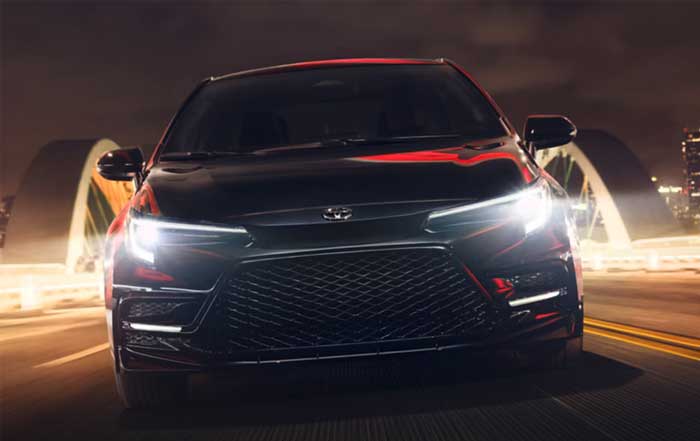
The Toyota Corolla continues to hold a similar position. Its reputation for durability, low maintenance costs, and conservative but functional design has made it a mainstay in households seeking long-term reliability. The availability of hybrid variants provides a compelling option for families focusing on fuel economy and emissions reduction. Toyota Safety Sense features, now standard across the lineup, add to its appeal as a secure choice for inexperienced drivers.
The Hyundai Elantra and Kia Forte have evolved into credible, value-oriented alternatives. Both offer bold styling, competitive fuel economy, long warranty coverage, and increasingly sophisticated interiors. Features such as adaptive cruise control and lane-centering are available on trims that remain accessible to first-time buyers. Over the past decade, Hyundai and Kia have invested heavily in quality and design, and their compact sedans now frequently appear in expert recommendations for first cars.
For families in regions with harsh winters or mountainous terrain, the Subaru Impreza and Subaru Crosstrek provide a compelling all-wheel-drive proposition. Standard Subaru EyeSight on many trims offers robust driver-assistance capabilities, while the brand's emphasis on safety and practicality aligns well with parental priorities. The Crosstrek's slightly higher ride height and crossover styling resonate particularly strongly with younger drivers who value versatility for outdoor activities.
The Mazda 3 occupies a somewhat more premium niche within the compact segment. Its engaging handling, upscale interior materials, and refined design appeal to drivers who view the first car as an expression of personal taste as well as a practical tool. Strong safety ratings and solid reliability underpin its suitability for new drivers, though insurance and maintenance costs may be modestly higher than some more utilitarian rivals.
On the crossover side, the Hyundai Kona, Kia Seltos, and Mazda CX-30 have become popular first-car options. They provide higher seating positions, increased cargo flexibility, and all-wheel-drive availability while maintaining manageable exterior dimensions and reasonable fuel efficiency. For many young drivers, these vehicles strike an appealing balance between practicality, style, and perceived safety.
In the EV space, the Chevrolet Bolt EUV continues to stand out as one of the more accessible entry points into electric mobility, particularly on the used and CPO markets, where pricing has become more attractive. Its real-world range, low operating costs, and compact footprint suit urban and suburban new drivers well, provided charging access is available. As federal and state incentives evolve, readers tracking energy and policy developments will want to reassess the economics of EV first cars annually.
Regional and Lifestyle Variations Across North America
The best first car in 2026 is not the same for every household; geography, climate, and lifestyle exert a powerful influence on what constitutes an optimal choice. In the snow-prone Northeast and Upper Midwest of the United States, as well as parts of Canada and the Nordic countries, all-wheel drive and robust winter performance often move to the top of the priority list. In these regions, vehicles like the Subaru Impreza, Subaru Crosstrek, Mazda CX-30, and certain all-wheel-drive trims of the Toyota Corolla Cross or Honda HR-V are frequently considered.
In the Sunbelt states, including Texas, Florida, Georgia, and much of the American Southwest, compact sedans and hatchbacks with strong air conditioning, fuel efficiency, and highway stability dominate first-car choices. At the same time, compact pickups such as the Ford Maverick have gained traction among young drivers who value the combination of open-bed practicality, hybrid powertrain options, and the cultural appeal of trucks in these regions.
On the West Coast of the United States and in parts of Canada, especially British Columbia and Quebec, EV and hybrid adoption rates among younger drivers are higher due to a combination of environmental values, supportive policy frameworks, and relatively dense charging infrastructure. Models such as the Chevrolet Bolt EUV, Hyundai Kona Electric, and Tesla Model 3 (often in used form for budget-conscious buyers) appear more frequently as first-car candidates than in other regions.
Urban versus rural differences are equally significant. In dense metropolitan areas such as New York City, Boston, San Francisco, Toronto, and Vancouver, compact dimensions, tight turning circles, and ease of parking are paramount. In these settings, small hatchbacks and compact crossovers outperform larger sedans or SUVs as first cars. In rural and exurban areas, where distances are longer and road conditions more variable, slightly larger sedans and crossovers with comfortable highway manners and strong reliability often make more sense.
For usa-update.com readers who travel frequently or monitor national and international trends, it is also worth noting that first-car preferences in Europe, Asia, and Australia often skew more heavily toward compact hatchbacks and small-displacement engines due to fuel prices and road conditions, while North and South American markets maintain a stronger emphasis on sedans, crossovers, and pickups. These global variations influence which models manufacturers prioritize for the U.S. market and, by extension, which vehicles are available as first-car options.
Insurance, Risk Management, and Behavior
Insurance is one of the most significant ongoing costs associated with a first car, and it is particularly high for young drivers due to actuarial risk profiles. Major insurers such as State Farm, GEICO, Progressive, and Allstate rely heavily on statistical data that shows elevated crash rates among drivers under 25, especially in the first few years of licensure. As a result, vehicle choice, driver behavior, and policy structure can collectively swing annual premiums by thousands of dollars.
Vehicles with strong safety ratings, modest engine outputs, lower repair costs, and extensive driver-assistance features typically qualify for lower premiums. Conversely, sporty models, high-horsepower trims, or vehicles with expensive bodywork and electronics can dramatically raise insurance costs, even if their purchase prices are similar. For this reason, families are often advised to avoid performance-oriented variants such as turbocharged hot hatches or sport packages as first cars, regardless of their appeal in entertainment media or video games.
Telematics-based insurance programs, in which driving behavior is monitored via smartphone apps or plug-in devices, have become more common and can offer substantial discounts for consistently safe driving. These programs track metrics such as hard braking, rapid acceleration, nighttime driving, and phone usage. For tech-savvy young drivers who are confident in their habits, such programs can be a powerful tool to reduce costs and reinforce safe behavior. However, they also raise questions about data privacy and long-term risk scoring that align with broader debates in technology and consumer rights.
For usa-update.com readers accustomed to thinking in terms of risk management, the insurance dimension of the first-car decision is not merely an unavoidable cost; it is a lever that can be influenced by strategic choices around vehicle type, trim level, safety features, and driver education. Many insurers still offer discounts for completion of accredited driver-education courses, high academic performance, and multi-policy bundling, all of which can be integrated into a holistic family plan.
Cultural, Lifestyle, and Media Influences
Beyond economics and engineering, the first car remains culturally significant in the United States and across much of North America. It signals a transition into adulthood, creates new social and professional opportunities, and often becomes part of a young person's identity. This symbolism is reinforced by film, television, music, and social media, where vehicles frequently appear as extensions of character and lifestyle.
Popular franchises and streaming content continue to romanticize certain models or types of vehicles, from compact tuners to rugged SUVs and pickups. Social platforms amplify trends in customization, from subtle cosmetic changes to more extensive modifications. For new drivers, this creates a powerful aspirational pull toward vehicles that may not align with the most prudent safety or financial criteria.
Families who read usa-update.com and approach the issue with a long-term mindset often seek a balance: a first car that is safe, reliable, and affordable, but still aesthetically appealing and modern enough that the young driver feels proud to own and maintain it. Models such as the Mazda 3, Hyundai Elantra, Kia Forte, Volkswagen Jetta, and well-specified trims of the Honda Civic and Toyota Corolla often serve this role effectively, offering design flair and connectivity without venturing into high-performance territory.
At the same time, generational shifts are evident. In some major cities in the United States, Canada, and Europe, younger adults are delaying car ownership or relying more on public transit, cycling, and ride-hailing services. Yet in much of suburban and rural North America, a car remains essential for accessing employment and education opportunities, a reality that ties directly into the employment and jobs coverage on usa-update.com. For many families, the first car is as much an enabler of economic mobility as it is a cultural milestone.
Looking Ahead: Regulatory Change, Autonomy, and New Ownership Models
By 2026, the automotive industry is already deep into a transformation that will reshape what "first car" means by 2030 and beyond. Regulatory pressures around emissions, safety, and data privacy are intensifying in the United States, Europe, and Asia, and these changes will filter down to entry-level vehicles. Readers following regulatory updates will be aware that advanced driver-assistance features such as automatic emergency braking and lane-keeping support are moving closer to baseline requirements in many jurisdictions, which will further enhance the safety of future first cars.
Partial automation is also progressing. While fully autonomous consumer vehicles remain some years away, Level 2 and emerging Level 3 systems-capable of managing steering, acceleration, and braking under limited conditions-are gradually appearing in more affordable models. For new drivers, this will change the skill set required, placing greater emphasis on supervision of automated systems and digital literacy rather than purely mechanical driving skills.
Ownership models are evolving as well. Subscription-based services, in which users pay a monthly fee that includes the vehicle, insurance, maintenance, and sometimes charging, are being tested by manufacturers such as Volvo, Hyundai, and several startups. While these offerings are not yet mainstream for first-time drivers, they hint at a future in which a "first car" may be less about owning a specific vehicle and more about accessing a mobility package tailored to a young person's life stage.
For usa-update.com readers monitoring business innovation and international trends, the first-car segment provides an early view of how new technologies, regulations, and business models will intersect at the mass-market level. Families making decisions in 2026 must therefore balance current needs with an awareness that the automotive landscape their young drivers will inhabit in five to ten years may look markedly different.
Conclusion: A Strategic, Trust-Centered Approach for 2026
In 2026, the best first cars for new drivers in the United States are those that align safety, reliability, affordability, and technology with the specific needs and circumstances of each household. Compact sedans and hatchbacks such as the Honda Civic, Toyota Corolla, Hyundai Elantra, Kia Forte, Mazda 3, and Subaru Impreza, along with compact crossovers like the Hyundai Kona, Kia Seltos, and Mazda CX-30, continue to form the core of responsible recommendations. Electric models such as the Chevrolet Bolt EUV and Hyundai Kona Electric are increasingly viable for families with suitable charging access and a strong commitment to sustainability.
For the audience of usa-update.com, the first-car decision is best approached with the same analytical discipline applied to business or investment choices. That means grounding decisions in trusted data from safety organizations, leveraging financial tools to understand total cost of ownership, monitoring regulatory and energy trends, and considering how mobility intersects with employment, education, and lifestyle goals. It also means recognizing the cultural and emotional significance of the first car while ensuring that pride of ownership does not override prudent risk management.
As the automotive sector continues to evolve-driven by electrification, connectivity, autonomy, and new business models-the first car will remain a defining experience for young Americans. By focusing on experience, expertise, authoritativeness, and trustworthiness in information sources and decision processes, families can ensure that this milestone not only symbolizes independence but also supports long-term financial stability, personal safety, and alignment with the values that usa-update.com readers bring to every major life decision. For ongoing coverage of the economic, regulatory, technological, and lifestyle forces shaping these choices, the evolving analysis in news, economy, finance, jobs, and lifestyle on usa-update.com will remain an essential resource.
