
No Kings, No Fear: How America's Fight for Liberty Is Reshaping Its Economy
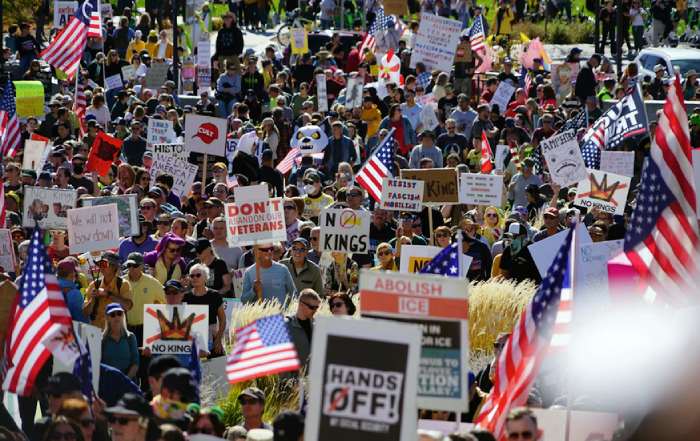
In early 2026, the United States is still living in the long shadow of the No Kings Day of Peaceful Action, a vast, coordinated protest that brought nearly seven million Americans into the streets across some 2,700 locations the previous year. For readers of usa-update.com, this moment is not a distant headline but an ongoing reality that continues to shape business confidence, labor markets, capital flows, and America's standing in the world. The demonstration, unprecedented in its scale and discipline, was not simply a rejection of a particular administration or policy; it was a collective declaration that the country had reached a breaking point in the tension between liberty and authority, transparency and secrecy, due process and discretionary power.
As 2026 unfolds, the central question for business leaders, investors, policymakers, and working households is no longer whether the protests were justified; it is how the erosion-or restoration-of democratic norms will influence economic performance, social stability, and long-term competitiveness. This article, prepared specifically for usa-update.com, examines the economic undercurrents of this political reckoning, the implications for domestic and international markets, and the ways in which American institutions are being tested as never before.
Stay updated on the latest national developments.
Economic Anxiety Beneath Political Upheaval
The American economy entered 2025 with strong headline indicators-robust GDP, low official unemployment, and deep capital markets-but beneath the surface, frustration was building. Wage growth lagged behind housing and healthcare costs, regional disparities widened, and many workers felt trapped in precarious employment. The No Kings Day movement emerged from this context of structural inequality and perceived institutional drift, where liberty was not only a philosophical concern but an economic one.
In financial terms, freedom functions as a form of intangible capital. When households believe that laws are applied fairly, contracts are enforceable, and institutions are accountable, they are more willing to invest in education, homeownership, and entrepreneurship. When that confidence erodes-when citizens suspect that power can be wielded arbitrarily-capital becomes cautious. Households delay major purchases, small businesses postpone expansion, and institutional investors demand higher risk premiums. The result is a subtle but pervasive drag on growth that is not always visible in quarterly data but becomes apparent over time.
The protests, and the government's response, injected a new layer of uncertainty into this already fragile environment. In the months that followed, volatility in equity markets increased, with traders reacting as much to political signals and legal disputes as to corporate earnings or productivity metrics. While the United States remains the world's largest economy, its domestic climate has begun to resemble the type of political-risk profile once associated primarily with emerging markets, where legal outcomes and regulatory enforcement can shift with the political winds.
For readers tracking these dynamics through the economy coverage at usa-update.com, the message is clear: political freedom and economic stability are not separate spheres. They are mutually reinforcing, and the weakening of one invariably undermines the other. Learn more about current shifts in economic confidence.
Federal Power, Perception of Overreach, and Local Economies
The use of federal law enforcement and, in some instances, military units within U.S. cities has become one of the most contentious issues in the post-No Kings environment. The appearance of masked ICE agents and other federal personnel operating with limited visible identification, particularly around courthouses and public demonstrations, triggered widespread concern among civil liberties organizations and local officials.
For businesses, this is not an abstract constitutional debate. When heavily armed federal units appear in commercial districts, local economies react immediately. Retailers close early, restaurants lose evening traffic, and gig-economy workers avoid affected neighborhoods. Insurance premiums rise for businesses in areas deemed at higher risk of unrest or enforcement actions. Property values, especially in immigrant communities that are vital to urban economic life, can stagnate or decline as fear displaces confidence.
Municipal leaders, chambers of commerce, and trade associations have warned that the perception of federal overreach undermines the carefully cultivated image of American cities as safe, open, and attractive destinations for both domestic and foreign investment. This is particularly damaging at a time when many metropolitan regions are competing to attract high-growth industries such as advanced manufacturing, clean energy, and digital services.
The more investors and executives perceive that local legal norms can be overridden by opaque federal directives, the more they question whether long-term capital projects are safe. This is not simply a matter of ideology; it is a calculation of risk. The rule of law, predictability of enforcement, and clarity of jurisdiction are core components of what makes a market investable. When those elements appear negotiable, capital begins to look elsewhere. Explore how these tensions are affecting American business dynamics.
Media Independence, Information Control, and Market Efficiency
The confrontation between the federal government and independent media has become a defining characteristic of this period. The widely reported walkout of reporters from the Pentagon press room, in protest of new restrictions on access and editorial independence, signaled to markets that the traditional checks on executive power were under strain.
From an economic standpoint, press freedom is not a luxury; it is an infrastructure asset. Markets depend on timely, accurate, and independent information to allocate capital efficiently. If media organizations fear retaliation for critical coverage, or if they are pressured to frame economic data in politically favorable ways, the reliability of that information deteriorates. Analysts, portfolio managers, and corporate strategists then face a more opaque environment in which to make decisions, raising the cost of capital and increasing the likelihood of mispricing.
The risk is especially acute in the age of algorithmic trading and high-frequency markets, where automated systems react instantaneously to headlines and data releases. If those inputs are manipulated or selectively released, price signals become distorted, and volatility rises. Over time, this can erode the competitive advantage of U.S. capital markets, which have historically benefited from a reputation for transparency and robust disclosure standards.
Organizations such as Reporters Without Borders and the Committee to Protect Journalists have warned that the United States' global ranking on press freedom has slipped in recent years, a trend that international investors follow closely. For a country whose financial system is deeply intertwined with global capital flows, any perception that information is being filtered for political ends carries real economic consequences. Follow technology and media-related developments in detail.
Freedom, Work, and the Fragility of the Labor Market
The American labor market in 2026 remains tight on paper but uneven in reality. Official unemployment figures mask the growing number of workers cycling between contract roles, gig assignments, and part-time jobs without long-term security. The extended government shutdowns of 2025 and early 2026, combined with repeated threats to invoke the Insurrection Act or declare sweeping national emergencies, have amplified a sense of precarity among both public- and private-sector workers.
For federal employees and contractors, the shutdowns were not merely political theater. They meant delayed paychecks, suspended benefits, and uncertainty about whether positions would even exist when funding resumed. Communities that rely heavily on federal installations-whether military bases, research laboratories, or national parks-saw local spending contract sharply. Small businesses servicing these workers, from childcare providers to auto repair shops, experienced cascading revenue losses.
In the private sector, executives have had to navigate a complex climate where public political statements can trigger backlash from customers, employees, or regulators. Many large employers have opted for cautious, values-based messaging that emphasizes unity and respect without directly challenging federal authority, hoping to maintain internal cohesion while avoiding regulatory scrutiny. Yet for workers on the ground, this restraint can feel like complicity, especially when labor rights, protest participation, or whistleblower protections appear at risk.
The broader labor market impact is subtle but significant. When individuals fear that political expression could jeopardize their employment, they may withdraw from civic participation, suppressing the very dialogue that democracies rely on to self-correct. At the same time, heightened stress, uncertainty, and distrust of institutions can reduce productivity and increase burnout, raising hidden costs for employers. Track evolving employment and workforce trends.
No Kings Economic Impact Dashboard
Protest Scale & Participation
The No Kings Day of Peaceful Action represented unprecedented civic mobilization, signaling deep concerns about democratic norms and institutional integrity that directly impact economic confidence.
Key Economic Concerns
Financial Market Indicators
International Implications
Foreign investors and central banks (ECB, BoE, BoJ, MAS) are closely monitoring U.S. political developments. Perceptions of democratic backsliding may trigger:
- Diversification away from dollar assets
- Increased reserve holdings in euros, yen, gold
- Supply chain recalibration
- Data infrastructure relocation
Sector-by-Sector Impact Analysis
Local Businesses & Retail
Federal enforcement actions in commercial districts cause immediate revenue losses. Evening traffic declines, insurance premiums rise, property values stagnate in affected areas.
High ImpactMedia & Information
Press restrictions reduce market information quality, increasing capital allocation costs and trading volatility. U.S. press freedom ranking decline noted by international investors.
High ImpactTechnology & Innovation
Surveillance expansion and data access concerns may shift R&D, data centers, and corporate domiciles to jurisdictions with stronger privacy protections (EU, Canada, Australia).
Medium-High ImpactEnergy & Infrastructure
Long-term energy transition investment requires policy predictability. Perceived regulatory instability could slow clean tech deployment and cede leadership to EU, China, Canada.
Medium ImpactTourism & Hospitality
International visitors weigh political stability alongside traditional factors. Domestic lifestyle choices shift based on perceived institutional integrity and civil liberties climate.
Medium ImpactKey Economic Milestones
2025: No Kings Day
7 million Americans across 2,700 locations mobilize peacefully, exposing tensions between liberty and authority. Markets begin pricing political risk into U.S. assets.
Critical2025: Federal Response
Deployment of federal enforcement units in cities triggers local economic disruptions. Business confidence wavers as perception of overreach grows among municipal leaders.
High Impact2025: Media Confrontation
Pentagon press room walkout signals strain on editorial independence. Markets react to information quality concerns, raising questions about transparency in data releases.
Medium-High Impact2025-2026: Government Shutdowns
Extended shutdowns impact federal workers, contractors, and communities dependent on federal installations. Small businesses face cascading revenue losses.
Medium ImpactEarly 2026: Current State
U.S. economy operates with strong headline indicators but elevated uncertainty. Trust erosion creates drag on growth as capital becomes cautious and innovation self-censors.
OngoingFinancial Markets Under the Strain of Civic Unrest
The reaction of financial markets to the political turbulence of 2025-2026 has been complex. The U.S. bond market, long regarded as the ultimate safe haven, has begun to show signs of political risk pricing. Yields on longer-term Treasuries have occasionally spiked following major constitutional confrontations or announcements about expanded executive powers, signaling that investors are demanding compensation for uncertainty about future governance.
The Federal Reserve, led by its current chair and Board of Governors, has found itself in an unusually politicized environment. Public debates over interest-rate policy, balance-sheet management, and emergency lending facilities have been accompanied by direct criticism from political figures, raising questions about the institution's independence. While the Fed has reiterated its commitment to data-driven decision-making, markets are acutely aware that central bank credibility rests on a perception of insulation from short-term political pressures.
If investors begin to doubt that monetary policy is being conducted with a long-term, technocratic focus, they may reassess their appetite for dollar-denominated assets. This, in turn, could weaken the currency, increase import prices, and complicate efforts to manage inflation. It would also raise borrowing costs for the federal government, which already faces structural deficits and rising entitlement obligations.
The interplay between civic unrest, fiscal imbalances, and monetary policy creates a feedback loop. Prolonged uncertainty depresses consumer spending and private investment, reducing tax revenues. Governments then face pressure to expand borrowing or implement emergency measures, which can further unsettle markets. In this environment, the integrity of institutions like the Federal Reserve, the Congressional Budget Office, and the Government Accountability Office becomes a critical factor in sustaining investor confidence. Review the latest financial insights and analysis.
Civil Liberties, Innovation, and Long-Term Growth
The erosion of civil liberties has historically been associated with weaker long-term economic performance. Research from institutions such as the World Bank, International Monetary Fund (IMF), and OECD has consistently found that countries with strong rule of law, independent judiciaries, and robust protections for speech and assembly tend to achieve higher levels of innovation, productivity, and per-capita income.
The logic is straightforward: innovation thrives in environments where individuals can challenge orthodoxy, share information freely, and take calculated risks without fear of arbitrary punishment. When surveillance expands, dissent is stigmatized, and legal protections are perceived as contingent, the incentives to experiment and speak openly diminish. Entrepreneurs become more cautious, researchers more guarded, and creative industries more self-censoring.
The No Kings Day of Peaceful Action highlighted this connection between liberty and growth. On the surface, the protests disrupted normal business activity in many cities, leading to lost sales and logistical headaches. Yet they also demonstrated the depth of civic engagement and the willingness of millions of Americans to mobilize peacefully in defense of constitutional norms. For many observers, this was a sign not of weakness but of resilience-a reminder that the country's human capital remains deeply invested in the preservation of democratic institutions.
The challenge for policymakers and business leaders is to ensure that the response to such movements does not undermine the very qualities that make the U.S. economy dynamic. Overly aggressive policing of protests, expansive surveillance of organizers, or punitive measures against participants would send a chilling message to the broader innovation ecosystem. In contrast, constructive engagement, transparent investigations into alleged abuses, and visible reforms can rebuild trust and unlock renewed economic energy. Examine how governance quality is shaping growth prospects.
America's Image Abroad and the Repricing of Political Risk
For decades, the United States' global economic influence has rested not only on its material power but also on its reputation as a predictable, rules-based democracy. International investors, sovereign wealth funds, and multinational corporations have treated U.S. assets as the gold standard of safety partly because they believed that institutions-courts, regulators, legislatures-would constrain arbitrary action.
The images from 2025 and early 2026-mass protests, militarized responses, contested emergency powers-have complicated that narrative. Allies in Europe, Asia, and North America are watching closely, as are emerging markets that have traditionally benchmarked their governance reforms against American norms. The European Central Bank, Bank of England, Bank of Japan, and Monetary Authority of Singapore all monitor U.S. political developments when calibrating their own risk assessments and reserve strategies.
If the perception takes hold that the United States is drifting toward more personalized or discretionary rule, foreign governments may diversify more aggressively away from dollar assets, increasing holdings in euros, yen, or gold. Multinational corporations might adjust supply chains, favoring jurisdictions with more stable regulatory environments. Global tech companies could reconsider where to store data or base critical infrastructure, weighing concerns about surveillance, data access, and legal predictability.
This does not mean an immediate collapse of U.S. primacy; the depth and liquidity of American markets remain formidable. But even a modest, sustained reallocation of capital away from U.S. assets would have cumulative effects on interest rates, equity valuations, and the cost of funding innovation. For a country accustomed to being the default destination for global savings, such a shift would mark a profound structural change. Follow global reactions and international market trends.
Protest as Economic Signal: The "No Kings" Movement
The No Kings Day of Peaceful Action deserves attention not only as a political milestone but also as an economic signal. Large-scale, coordinated, nonviolent protests of this magnitude are rare in advanced economies, and when they occur, they often foreshadow significant institutional change.
From a purely transactional perspective, the event generated substantial economic activity. Participants traveled by air, rail, and road; booked hotels; purchased food, signage, and protective gear; and utilized digital platforms to coordinate logistics. Local vendors, transportation services, and hospitality providers in many cities reported spikes in demand, even as some retail sectors near protest zones scaled back operations for safety reasons.
More importantly, the protests functioned as a referendum on the perceived health of American democracy. For corporate leaders and institutional investors, the sheer size and geographic reach of the movement suggested that concerns about executive overreach, erosion of due process, and weakening of checks and balances were not fringe positions but mainstream anxieties cutting across regions and demographics.
In this sense, the protests acted as a form of social due diligence-a public demonstration that millions of stakeholders were willing to invest their time, energy, and personal risk to demand institutional accountability. Economists and political scientists at universities such as Harvard, Stanford, and University of Chicago have long studied the relationship between civic participation and long-term development, finding that societies with active, organized citizen engagement tend to experience more sustainable growth and more resilient institutions.
For readers of usa-update.com, the key takeaway is that the protest economy is not simply about temporary disruption. It is about whether the grievances expressed are addressed through reforms that restore confidence-or ignored in ways that deepen cynicism and accelerate capital flight. Explore related national events and civic movements.
Trust as Economic Infrastructure
Trust is often described as the invisible infrastructure of the economy. It underlies every credit transaction, every employment contract, and every regulatory regime. In the wake of the No Kings protests, trust has become both scarcer and more contested.
Business leaders must now navigate an environment in which customers question corporate silence on civil liberties, employees demand clearer ethical commitments, and investors scrutinize governance practices through an ESG lens that increasingly includes democratic resilience. At the same time, many citizens question whether government agencies, from law enforcement to regulatory bodies, are operating impartially or in service of narrow political objectives.
This erosion of trust has concrete economic consequences. Households that fear arbitrary enforcement or asset seizure are more likely to hoard cash or move savings into informal channels, reducing the efficiency of the financial system. Entrepreneurs may choose to remain small and under the radar rather than scale their ventures and attract regulatory attention. Foreign investors, uncertain about dispute-resolution mechanisms, may insist on higher returns or more stringent legal safeguards before committing capital.
Rebuilding trust requires more than rhetorical reassurance. It demands visible accountability for abuses, transparent investigations into contested events, and meaningful reforms that restore the perception that no individual or office stands above the law. Independent oversight bodies, inspector generals, and nonpartisan watchdog organizations play a critical role in this process, as do investigative journalists and civil society groups.
In practical terms, the health of the U.S. economy over the coming decade will depend as much on the restoration of institutional trust as on advances in technology or shifts in fiscal policy. Learn how trust and confidence are shaping economic outcomes.
Technology, Surveillance, and the Digital Marketplace of Ideas
The role of technology in this period is deeply ambivalent. On one hand, digital platforms and encrypted communication tools have enabled organizers of No Kings Day and subsequent actions to coordinate across states and regions, share real-time information, and document events for global audiences. On the other, the same technologies have facilitated unprecedented levels of surveillance, data aggregation, and algorithmic content control by both state and corporate actors.
Federal pressure on social media companies and telecommunications providers to monitor, flag, or remove certain types of political content has intensified long-running debates over the boundaries of free speech online. Companies in the U.S. tech sector-many of them global leaders in cloud computing, artificial intelligence, and social networking-now find themselves balancing domestic regulatory demands against international expectations for privacy and human rights compliance.
Economically, this environment affects not only user behavior but also international competitiveness. Countries in Europe, guided by frameworks such as the GDPR, and jurisdictions like Canada, Australia, and New Zealand are positioning themselves as champions of data protection and digital rights. If global enterprises perceive the U.S. as a jurisdiction where data can be accessed or monitored for political purposes with limited oversight, they may shift data centers, R&D hubs, or even corporate domiciles to other regions.
At the same time, the growth of surveillance technologies-facial recognition, predictive policing algorithms, and large-scale data fusion systems-raises questions about the future of innovation culture within the United States. Startups and researchers may hesitate to explore sensitive topics or build tools that challenge existing power structures if they fear regulatory retaliation or reputational risk. The long-term cost of such self-censorship is difficult to quantify but potentially enormous. Follow ongoing coverage of technology, regulation, and digital rights.
Lifestyle, Travel, and the Human Side of Economic Fear
The consequences of democratic strain are not confined to stock exchanges or policy briefings; they are visible in the daily lives of families, communities, and travelers. Tourism to the United States, once an almost automatic aspiration for millions around the world, has begun to reflect concerns about safety, political polarization, and the possibility of encountering protests or heavy security in major cities. International visitors from Europe, Asia, and Latin America now weigh not only exchange rates and airline prices but also the perceived stability of their destinations.
Domestically, lifestyle choices are shifting as well. Some households are relocating from politically contentious urban centers to smaller cities or rural areas in search of a sense of normalcy, while others are moving in the opposite direction to be closer to civic networks and advocacy organizations. Educational and career decisions are increasingly influenced by assessments of institutional integrity; young professionals may choose employers, regions, or even countries that they believe will offer greater long-term security and freedom.
These patterns carry implications for regional economic development, housing markets, and labor mobility. States and municipalities that can credibly demonstrate respect for civil liberties, transparent governance, and constructive engagement with dissent are likely to attract both human and financial capital. Those perceived as hostile to such values may experience brain drain, reduced tourism, and slower growth. Read more about how political conditions are shaping lifestyle and travel choices.
Regulation, Energy, and the Next Phase of U.S. Competitiveness
As the United States navigates this period of internal tension, regulatory choices in key sectors-especially energy and climate-will help determine whether the country can maintain its competitive edge. The transition toward renewable energy, electrification of transport, and modernization of the grid requires massive, long-term investment and confidence in policy continuity.
If energy companies and institutional investors perceive that regulatory frameworks can be altered abruptly for political reasons, they may hesitate to commit capital to multi-decade projects. This would slow the deployment of clean technologies, undermine climate goals, and cede leadership to regions such as the European Union, China, and Canada, where climate policy, while contested, has often been more predictable.
At the same time, the governance of new energy technologies-such as advanced nuclear reactors, large-scale battery storage, and hydrogen infrastructure-raises complex questions about safety, oversight, and public trust. Missteps or perceived favoritism in permitting and subsidies could reinforce narratives of cronyism and deepen skepticism about the fairness of the regulatory state.
For the U.S. to harness the full economic potential of the energy transition, it must pair technological ambition with institutional credibility. Clear rules, consistent enforcement, and meaningful public consultation processes are essential. Follow regulatory and energy-sector developments as they unfold.
Rebuilding Confidence: A Strategic Imperative
The United States in 2026 stands at a critical juncture. The events surrounding No Kings Day of Peaceful Action have exposed vulnerabilities in its democratic architecture but have also demonstrated the depth of public commitment to constitutional norms. For business leaders, investors, and policymakers, the path forward is not simply about restoring calm; it is about rebuilding confidence on firmer foundations.
This will require a renewed emphasis on transparency, accountability, and institutional independence. Investigations into alleged abuses of power must be credible and visible. Press freedoms need to be reaffirmed, not merely in principle but in practice, by ensuring journalists can report without intimidation. Courts must be seen to operate free from political interference, and legislative oversight must be robust enough to check executive excess.
Economically, the United States will need to signal to both domestic and global audiences that it remains committed to a rules-based order where contracts are enforced impartially, data is reported honestly, and policy changes follow established processes rather than personal whim. Fiscal discipline, responsible debt management, and a clear framework for emergency powers will be central to this effort. So too will be the protection of the right to organize, protest, and advocate-rights that, far from being threats to stability, are essential mechanisms of course correction.
For the readers of usa-update.com, who follow developments in the economy, news, business, jobs, technology, and international arenas, the stakes are high but not hopeless. The same civic energy that filled streets across the country can be channeled into sustained engagement with local, state, and federal institutions. The same innovation capacity that built world-leading industries can be applied to strengthening governance, enhancing transparency, and designing systems that resist abuse.
Stay informed as America's economic and political story continues to unfold.
In the end, the core lesson of this moment is straightforward: freedom is not an abstract ideal detached from material prosperity. It is the cornerstone of a functioning market economy, the guarantor of innovation, and the foundation of trust. When it is compromised, the costs are measured not only in lost rights but in lost growth, lost investment, and lost opportunity. When it is defended-peacefully, persistently, and collectively-it becomes the engine of a renewed American promise.
