
Maryland: How "America in Miniature" Became a Model for Modern Economic Power
Maryland's long-standing reputation as "America in Miniature" has usually referred to its varied landscapes and communities, but by 2026 that phrase has acquired a distinctly economic meaning. Within a relatively compact geographic footprint, the state now concentrates many of the forces reshaping the United States and the wider global economy: a deep federal presence, world-class research institutions, leading clusters in biotechnology and cybersecurity, ambitious clean-energy investments, and a complex mix of urban revitalization and regional inequality. For the business-focused readers of usa-update.com, Maryland's experience offers a highly instructive case study in how a state can convert structural advantages into durable competitive strengths while managing technological disruption, demographic change, and geopolitical uncertainty.
In an era when investors, executives, and policymakers are increasingly attentive to Experience, Expertise, Authoritativeness, and Trustworthiness, Maryland's trajectory is particularly relevant. The state's institutions-ranging from Johns Hopkins University to the National Institutes of Health (NIH) and the Maryland Department of Commerce-have demonstrated a capacity to generate credible research, attract specialized talent, and support evidence-based policy. At the same time, Maryland's business community has had to respond to national debates on supply-chain resilience, digital security, climate risk, and workforce inclusion, themes that recur across the coverage of U.S. economic developments on usa-update.com and resonate with audiences not only in the United States and Canada, but also in Europe, Asia, and other key global regions.
From Industrial Past to Knowledge Economy
Historically, Maryland's economy was anchored in agriculture, shipping, and manufacturing, with the Port of Baltimore and the Chesapeake Bay serving as vital arteries for trade and industry. Tobacco, grain, seafood, and shipbuilding underpinned early prosperity, while the twentieth century saw the rise of steel production, railroads, and textiles. As global competition intensified and traditional manufacturing contracted in the late twentieth century, Maryland faced the same structural headwinds that challenged many industrial regions across North America and Europe. The difference lay in how aggressively the state leveraged its proximity to Washington, D.C. and its concentration of universities and federal facilities to pivot toward a knowledge-intensive economic model.
That pivot was neither automatic nor guaranteed. It required sustained public investment in higher education, targeted support for emerging industries, and a deliberate strategy to align state policy with the needs of research-driven sectors. Over several decades, Maryland's leadership worked to transform the state from a logistics and industrial hub into a center for high-value services and advanced technology. This evolution mirrors broader U.S. trends described in national business and policy coverage, but Maryland's particular combination of assets and governance choices has given it an outsized influence relative to its size.
The Federal Nexus: Government as Economic Engine
Few states are as tightly integrated with the federal government as Maryland, and in 2026 that relationship remains one of the defining features of its economy. The presence of agencies such as the NIH, the Food and Drug Administration (FDA), and the National Security Agency (NSA), alongside U.S. Cyber Command and major installations of the Department of Defense, anchors tens of billions of dollars in annual spending. This ecosystem has not only provided direct employment, but has also catalyzed clusters in healthcare, biotechnology, cybersecurity, and defense technologies that radiate across the Washington-Baltimore corridor.
The federal footprint has attracted global prime contractors and specialized suppliers. Lockheed Martin, headquartered in Bethesda, exemplifies how large defense and aerospace firms integrate sophisticated R&D with high-skilled employment and extensive supply chains. The company's work in areas such as missile defense, space systems, and advanced avionics links Maryland's economy to strategic priorities in North America, Europe, and Asia, reinforcing the state's role in transatlantic and Indo-Pacific security frameworks that are frequently analyzed in international business reporting. For Maryland, the challenge has been to convert this federal dependence into a platform for broader innovation, rather than a source of vulnerability in times of budget uncertainty.
One way the state has strengthened its position is by encouraging collaboration between federal laboratories and private industry. Technology transfer programs and cooperative research agreements enable small and mid-sized firms to commercialize federally funded innovations, particularly in fields such as advanced materials, medical devices, and data analytics. This interplay between public funding and private entrepreneurship has helped Maryland develop a reputation for reliability and technical depth, qualities that international investors increasingly seek when evaluating U.S. locations.
Biotechnology and Healthcare: A Global Life-Sciences Hub
By 2026, Maryland stands firmly among the leading life-sciences hubs in the United States, alongside regions such as Massachusetts and California. The anchor is Johns Hopkins University, whose medical and public health institutions in Baltimore are consistently ranked among the world's best. The university's hospitals, research centers, and affiliated institutes attract top scientists, clinicians, and students from Europe, Asia, and beyond, making Maryland a magnet for global talent in biomedical research. Complementing this is the University of Maryland Medical System and the University of Maryland, College Park, which together provide a robust pipeline of researchers, data scientists, engineers, and healthcare professionals.
State entities such as the Maryland Biotechnology Center and TEDCO (Maryland Technology Development Corporation) have played a crucial role in nurturing startups and scaling innovative firms. Companies like Emergent BioSolutions and United Therapeutics illustrate how Maryland-based enterprises can move from early-stage research to commercial therapies with global impact, spanning vaccines, rare-disease treatments, and advanced biologics. The COVID-19 pandemic, which dominated global headlines and economic analysis on platforms including major health and science outlets, underscored the strategic importance of having a dense network of biomanufacturing, clinical trial infrastructure, and regulatory expertise in close proximity.
The state's life-sciences cluster benefits from a unique triangle of capabilities: world-class research universities, federal agencies like the FDA and NIH, and an increasingly sophisticated private sector. This triad allows for rapid feedback loops between basic science, regulatory review, and commercial deployment, an advantage that is particularly valuable as personalized medicine, gene therapies, and AI-driven diagnostics move from research pipelines into mainstream healthcare systems in the United States, Europe, and Asia. Businesses tracking these trends can deepen their understanding of the technology dimension through specialized innovation coverage on usa-update.com, where Maryland's developments are often used as reference points for national and international comparisons.
Cybersecurity and Digital Defense: Maryland's Strategic Edge
If biotechnology represents Maryland's biological frontier, cybersecurity is its digital counterpart. The concentration of the NSA, U.S. Cyber Command, and key elements of the Department of Homeland Security in Maryland has made the state central to the United States' cyber defense posture. As cyberattacks on critical infrastructure, financial institutions, and supply chains have multiplied-from North America to Europe, Asia, and Africa-Maryland's expertise has taken on global significance, frequently intersecting with the international risk narratives covered in global business and security reporting.
Private-sector firms such as Tenable Holdings, Dragos, and IronNet Cybersecurity have grown out of or alongside this federal ecosystem, commercializing advanced threat detection, industrial control system protection, and network defense capabilities. These companies compete and collaborate with peers in regions like Israel, the United Kingdom, and Singapore, placing Maryland at the center of an international marketplace for cybersecurity products and services. Their success has reinforced perceptions of Maryland as a trusted location for sensitive digital operations, a factor that appeals to multinational banks, cloud providers, and critical-infrastructure operators.
Maryland's universities have responded by building specialized programs to train the next generation of cyber professionals. The University of Maryland, Baltimore County (UMBC), the University of Maryland Global Campus, and other institutions now offer degrees and certifications that align closely with federal and industry standards. The state's collaborative approach, bringing together academia, government, and industry, has attracted attention from policymakers in Europe and Asia who are seeking to replicate similar models. For businesses following labor-market shifts and skills gaps, the cyber workforce strategies emerging from Maryland provide a useful lens that complements broader employment and jobs analysis on usa-update.com.
Trade, Logistics, and Infrastructure: The Port Advantage
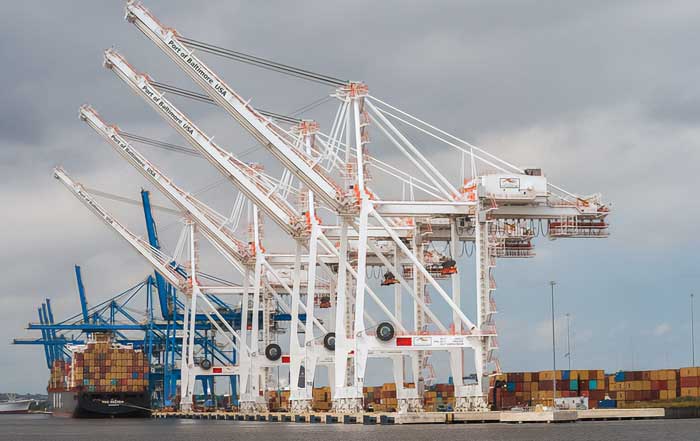
Despite its transition toward knowledge-based sectors, Maryland has not abandoned its historic strengths in trade and logistics. The Port of Baltimore remains one of the most productive and strategically important deepwater ports on the U.S. East Coast, particularly for roll-on/roll-off cargo, automobiles, and bulk commodities. Its location offers efficient access to the industrial Midwest, the Mid-Atlantic consumer corridor, and major rail networks, positioning Maryland as a key node in transatlantic and transpacific trade routes.
Infrastructure investments over the past decade, supported by federal programs such as those discussed in national infrastructure analyses by organizations like the U.S. Department of Transportation, have enhanced the port's capacity, dredging depth, and intermodal connectivity. These improvements are particularly relevant as shipping lines reconfigure routes in response to global disruptions, climate-related risks, and evolving trade patterns between North America, Europe, and Asia. The port's resilience and efficiency also matter for automotive and manufacturing supply chains in Canada and the U.S. heartland, which rely on predictable access to imported components and export channels.
Beyond the port itself, Maryland benefits from Baltimore/Washington International Thurgood Marshall Airport (BWI), a major passenger and cargo hub that connects the state to domestic and international destinations. The interplay between air, sea, rail, and highway infrastructure has supported the growth of e-commerce fulfillment centers, logistics technology firms, and advanced warehousing operations. Companies seeking to understand how these logistics capabilities influence regional competitiveness can find additional context in usa-update.com's business and trade coverage, where Maryland often appears as a case study in infrastructure-driven growth.
Talent, Education, and Workforce Strategy
Maryland's long-term economic performance is inseparable from its human capital. The state consistently ranks near the top of U.S. measures for educational attainment, with a high proportion of residents holding bachelor's and advanced degrees. Institutions such as Johns Hopkins University, the University of Maryland, College Park, Towson University, and Morgan State University form the backbone of a higher-education system that is closely integrated with regional industry needs. These universities collaborate with federal laboratories and private employers to design curricula in fields ranging from data science and biomedical engineering to cybersecurity and public policy.
At the same time, Maryland has recognized that a high-performing economy cannot rely solely on elite research institutions. Community colleges and technical schools across the state have expanded programs in advanced manufacturing, healthcare support, IT administration, and clean-energy installation, offering pathways for residents who may not pursue four-year degrees but are essential to the functioning of complex supply chains and service systems. The state's workforce development strategies emphasize reskilling and upskilling, particularly for workers displaced by automation or sectoral shifts, reflecting broader national debates on employment and inclusion that are regularly examined in U.S. employment coverage.
Maryland's approach has also been shaped by demographic realities. The state's population is diverse, with significant African American, Hispanic, and Asian communities, as well as growing immigrant populations from Africa, the Caribbean, and South Asia. This diversity enriches the talent pool and contributes to a dynamic entrepreneurial ecosystem, but it also requires targeted policies to ensure equitable access to education, training, and capital. Addressing these disparities is not only a social imperative; it is a business necessity in a labor market where competition for specialized skills is intense across the United States, Canada, and Europe.
Tourism, Entertainment, and Cultural Capital
While high-technology sectors often dominate economic headlines, Maryland's tourism and entertainment industries remain vital components of its overall performance. The Chesapeake Bay, Assateague Island National Seashore, and the historic towns of Annapolis and Frederick draw visitors from across the United States and increasingly from Europe and Asia, particularly as international travel has recovered from pandemic-era disruptions. Baltimore's Inner Harbor, with its museums, restaurants, and waterfront attractions, continues to serve as a focal point for both leisure and business travel.
Professional sports and live entertainment have also contributed to Maryland's profile. The Baltimore Ravens and Baltimore Orioles generate substantial economic activity through ticket sales, broadcasting, hospitality, and related services, while music venues and festivals support a creative economy that intersects with food, fashion, and digital media. The state's film and television incentives have attracted productions that bring in external capital and raise Maryland's visibility in international markets, complementing the broader entertainment narratives highlighted in media and culture coverage on usa-update.com.
Cultural capital extends beyond tourism receipts. Maryland's culinary scene, anchored by its iconic blue crabs and seafood traditions, has become a platform for food entrepreneurship and innovation in sustainable aquaculture. These activities connect local businesses to global conversations about sustainable sourcing and climate-resilient food systems, which are increasingly important to consumers in North America, Europe, and Asia who are attentive to environmental and social impacts in their purchasing decisions.
Maryland Economic Dashboard 2026
Explore the key sectors driving "America in Miniature"
Key Economic Strengths
Clean Energy, Climate Policy, and Sustainable Growth
Maryland's commitment to sustainability has moved from rhetoric to implementation, positioning the state as a leading example of how climate policy can align with economic opportunity. The Maryland Energy Administration has supported a range of initiatives to expand solar capacity, improve energy efficiency, and modernize the grid. Ambitious targets for greenhouse gas reductions and renewable-energy penetration place Maryland among the more aggressive U.S. jurisdictions, in line with climate ambitions in parts of Europe and regions such as California and New York.
Offshore wind has become a flagstone of this strategy. Projects led by Ørsted and US Wind off the Maryland coast are designed to supply gigawatts of clean power to Mid-Atlantic consumers while creating manufacturing, construction, and maintenance jobs. These developments link Maryland to global supply chains for turbines, cables, and specialized vessels, drawing on expertise from countries like Denmark, Germany, and the United Kingdom that have long been leaders in offshore wind. For businesses and investors seeking to understand how clean energy intersects with industrial policy and regional competitiveness, resources such as the U.S. Department of Energy and independent organizations like the International Energy Agency provide additional perspective that complements Maryland-specific reporting in usa-update.com's energy coverage.
The state has also encouraged residential and community solar programs, energy-efficient building codes, and electrification of transportation fleets. These measures not only reduce emissions, but also generate demand for electricians, installers, engineers, and software developers, reinforcing the link between climate action and employment growth. However, they require careful regulatory design and grid planning, areas where Maryland's experience is being closely watched by other U.S. states and by policymakers in Canada and Europe who are grappling with similar integration challenges.
Real Estate, Urban Revitalization, and Regional Imbalance
Maryland's economic transformation is visible in its built environment. Baltimore, once heavily dependent on manufacturing, has seen significant investment in waterfront redevelopment, mixed-use projects, and innovation districts. Neighborhoods around the Inner Harbor and the city's medical and university campuses have attracted technology firms, life-sciences startups, and professional-services companies. Public-private partnerships have been instrumental in financing infrastructure improvements, upgrading transit, and repurposing former industrial sites.
Suburban counties such as Montgomery, Howard, and Anne Arundel have experienced robust growth, driven by their proximity to federal agencies, corporate headquarters, and high-performing school systems. These areas have become hubs for professional and technical workers, with a proliferation of co-working spaces, research parks, and transit-oriented developments. As remote and hybrid work patterns evolve, Maryland's suburban and exurban communities are rethinking land-use planning and transportation investments to maintain their attractiveness to residents and employers.
Yet these successes coexist with persistent regional imbalances. Parts of Western Maryland and the Eastern Shore lag behind in income, infrastructure, and access to high-growth industries. Baltimore faces ongoing challenges related to housing affordability, public safety, and educational equity, issues that are well known to readers who follow consumer and community-level economic reporting on usa-update.com. Addressing these disparities requires targeted investment, coordinated regional planning, and inclusive economic-development strategies that ensure new opportunities in technology, logistics, and clean energy are accessible to a broader cross-section of Maryland's population.
International Trade, Investment, and Global Positioning
Maryland's global orientation has deepened as companies and investors look for stable, innovation-rich locations within the United States. European, Canadian, and Asian firms have established operations in Maryland to gain proximity to federal agencies, research institutions, and the East Coast consumer market. Life-sciences companies from Germany, Switzerland, and the United Kingdom, information-technology firms from India and South Korea, and advanced-manufacturing enterprises from Japan and Canada are among those that have found Maryland an attractive base for North American expansion.
The Maryland Department of Commerce has actively promoted trade and investment through missions to Europe, Asia, and Latin America, emphasizing the state's strengths in biotechnology, cybersecurity, aerospace, and clean energy. These efforts align with broader U.S. trade strategies and shifting global supply-chain patterns, as companies seek to diversify away from concentrated manufacturing hubs and build resilience against geopolitical and climate-related shocks. The Port of Baltimore's direct connections to major European and Asian ports, combined with BWI's international routes, reinforce Maryland's role as a gateway for transatlantic and transpacific commerce.
International investors evaluating Maryland often focus on governance quality, regulatory predictability, and access to specialized talent, themes that also feature prominently in usa-update.com's finance and investment coverage. The state's experience suggests that a clear policy framework, strong institutions, and a track record of public-private collaboration can be just as important as tax incentives when competing for high-value foreign direct investment.
Small Business, Entrepreneurship, and Innovation Culture
Behind the high-profile anchors of federal agencies and multinational corporations, Maryland's economy is sustained by a dense network of small and mid-sized enterprises. Family-owned seafood businesses along the Chesapeake, independent manufacturers in smaller cities, and technology startups in Baltimore, Rockville, and College Park all contribute to job creation and community stability. Their stories often receive less international attention, yet they are central to understanding how economic growth is experienced at the local level.
Organizations such as TEDCO, university-affiliated incubators, and regional innovation hubs provide capital, mentoring, and networking for early-stage companies. These support systems are particularly important in sectors that require patient capital and specialized expertise, such as medical devices, digital health, and industrial cybersecurity. Maryland's entrepreneurial culture has also benefited from its diversity, with growing numbers of minority-owned and immigrant-founded businesses participating in technology, retail, and professional services. Their experiences intersect with national conversations about inclusive capitalism and access to opportunity that are examined across usa-update.com's business and jobs reporting.
For entrepreneurs, Maryland offers a combination of advantages that are not easily replicated: access to decision-makers in Washington, D.C.; proximity to major East Coast markets; a high concentration of research institutions; and a supportive, though still evolving, ecosystem of investors and accelerators. The challenge for policymakers and business leaders is to ensure that regulatory frameworks, infrastructure, and housing policies keep pace with the needs of a dynamic startup environment, particularly as competition intensifies from other innovation hubs in the United States, Canada, and Europe.
Culture, Diversity, and the Social Foundations of Business
Economic performance does not occur in a vacuum; it is shaped by social cohesion, cultural vibrancy, and public trust. Maryland's diverse population has been a source of both creativity and complexity. Baltimore's deep African American heritage, the presence of significant Latino and Asian communities in suburban counties, and the contributions of immigrants from Africa, the Middle East, and South Asia all enrich the state's cultural landscape. This diversity has produced leaders in business, academia, and the arts whose influence extends well beyond state borders.
Cultural institutions, festivals, and local media play a role in sustaining this vibrancy, while also shaping perceptions of Maryland in national and international arenas. For example, the state's literary and musical traditions, its history in the civil-rights movement, and its evolving culinary scene contribute to a distinctive brand that complements the more technical narratives of biotechnology and cybersecurity. Readers who follow lifestyle and culture coverage on usa-update.com will recognize how these softer dimensions of place identity can influence decisions by companies and professionals when choosing where to invest, locate, or build careers.
The social foundations of business also involve trust in institutions, transparency in governance, and responsiveness to community concerns. Maryland has had to confront issues related to policing, public education, and health disparities, particularly in urban areas. How effectively the state addresses these challenges will affect its ability to attract and retain talent, especially younger workers who place high value on social equity and quality of life. In this respect, Maryland's experience is closely watched by other jurisdictions in North America and Europe facing similar tensions between economic dynamism and social fragmentation.
Policy, Regulation, and Maryland as a Governance Laboratory
Maryland's proximity to Washington, D.C. gives it a front-row seat to national policy debates and, in some cases, allows it to function as a testing ground for regulatory innovations. The state has been active in areas such as healthcare reform, cybersecurity standards, environmental regulation, and labor policy. Its participation in regional initiatives like the Chesapeake Bay Program demonstrates how multi-state collaboration can address cross-border environmental challenges that affect fisheries, tourism, and coastal resilience from Maryland to Virginia and beyond.
In cybersecurity, Maryland has supported efforts to develop best practices and frameworks that can be adopted by critical-infrastructure operators and small businesses, aligning with national guidelines from bodies such as the National Institute of Standards and Technology (NIST). In environmental policy, the state's renewable-portfolio standards, emissions-reduction targets, and incentives for electric vehicles place it among the more proactive U.S. jurisdictions, inviting comparison with European Union member states that have pursued aggressive climate legislation. Businesses that monitor regulatory risk and compliance requirements can find detailed context in usa-update.com's regulation and policy coverage, where Maryland frequently appears as a reference point for emerging standards.
Maryland's experience underscores the importance of regulatory clarity and stakeholder engagement. Whether in setting cybersecurity baselines for small enterprises or designing incentives for offshore wind, the state has had to balance competing interests: environmental advocates, industry groups, local communities, and federal agencies. The outcome of these processes shapes not only local business conditions, but also the broader regulatory environment in which companies across the United States and international partners must operate.
Looking Ahead: Risks, Opportunities, and Strategic Choices
As of 2026, Maryland's economic fundamentals are strong, but the state faces a set of interlocking challenges that will influence its trajectory over the next decade. Income inequality and regional disparities remain stubborn, with high-income suburbs and innovation districts coexisting alongside communities that struggle with underinvestment and limited access to high-growth sectors. Housing affordability pressures in some counties risk pushing workers farther from employment centers, straining transportation systems and complicating employers' recruitment strategies. These dynamics mirror broader national concerns discussed in usa-update.com's economy and news coverage, where Maryland often serves as a microcosm of U.S. trends.
The transition to a low-carbon economy, while rich in opportunity, requires significant capital expenditure and careful sequencing. Grid modernization, energy storage, and transmission build-out are complex undertakings that involve regulatory approvals, community engagement, and coordination with neighboring states. Failure to manage these transitions smoothly could create reliability issues or cost burdens that undermine public support. At the same time, success in these areas could establish Maryland as a benchmark for other jurisdictions, attracting additional investment from companies and funds that prioritize environmental, social, and governance (ESG) performance.
Global uncertainties-from geopolitical tensions affecting trade flows to technological disruptions in artificial intelligence and quantum computing-add another layer of complexity. Maryland's deep integration with federal defense and intelligence agencies, its reliance on research-intensive industries, and its role in international supply chains mean that developments in Europe, Asia, and other regions can have direct local consequences. Businesses and policymakers will need to remain agile, drawing on the state's institutional strengths and diverse talent base to navigate an increasingly volatile environment, a theme that aligns with the cross-border perspectives highlighted in usa-update.com's international coverage.
Conclusion: Maryland as a Strategic Lens for a Changing World
Maryland's evolution from an economy rooted in agriculture, shipping, and heavy industry to a diversified, knowledge-driven powerhouse offers a compelling narrative for the global business audience of usa-update.com. The state's experience illustrates how proximity to federal institutions, investments in higher education, and targeted support for innovation can create enduring competitive advantages. It also shows that such advantages come with responsibilities: to manage inequality, to invest in sustainable infrastructure, and to maintain public trust in the face of rapid technological and social change.
For readers in the United States, Canada, Europe, Asia, and beyond who track developments in the economy, technology, energy, regulation, and consumer behavior, Maryland provides a useful lens through which to interpret broader shifts. Its biotechnology labs and cybersecurity firms, its port terminals and offshore wind farms, its universities and small businesses together form an ecosystem that reflects the opportunities and tensions of the twenty-first-century global economy. As usa-update.com continues to monitor and analyze these dynamics across its coverage of economy, business, technology, energy, and related topics, Maryland will remain a critical reference point-a state-sized version of the complex, interconnected world in which today's decision-makers operate.
