
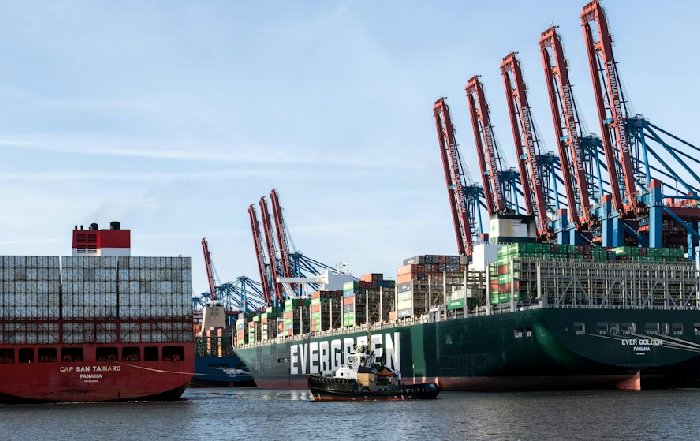
Shifting Geopolitical Alliances and Trade: What It Means for Business, Markets, and Consumers
Introduction: A New Geoeconomic Era?
So the global economy has entered a distinctly geoeconomic era in which trade flows, capital allocation, and corporate strategy are increasingly shaped not only by market forces but by geopolitical calculations, regulatory shifts, and the strategic competition among major powers. For decision-makers who turn to usa-update.com for timely insight on the economy, finance, employment, technology, and global markets, understanding how shifting alliances and trade patterns interact has become essential to managing risk, identifying growth opportunities, and safeguarding long-term value.
The post-pandemic recovery, the ripple effects of Russia's invasion of Ukraine, the intensifying strategic rivalry between the United States and China, and renewed emphasis on industrial policy in North America, Europe, and Asia have all converged to redefine what globalization means in practice. Trade is no longer only about efficiency and comparative advantage; it is now also about resilience, national security, climate objectives, and social stability. Businesses that once optimized purely for cost are now redesigning supply chains around redundancy, friend-shoring, and compliance with a growing web of sanctions, export controls, and sustainability rules.
Against this backdrop, usa-update.com is building a forward-looking perspective that connects developments in geopolitics and trade to concrete implications for the U.S. and North American economy, labor markets, cross-border investment, and consumer behavior. Readers seeking deeper context on macroeconomic trends can explore the platform's dedicated coverage of the U.S. and global economy, while those focused on corporate strategy and capital markets can turn to the latest analysis in business and finance.
From Hyper-Globalization to Fragmentation and Realignment
The period from the late 1990s through the mid-2010s is often described by economists as one of "hyper-globalization," characterized by rapidly expanding cross-border trade, deepening supply chains, and the integration of emerging markets-most notably China-into the global trading system. According to data from the World Trade Organization, global trade as a share of GDP rose sharply during this era, driven by trade liberalization, technological advances in logistics and communications, and the rise of multinational production networks. Yet by the mid-2010s, trade intensity began to plateau, and by the early 2020s, the geopolitical context had shifted decisively.
The U.S.-China trade dispute, Brexit, and rising populist pressures in advanced economies all contributed to a reassessment of globalization's benefits and vulnerabilities. The COVID-19 pandemic then exposed the fragility of just-in-time production models and overconcentrated supply chains, especially in critical sectors such as medical equipment, pharmaceuticals, semiconductors, and logistics. As the International Monetary Fund has documented, trade growth has since lagged behind global GDP growth, signaling a transition from expansionary globalization to a more fragmented and contested landscape. Businesses that follow the latest international developments on usa-update.com have witnessed how trade policy has become a tool of strategic competition and resilience-building rather than simply a mechanism for efficiency gains.
In this new environment, alliances are being reconsidered, and trade blocs are strengthening or reconfiguring. The United States is deepening ties with partners across North America, Europe, and the Indo-Pacific, while China is consolidating influence through regional arrangements and strategic investments. Meanwhile, middle powers from Germany and France to India, Brazil, and South Africa are seeking greater autonomy, often hedging between competing poles. The result is a complex, multipolar trading system in which companies must navigate overlapping rules, standards, and expectations.
The United States at the Center of Strategic Trade Realignment
The United States remains the world's largest economy and a central node in global trade and finance, but its strategy has evolved from promoting broad-based liberalization to prioritizing security, resilience, and industrial competitiveness. The shift began with the renegotiation of NAFTA into the United States-Mexico-Canada Agreement (USMCA) and has accelerated with the implementation of expansive industrial policies and export controls.
The U.S. Department of Commerce and other agencies have introduced far-reaching restrictions on the export of advanced semiconductors and related technologies to China, citing national security concerns and the need to protect critical supply chains. At the same time, the CHIPS and Science Act and the Inflation Reduction Act have mobilized substantial public investment to reshore or friend-shore manufacturing in semiconductors, clean energy technologies, and electric vehicles. These policies are intended not only to reduce dependencies on strategic competitors but also to create high-quality jobs and stimulate regional development within the United States, themes that resonate strongly with readers interested in jobs and employment trends on usa-update.com.
For global businesses, this evolving U.S. strategy means that access to the American market increasingly comes with expectations regarding compliance, transparency, security, and sustainability. Companies with operations in Canada, Mexico, Europe, and Asia must align with U.S. export controls, sanctions regimes, and due diligence requirements, which are regularly updated by authorities such as the U.S. Department of the Treasury's Office of Foreign Assets Control. At the same time, the United States remains a magnet for foreign direct investment, particularly in high-tech manufacturing, life sciences, and energy transition projects, supported by a robust financial system overseen by institutions like the Federal Reserve.
For readers of usa-update.com, staying abreast of these developments is crucial not only for understanding macroeconomic direction but also for interpreting regulatory risk, capital flows, and sector-specific opportunities. The site's coverage of regulation and energy provides practical context on how policy choices in Washington are reshaping investment decisions across the United States and beyond.
China, Asia, and the Contest for Economic Influence
While the United States recalibrates its trade and industrial policies, China continues to play a pivotal role in global commerce, even as its growth model evolves and its relationships with Western economies become more complex. China remains a central manufacturing hub for electronics, machinery, and consumer goods, and its domestic market is a critical source of demand for exporters from Europe, South America, Africa, and the broader Asia-Pacific region. Yet concerns over intellectual property protection, data security, market access, and geopolitical risk have led many multinational companies to pursue "China-plus-one" strategies, diversifying production into countries such as Vietnam, Thailand, Malaysia, and India.
Regional trade agreements illustrate the shifting landscape. The Regional Comprehensive Economic Partnership (RCEP), which includes China, Japan, South Korea, and the Association of Southeast Asian Nations (ASEAN) members, has created one of the world's largest free trade areas, facilitating intra-Asian trade and investment. Meanwhile, the Comprehensive and Progressive Agreement for Trans-Pacific Partnership (CPTPP), which includes Japan, Canada, Australia, and several other economies, continues to evolve as a high-standard trade framework, even without U.S. participation. Businesses looking to understand these dynamics can consult resources from organizations like the Asian Development Bank and the World Bank, which provide detailed analysis of trade integration and infrastructure investment across Asia.
For companies headquartered in the United States and North America, Asia remains both an essential growth market and a complex risk environment. The contest for technological leadership in fields such as semiconductors, artificial intelligence, and green technologies has led to overlapping export controls and investment screening mechanisms, particularly between the United States and China. Firms must balance access to the Chinese market with compliance obligations and reputational considerations in their home markets. Readers of usa-update.com interested in technology trends can follow how these tensions influence global research and development strategies, cross-border data flows, and digital trade rules.
Europe's Strategic Autonomy and Regulatory Power
In Europe, shifting geopolitical alliances and trade relationships are framed by the concept of "strategic autonomy," a term used by European Union leaders to describe the bloc's ambition to reduce critical dependencies while preserving an open, rules-based trading system. The war in Ukraine and the resulting energy crisis accelerated efforts to diversify away from Russian fossil fuels, deepen cooperation with partners such as Norway, United States, and Qatar, and invest heavily in renewable energy and energy efficiency. Institutions like the European Commission and the European Central Bank have emphasized the need to align trade, climate, and industrial policies, especially in sectors such as batteries, hydrogen, and advanced manufacturing.
Europe's regulatory influence remains one of its most significant tools in shaping global trade norms. The General Data Protection Regulation (GDPR), digital market rules, and the Carbon Border Adjustment Mechanism (CBAM) are examples of how EU standards can affect companies worldwide, including U.S. firms exporting to Germany, France, Italy, Spain, Netherlands, and Sweden. Businesses must now incorporate carbon pricing, sustainability reporting, and data governance into their trade strategies, often relying on guidance from organizations such as the Organisation for Economic Co-operation and Development (OECD) to interpret evolving standards and best practices.
For North American investors and companies that follow usa-update.com, Europe's trajectory matters not only because of its role as a key export destination and investment partner, but also because European rules increasingly set benchmarks for global compliance. The intersection of trade, climate policy, and digital regulation is reshaping how firms design products, manage supply chains, and report on environmental, social, and governance (ESG) performance. Those seeking to learn more about sustainable business practices can turn to international bodies such as the United Nations Environment Programme, which provide frameworks that complement national and regional regulations.
Global trade era
Key insight:Trade has shifted from a purely efficiency-driven model to one shaped by geopolitics, resilience, and national security concerns.
The Rise of Middle Powers and Regional Blocs
Beyond the United States, China, and the European Union, a diverse group of middle powers and regional blocs is exerting greater influence over trade and alliances. Countries such as India, Brazil, South Africa, Saudi Arabia, Indonesia, and Mexico are leveraging their growing economic weight, demographic advantages, and strategic resources to shape regional and global agendas. Many of these states participate in groupings such as BRICS, the G20, and a variety of regional trade agreements, using them to advocate for reform of global institutions, greater representation in decision-making, and more equitable development outcomes.
In Latin America, Brazil, Chile, and Mexico have pursued distinct trade strategies, balancing relations with the United States, Europe, and China while engaging in regional integration efforts. In Africa, the African Continental Free Trade Area (AfCFTA), supported by the African Union and development partners, aims to boost intra-African trade, industrialization, and job creation by reducing tariffs and harmonizing regulations across the continent. These developments open new opportunities for companies in sectors such as agribusiness, renewable energy, logistics, and digital services, but they also require nuanced understanding of political risk, infrastructure constraints, and local regulatory environments.
For readers of usa-update.com who track international business trends, the rise of middle powers underscores the importance of a diversified global strategy. Rather than viewing trade through a binary U.S.-China lens, leading companies are mapping a more granular landscape that includes opportunities in Southeast Asia, Africa, South America, and the Middle East, often in partnership with local firms and multilateral institutions like the World Bank Group and the International Finance Corporation. This multipolar reality demands more sophisticated risk assessment and scenario planning, as alliances and policies can evolve rapidly in response to domestic politics and external shocks.
Energy, Climate, and the Geopolitics of Transition
Energy has always been central to geopolitics and trade, but the global push toward decarbonization has added a new layer of complexity and strategic competition. The post-2022 reconfiguration of gas and oil flows, driven by sanctions on Russia and Europe's pivot away from Russian energy, highlighted the vulnerability of import-dependent economies and the importance of diversified supply. At the same time, the race to secure critical minerals such as lithium, cobalt, nickel, and rare earth elements-essential for batteries, wind turbines, and electric vehicles-has intensified competition among major powers and resource-rich states.
Organizations such as the International Energy Agency (IEA) and the International Renewable Energy Agency (IRENA) provide detailed analysis of how energy transition pathways intersect with trade, investment, and security. As countries from Canada and Australia to Chile and South Africa seek to capitalize on their mineral endowments, questions of environmental impact, community consent, and value-added processing have become more prominent. Meanwhile, advanced economies are investing heavily in domestic and allied production of clean technologies, supported by incentives, subsidies, and trade measures designed to protect nascent industries from unfair competition.
For U.S. businesses and investors, the geopolitics of energy transition present both risks and opportunities. On one hand, supply chain disruptions, export restrictions, and shifting regulations can increase costs and uncertainty for manufacturers and utilities. On the other, new markets are opening for renewable energy equipment, grid modernization, green hydrogen, and energy-efficient technologies. Readers of usa-update.com can follow these developments through the platform's dedicated energy coverage, which connects global shifts in energy trade to domestic implications for jobs, infrastructure, and consumer prices.
Technology, Data, and the Fragmentation of the Digital Economy
As trade in goods becomes more politicized, digital trade and technology have emerged as central arenas of strategic competition and regulatory experimentation. The cross-border flow of data underpins everything from cloud computing and digital payments to entertainment streaming and remote work, yet national governments are increasingly asserting sovereignty over data storage, privacy, and cybersecurity. This has led to the emergence of distinct regulatory models, often described as the "Brussels effect" in the European Union, the "Beijing model" in China, and a more market-driven but security-conscious approach in the United States and other democracies.
Institutions such as the World Economic Forum and think tanks like the Carnegie Endowment for International Peace have highlighted how divergent standards for data protection, platform regulation, and artificial intelligence could fragment the digital economy into partially incompatible spheres. For businesses, this means that digital services and software may need to be tailored to specific jurisdictions, with separate data centers, content policies, and compliance regimes. The implications are particularly significant for technology firms, financial institutions, and media companies that operate across multiple regions.
Readers of usa-update.com who follow technology and entertainment trends can see how these dynamics affect not only enterprise software and fintech, but also streaming platforms, gaming, and digital advertising. Content localization rules, censorship concerns, and licensing requirements can influence where and how companies invest in new markets. At the same time, emerging frameworks for cross-border data flows, such as the OECD's work on trusted government access to data and regional digital trade agreements, offer potential pathways to reduce fragmentation while respecting privacy and security.
Labor Markets, Employment, and the Human Side of Geoeconomics
Shifting geopolitical alliances and trade patterns are not only macroeconomic phenomena; they have direct consequences for workers, communities, and consumers. Trade liberalization in past decades contributed to job dislocations in certain sectors and regions, particularly in manufacturing, even as it generated overall welfare gains. The current wave of geoeconomic adjustment-reshoring, friend-shoring, and industrial policy-aims in part to address these imbalances by creating new industrial jobs and strengthening domestic supply chains. However, the transition is complex and uneven, with significant implications for skills, mobility, and social cohesion.
Labor economists and institutions such as the International Labour Organization (ILO) emphasize the importance of active labor market policies, vocational training, and social safety nets in managing structural change. As advanced economies invest in semiconductors, clean energy, and advanced manufacturing, they face shortages of skilled technicians, engineers, and construction workers. At the same time, automation and artificial intelligence are transforming service sectors, logistics, and back-office functions, raising questions about the future of work and the distribution of gains from trade and technology.
For the audience of usa-update.com, which follows employment and jobs trends closely, these developments underscore the need to align workforce strategies with evolving trade and industrial policies. Businesses that invest in training, apprenticeships, and partnerships with educational institutions are better positioned to adapt to new production models and regulatory requirements. Policymakers, meanwhile, are under pressure to ensure that the benefits of geoeconomic realignment are broadly shared and that communities affected by plant closures or shifts in trade flows receive targeted support.
Financial Markets, Capital Flows, and Risk Management
Financial markets are both a reflection of and a driver of shifts in trade and alliances. Capital flows respond quickly to geopolitical events, regulatory changes, and shifts in investor sentiment, often amplifying underlying trends. Sanctions regimes, such as those targeting Russia after its invasion of Ukraine, have demonstrated how access to the global financial system can be used as a tool of foreign policy, with profound implications for banks, investors, and corporations. Institutions like the Bank for International Settlements (BIS) and the Financial Stability Board (FSB) monitor how these developments affect systemic risk, cross-border lending, and currency markets.
For global businesses, the intersection of geopolitics and finance translates into heightened due diligence requirements, more complex compliance frameworks, and a premium on scenario analysis. Exposure to currencies, sovereign risk, and regulatory arbitrage must be carefully managed, especially for firms with operations in multiple jurisdictions. The growing importance of ESG investing also means that geopolitical considerations-such as human rights, conflict risk, and environmental performance-are increasingly factored into portfolio decisions by major asset managers and institutional investors.
Readers who rely on usa-update.com for finance and market insight can see how these forces shape everything from equity valuations and bond spreads to commodity prices and real estate investment. In an environment where alliances and trade relationships can shift rapidly, robust risk management frameworks, diversified funding sources, and transparent governance are essential components of corporate resilience and investor confidence.
Travel, Tourism, and the Reconfiguration of People Flows
While much of the discussion about shifting alliances and trade focuses on goods, services, and capital, the movement of people-whether for tourism, business, or migration-remains a critical dimension of globalization. Travel patterns have been reshaped by health concerns, visa policies, security considerations, and geopolitical tensions. Airlines, hospitality companies, and tourism boards have had to adjust to new demand dynamics, with some routes and destinations benefiting from closer political and economic ties, while others are constrained by sanctions, conflict, or diplomatic strains.
International organizations such as the World Tourism Organization (UNWTO) and the International Air Transport Association (IATA) provide data and analysis on how travel flows respond to policy changes and global events. For countries such as the United States, Canada, United Kingdom, Japan, and Australia, attracting high-value tourists, students, and professionals is part of a broader strategy to maintain competitiveness and soft power. At the same time, concerns over national security and public health have led to more stringent screening and data collection at borders.
For the audience of usa-update.com, which includes frequent travelers, corporate decision-makers, and professionals managing global teams, understanding how alliances and trade influence mobility is increasingly important. The platform's coverage of travel and lifestyle can help readers anticipate changes in visa policies, air connectivity, and destination preferences, as well as their impact on business development, cross-cultural collaboration, and quality of life.
Consumer Markets, Supply Chains, and Everyday Impacts
Ultimately, the consequences of shifting geopolitical alliances and trade patterns are felt by consumers in their daily lives, from the price and availability of goods to the choice of brands and services. Supply chain disruptions, tariffs, and regulatory changes can affect everything from electronics and automobiles to food and pharmaceuticals. The experience of shortages and price spikes during recent crises has heightened consumer awareness of supply chain resilience and ethical sourcing, influencing purchasing decisions and brand loyalty.
Organizations such as the U.S. Bureau of Labor Statistics and the U.S. Census Bureau provide data on inflation, trade flows, and consumer behavior that help businesses and policymakers understand these trends. Meanwhile, consumer advocacy groups and standards bodies are pushing for greater transparency around product origins, labor conditions, and environmental impact. For retailers, manufacturers, and logistics providers, this means that supply chain management is no longer a back-office function but a core element of brand strategy and risk management.
Readers of usa-update.com who follow consumer and business news can see how geopolitical developments translate into shifts in pricing, product availability, and customer expectations in the United States and across North America. Companies that communicate clearly about their sourcing strategies, resilience measures, and sustainability commitments are better positioned to maintain trust and market share in a volatile environment.
Strategic Responses: How Businesses Can Navigate the New Landscape
In this complex and fluid environment, leading organizations are adopting a series of strategic responses to manage risk and capture opportunity. Scenario planning has become more sophisticated, incorporating geopolitical analysis, regulatory forecasting, and climate risk into long-term planning. Supply chain mapping and diversification are now standard practices, with firms investing in digital tools to gain visibility into tier-two and tier-three suppliers and to model the impact of disruptions.
Many companies are also deepening engagement with policymakers, industry associations, and multilateral organizations to help shape emerging standards and regulations. Participation in forums organized by entities such as the World Economic Forum, OECD, and regional business councils allows firms to contribute expertise and anticipate policy shifts. At the same time, corporate governance structures are evolving to integrate geopolitical and sustainability risks into board-level oversight and executive compensation metrics.
For the business-focused target audience, these strategic responses highlight the importance of integrated thinking across functions-finance, operations, legal, technology, and human resources-to build resilience. The site's coverage of business trends, regulation, and technology offers a holistic perspective on how leading organizations are adapting their operating models, investment priorities, and risk frameworks to the realities of a more fragmented and contested global trading system.
Gazing Ahead: Alliances, Trade, and the Future of Globalization
It is clear that globalization is not reversing, but it is being reshaped. Cross-border trade, investment, and data flows remain vital to economic growth and innovation, yet they are increasingly mediated by geopolitics, security concerns, and societal expectations. Alliances are more fluid, regional blocs more assertive, and middle powers more influential than in previous decades. The challenge for businesses, investors, and policymakers is to navigate this complexity without losing the benefits of openness, competition, and collaboration that underpin long-term prosperity.
For readers who rely on usa-update.com as a trusted source of news and analysis, the task ahead is to stay informed, critically engaged, and strategically agile. Understanding how shifts in trade policy, energy markets, technology governance, and labor dynamics intersect will be essential to making sound decisions, whether one is leading a multinational corporation, managing a portfolio, or planning a career in an increasingly interconnected yet contested world.
By integrating insights from authoritative institutions such as the World Trade Organization, International Monetary Fund, OECD, International Energy Agency, and others with on-the-ground reporting and expert commentary, the news team aims to provide its audience with the experience-driven, expert, and trustworthy perspective needed to navigate the evolving geoeconomic landscape. In an era where alliances and trade are in flux, informed understanding is not just an advantage; it is a necessity for resilience, competitiveness, and sustainable growth.
