
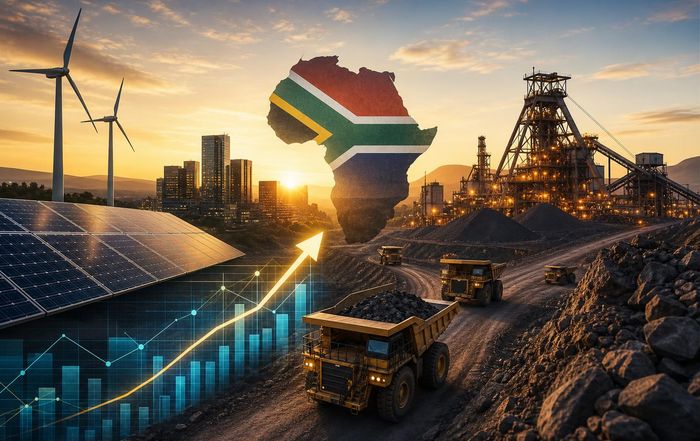
South Africa Business Trends Across Energy and Mining
A Strategic Moment For South Africa's Energy-Mining Nexus
South Africa's economy has long been defined by the twin pillars of energy and mining. From deep-level gold and platinum mines to vast coalfields that fuel most of the country's electricity, these sectors remain central to growth, employment and export earnings. At the same time, they sit at the heart of South Africa's most pressing challenges: unreliable power supply, the urgent need for decarbonisation, infrastructure constraints and intense social pressures around jobs and community development.
These changes are not only a regional story; they shape global supply chains for critical minerals, influence international climate and energy markets, and create both risk and opportunity for investors in North America, Europe, Asia and beyond. As the world navigates a complex energy transition, South Africa's evolving business trends across energy and mining offer a revealing case study in how a resource-rich emerging economy can attempt to pivot towards sustainability while preserving economic stability and social cohesion.
Today we will think about the key structural shifts underway, the policy and regulatory context, the responses from major companies and investors, and the emerging opportunities that are beginning to redefine South Africa's role in the global energy and mining landscape, with a particular focus on what matters most to business, finance and policy audiences that follow USA update.
From Coal Dominance To Energy Transition
South Africa's energy system has historically been built around coal. According to the International Energy Agency (IEA), coal has provided roughly 80-85% of the country's electricity generation for many years, making South Africa one of the most coal-dependent economies in the world. The state-owned utility Eskom operates a large fleet of coal-fired power stations, many of which are aging and increasingly unreliable, contributing to the rolling blackouts, locally known as load-shedding, that have constrained growth and undermined business confidence.
In response, the government has committed to a Just Energy Transition that seeks to reduce emissions, diversify the energy mix and support workers and communities who depend on coal. South Africa's Just Energy Transition Partnership, announced at the COP26 climate summit and further developed in subsequent years, brought together financing commitments from partners including the United States, United Kingdom, European Union, France and Germany to support decarbonisation and economic diversification. Interested readers can explore broader economic implications through the USA update coverage of South Africa and global economic trends.
The policy framework has gradually opened the door for large-scale private investment in renewables. Reforms to the Electricity Regulation Act and subsequent regulations removed licensing requirements for many private generation projects, enabling mines, industrial firms and independent power producers to develop utility-scale solar and wind facilities. The Council for Scientific and Industrial Research (CSIR) and other institutions have highlighted that South Africa has some of the world's best solar and wind resources, particularly in the Northern, Western and Eastern Cape provinces, which positions the country well for a long-term shift in its energy base.
While progress has been uneven and grid constraints have slowed some projects, the direction of travel is clear: coal's dominance is beginning to erode, and the energy-mining relationship is being reshaped around new forms of generation, storage and infrastructure.
Interactive Feature: Energy & Mining Scenario Slider
Below is an interactive, mobile-optimised slider that lets you explore how different transition scenarios could reshape South Africa's coal, renewables and future-facing minerals by 2035.
South Africa 2035 Energy-Mining Scenarios
Adjust the slider to compare coal decline, renewable growth and future-facing minerals.
Coal remains dominant, with slow retirements.
Utility-scale solar and wind expand steadily.
PGMs, manganese and vanadium gain share in exports.
- Load-shedding risk remains elevated for energy-intensive users.
- Gradual shift in capex from coal to hybrid portfolios.
- Investors reward credible transition roadmaps.
Mining Under Pressure - And Reinvention
Mining remains a cornerstone of South Africa's economy. According to Minerals Council South Africa, the sector directly employs hundreds of thousands of workers and contributes significantly to export earnings, corporate tax and royalty revenues. The country is a leading producer of platinum group metals (PGMs), manganese, chrome and other minerals, and it maintains important positions in gold, coal and iron ore.
However, the traditional mining model faces intense pressure. Deep-level gold mining has become increasingly costly and technically demanding, while safety concerns and rising input costs weigh on profitability. Coal mining confronts not only environmental and climate scrutiny but also uncertainty about long-term demand as power utilities in South Africa and abroad move towards cleaner energy sources. At the same time, global competition for investment is fierce, with jurisdictions such as Australia, Canada and several Latin American countries offering stable regulatory environments and strong infrastructure.
In response, South African mining companies have embarked on a process of reinvention. Many are prioritising mechanisation and digitalisation to improve productivity and safety, investing in on-site renewable energy to stabilise power supply and reduce emissions, and reviewing their portfolios to focus on higher-margin or future-facing commodities. Analysts at institutions such as McKinsey & Company and Boston Consulting Group have noted that global mining capital is increasingly flowing towards minerals that underpin the energy transition, such as copper, nickel, lithium, cobalt and certain PGMs, creating both challenges and opportunities for South African firms.
For a more detailed view on how these shifts intersect with global business dynamics, online readers can follow related news in the business section, which frequently highlights cross-border investment trends and corporate strategies.
The Rise Of Future-Facing Minerals
One of the most important business trends in South African mining is the growing emphasis on minerals linked directly to the low-carbon transition. While South Africa does not dominate lithium or nickel in the way that some other countries do, it holds strong positions in PGMs, manganese and vanadium, all of which have strategic relevance for cleaner energy technologies.
Platinum, palladium and rhodium, for example, are critical components in catalytic converters that reduce vehicle emissions, and they are also central to certain hydrogen fuel cell technologies. As global automakers and industrial companies explore hydrogen as a potential decarbonisation pathway, South Africa's PGM producers have taken a keen interest in developing domestic hydrogen value chains. Anglo American, Impala Platinum and other major firms have supported pilot projects and research efforts focused on hydrogen production, fuel cells and related infrastructure, often in collaboration with universities and technology partners. Readers can learn more about these technological developments through resources such as the International Energy Agency's hydrogen reports and the Hydrogen Council.
Manganese, widely used in steelmaking, is gaining attention for its potential role in certain battery chemistries, particularly high-manganese cathodes. South Africa is one of the world's largest manganese ore producers, with operations concentrated in the Northern Cape. Global research, including analysis by BloombergNEF, has highlighted that battery manufacturers are experimenting with formulations that balance cost, performance and resource availability, which could benefit manganese-rich countries if these technologies scale commercially.
Vanadium, used in steel alloys and increasingly discussed in the context of vanadium redox flow batteries for long-duration energy storage, is another mineral where South Africa has significant resources. While flow batteries remain a niche technology compared with lithium-ion, they are considered promising for grid-scale applications where long life and high cycle stability matter more than energy density. Companies and research institutions are monitoring whether vanadium-based storage can play a meaningful role in balancing variable renewable energy, a topic covered frequently in international energy and technology publications such as IEA, IRENA and World Bank reports.
These developments underscore a broader shift: South Africa's mining sector is gradually aligning itself with global demand for minerals that support decarbonisation and electrification, even as it continues to manage the legacy of coal and deep-level gold.
Energy Security, Private Power And Embedded Generation
For businesses operating in South Africa, energy security has become a defining concern. Extended load-shedding periods have disrupted production, increased operating costs and deterred investment. Manufacturers, miners and service industries have been forced to rely on diesel generators and other backup systems, with significant financial and environmental implications.
In response, the country has seen a surge in private power initiatives. Policy reforms have allowed companies to build and operate their own generation facilities, either on-site or through wheeling arrangements across the national grid. Mining companies have been among the most active participants in this trend, given their large and relatively predictable power needs.
Major firms such as Sibanye-Stillwater, Gold Fields and Exxaro Resources have announced or developed substantial solar and wind projects to supply their operations. These embedded generation projects often combine renewable energy with battery storage to improve reliability and reduce exposure to Eskom's outages. International energy and infrastructure investors have shown strong interest in partnering on such projects, seeing them as a way to gain exposure to South Africa's energy transition while working with creditworthy industrial offtakers.
Industry analysis from organisations like Wood Mackenzie and S&P Global suggests that this decentralised, private-led generation model could permanently alter South Africa's power landscape, with Eskom increasingly acting as a grid operator and buyer of last resort rather than the sole provider of generation capacity. This evolution aligns with broader global trends towards distributed energy resources and corporate power purchase agreements, themes that are also explored in the updated energy coverage.
Regulatory Reform And Investment Climate
Regulation and policy certainty are central to business decisions in both energy and mining. South Africa's regulatory environment has been a source of both progress and frustration for investors. On the positive side, there have been meaningful reforms aimed at opening the electricity market, streamlining environmental approvals and clarifying aspects of mining law. On the negative side, concerns remain about bureaucratic delays, inconsistent implementation and the time required to secure permits and licenses.
The Mineral and Petroleum Resources Development Act (MPRDA) and the Mining Charter have been central to debates about ownership, empowerment and community benefits. These frameworks seek to ensure that historically disadvantaged South Africans share in the benefits of mining, through mechanisms such as equity participation, procurement requirements and social and labour plans. While the objectives enjoy broad support, disagreements over interpretation and compliance have sometimes led to litigation and uncertainty, which investors monitor closely through legal and policy analysis by firms such as Cliffe Dekker Hofmeyr, Webber Wentzel and international law practices.
On the energy side, the Department of Mineral Resources and Energy (DMRE), the National Energy Regulator of South Africa (NERSA) and the state-owned Eskom play crucial roles in shaping market structure, tariffs and procurement. The Renewable Energy Independent Power Producer Procurement Programme (REIPPPP) has attracted significant international capital over the past decade, although some bidding rounds have faced delays. Analysts at organisations like the World Bank, African Development Bank and International Renewable Energy Agency (IRENA) often cite South Africa as a key example of how structured, competitive procurement can mobilise private investment in renewables, while also noting the importance of consistent policy execution.
For individuals seeking a broader perspective on regulatory events and their implications for business, USA update maintains dedicated reporting of regulation and policy trends, including comparative insights from other jurisdictions.
ESG, Social License And Community Partnerships
Environmental, social and governance (ESG) considerations have moved from the margins to the mainstream of global capital markets, and South African energy and mining companies are deeply affected by this shift. International investors, including major pension funds and asset managers in the United States, Europe and Asia, increasingly require robust ESG performance as a condition for capital allocation. This includes not only climate and environmental metrics but also labour practices, community relations, governance standards and transparency.
In South Africa, where mining operations are often located in areas with high levels of poverty and unemployment, the concept of a social license to operate is particularly salient. Companies are expected to contribute to local development through employment, procurement from local suppliers, infrastructure investment and social programmes in education, health and enterprise development. Organisations such as Anglo American, Glencore, Harmony Gold and others publish detailed sustainability and community impact reports, which are scrutinised by civil society, regulators and investors alike.
There have been high-profile disputes and legal actions related to environmental impacts, community resettlement and historical legacies, including cases that have involved international courts and settlement agreements. Research and advocacy groups such as Human Rights Watch, Amnesty International and local NGOs monitor these developments closely, highlighting both progress and ongoing challenges. Responsible investors often consult these sources, alongside company disclosures and independent ESG ratings from providers like MSCI and Sustainalytics, when forming their views on risk and opportunity.
The trend towards integrated reporting, championed by bodies such as the International Integrated Reporting Council (IIRC) and embraced by many South African corporates, reflects an understanding that long-term value creation depends on managing social and environmental capital alongside financial performance. For active daily readers interested in broader consumer and societal implications, USA update offers related perspectives in its consumer and lifestyle sections.
Technology, Automation And The Digital Mine
Technological innovation is reshaping mining operations worldwide, and South Africa is no exception. Facing rising costs, safety concerns and the need to remain competitive, mining companies are increasingly turning to automation, remote operations, data analytics and advanced equipment.
Underground operations are deploying remote-controlled and autonomous drilling and loading systems, which can operate in hazardous areas while keeping workers at safer distances. Surface operations are experimenting with autonomous haul trucks, drone-based surveying and real-time monitoring of equipment health. Major global equipment suppliers such as Caterpillar, Komatsu and Sandvik are active in the region, working with local mining houses to implement these technologies.
Digital platforms that integrate geological data, production metrics, maintenance schedules and supply chain information are helping companies optimise planning and reduce downtime. Artificial intelligence and machine learning are being applied to ore body modelling, predictive maintenance and safety analytics. Partnerships between mining companies, technology firms and research institutions, including South African universities and international centres of excellence, are accelerating the adoption of these tools.
At the same time, there is an active debate about the social implications of automation for employment. While technology can create new skilled jobs and improve working conditions, it can also reduce demand for certain categories of labour. Policy makers, unions and companies are engaged in discussions about retraining, skills development and inclusive growth, themes that resonate strongly with readers concerned about jobs and employment in both South Africa and other economies. We regularly explore these issues in its jobs and employment coverage, drawing parallels between different countries and sectors.
Green Hydrogen And The Next Frontier
One of the most ambitious and forward-looking trends in South Africa's energy and mining landscape is the emerging interest in green hydrogen. With abundant solar and wind resources, existing industrial infrastructure and proximity to key shipping routes, South Africa is seen by some analysts as a potential hub for producing hydrogen from renewable electricity and exporting it, or its derivatives such as ammonia, to global markets.
Government strategies, including the Hydrogen Society Roadmap, outline a vision in which green hydrogen supports decarbonisation of domestic industries such as steel, chemicals and heavy transport, while also creating export opportunities. Mining companies with strong positions in PGMs are particularly interested in this space, given the role of platinum-based catalysts in certain hydrogen technologies. Pilot projects, feasibility studies and early-stage investments are underway, often with support from international partners and development finance institutions.
Reports from organisations like the International Renewable Energy Agency (IRENA), the World Bank and the International Energy Forum discuss South Africa among a group of countries that could become early movers in green hydrogen, while also cautioning that the economics, infrastructure requirements and global demand patterns remain uncertain. The success of these initiatives will depend on sustained policy support, competitive renewable power costs, access to finance and the ability to build complex new value chains that span mining, energy, manufacturing and logistics.
For global investors and policy makers tracking hydrogen as a component of the broader energy transition, developments in South Africa offer a useful lens on how emerging markets can leverage natural resource endowments and existing industrial capabilities to participate in new low-carbon industries. This aligns with the international focus of our new technology and international sections, which frequently analyse cross-border innovation and collaboration.
Infrastructure, Logistics And Export Corridors
Energy and mining businesses in South Africa are deeply intertwined with the country's infrastructure network, including railways, ports, pipelines and roads. Efficient logistics are essential for moving bulk commodities such as coal, iron ore, manganese and chrome from inland mines to export terminals. Historically, state-owned entities like Transnet have played a dominant role in rail and port operations.
In recent years, constraints in rail capacity, maintenance backlogs and operational disruptions have affected the ability of mining companies to move product to market, resulting in lost export volumes and revenue. Industry groups and analysts, including reports by Minerals Council South Africa and economic research institutions, have highlighted these bottlenecks as a significant drag on growth and competitiveness.
In response, there has been growing discussion about greater private sector participation in rail and port infrastructure, through concession models, joint ventures or other forms of public-private partnership. Policy reforms and pilot projects are being explored to allow private operators to run trains on certain corridors or to invest in terminal capacity, while maintaining regulatory oversight and public ownership of core assets. International experience from countries such as Australia and Brazil, where private and public actors share responsibilities across major mining export corridors, is often cited as a reference point.
Improved infrastructure is not only important for traditional bulk commodities but also for emerging value chains such as green hydrogen, battery minerals and processed metals. As global supply chains evolve in response to geopolitical shifts, trade policy changes and the energy transition, South Africa's ability to offer reliable, cost-effective logistics will be a key determinant of its role in international markets. Readers interested in the intersection of infrastructure, trade and travel can find related insights in USA update's travel and news reporting, which often highlights how connectivity shapes economic opportunity.
International Partnerships And Capital Flows
South Africa's energy and mining sectors are deeply embedded in global capital and trade networks. Major multinational companies, including BHP (historically), Glencore, Anglo American and others, have long-standing operations in the country, while South African firms invest across Africa, Australia, North America and other regions. International banks, development finance institutions and export credit agencies provide funding for large-scale projects, from renewable energy parks to deep-level mines.
The Just Energy Transition Partnership mentioned earlier is one of the most prominent examples of structured international cooperation, bringing together donor governments, multilateral lenders and private financiers to support decarbonisation while addressing social impacts. Institutions such as the World Bank, International Finance Corporation (IFC), African Development Bank and European Investment Bank (EIB) have provided analytical and financial support for projects aimed at diversifying coal-dependent regions, upgrading transmission infrastructure and expanding clean energy.
At the same time, global investors are carefully assessing sovereign risk, currency volatility, governance and policy stability when making decisions about long-term commitments. Comparative analyses by rating agencies such as Moody's, S&P Global Ratings and Fitch Ratings, as well as research houses and think tanks, influence how capital is priced and allocated. South Africa's ability to maintain macroeconomic stability, implement credible reforms and manage public finances will remain critical to sustaining investment in energy and mining, themes that resonate strongly with many of our email subscribers following the finance coverage.
Trade relationships with key markets, including the United States, European Union, China, India and other major economies, also shape demand for South African commodities. Changes in trade policy, such as carbon border adjustment mechanisms, environmental standards for imported goods or critical mineral strategies in advanced economies, could have significant implications for South African exporters. Monitoring these developments through trusted international news sources such as Reuters, Financial Times, Bloomberg and The Wall Street Journal is increasingly part of strategic planning for both corporate leaders and policy makers.
Employment, Skills And The Human Dimension
Behind the macroeconomic statistics and corporate strategies, the evolution of South Africa's energy and mining sectors has profound implications for people and communities. Mining has historically been a major employer, particularly in rural and peri-urban areas, and it continues to support extensive value chains in services, manufacturing and retail. Energy infrastructure projects, whether coal-fired power stations, renewable farms or transmission lines, also generate significant employment during construction and, to a lesser extent, operations.
However, the nature of work is changing. As discussed earlier, automation and digital technologies are reshaping job profiles, often increasing demand for highly skilled technical roles while reducing the number of manual positions. The shift away from coal, if not managed carefully, could lead to job losses in mines, power stations and associated industries, with knock-on effects for local economies. International experience from countries undergoing similar transitions, such as parts of the United States, Germany and Spain, suggests that proactive planning, reskilling programmes and targeted regional development initiatives are essential to avoid long-term socio-economic distress.
South Africa's government, companies and labour organisations are engaged in dialogue about how to achieve a Just Transition that balances environmental imperatives with social justice. Initiatives involving technical and vocational education, apprenticeships, entrepreneurship support and community development are being piloted and scaled, often with support from international partners and NGOs. Research by institutions such as the International Labour Organization (ILO) and local think tanks provides guidance on best practices and lessons learned from other contexts.
For readers of USA update, who often track employment trends and labour market shifts across multiple countries, South Africa's experience offers valuable insights into how resource-dependent economies can navigate structural change while striving to protect livelihoods and create new opportunities. These themes connect directly to the platform's top focus on jobs and employment, as well as its broader coverage of economic resilience and social policy.
Outlook: Opportunity Amid Complexity
Looking ahead, South Africa's energy and mining sectors are poised at a complex but potentially transformative juncture. The country faces undeniable challenges: aging coal infrastructure, grid constraints, regulatory uncertainty in some areas, infrastructure bottlenecks and the social implications of industrial change. Yet it also possesses significant strengths: world-class mineral endowments, excellent renewable energy resources, sophisticated financial and professional services, and a corporate sector with deep technical expertise and global reach.
For international investors, partners and observers, several themes are likely to define the coming years. The pace and scale of renewable energy deployment, both grid-connected and embedded, will be central to restoring energy security and enabling growth. The ability of mining companies to reposition portfolios towards future-facing minerals while maintaining strong ESG performance will shape their competitiveness and access to capital. Regulatory reforms that enhance transparency, reduce delays and provide clear long-term signals will be crucial for unlocking investment in both traditional and emerging value chains.
At the same time, the human dimension cannot be overlooked. Ensuring that workers, communities and regions are supported through the transition from coal and other legacy industries to new opportunities in renewables, hydrogen, advanced manufacturing and services will be a defining test of policy and corporate leadership. Successful examples of inclusive, sustainable development will strengthen South Africa's international standing and provide models that other countries can adapt.
For USA update and its readers across the United States, North America and around the world, South Africa's evolving business trends across energy and mining offer a rich source of insight into how economies navigate the intersection of resource wealth, climate imperatives, technological change and social expectations. By following media through top international outlets, specialised research institutions and dedicated sites, stakeholders can better understand not only the risks but also the significant opportunities that arise when a country with deep mining heritage and vast energy potential seeks to reinvent itself for a more sustainable and resilient future.
