
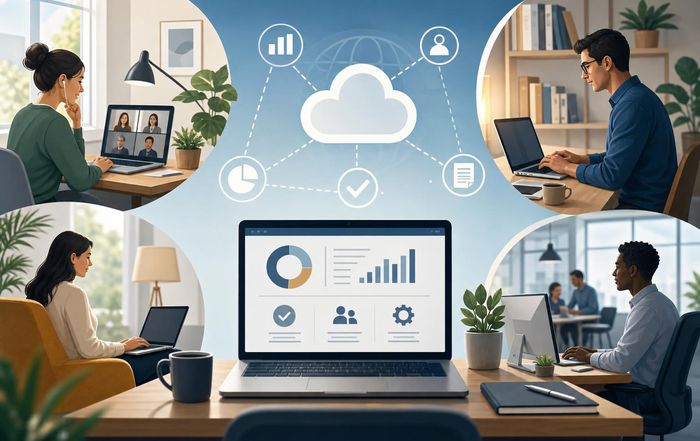
How Business Services Are Adapting to Flexible Work
Summary Introduction: Flexible Work Becomes the Default
Flexible work is no longer a temporary response to crisis but a structural feature of the global economy, reshaping how organizations in the United States and across North America, Europe, Asia, and beyond design their operations, manage talent, and deliver value to customers. For a business-focused online hub like USA update, whose subs and readers follow recent developments across the economy, finance, technology, employment, and regulation, the evolution of business services in response to flexible work is not simply a workplace story; it is a story about competitiveness, risk, innovation, and long-term growth.
Flexible work-encompassing remote, hybrid, and asynchronous models-has moved from the periphery to the center of corporate strategy. Data from organizations such as McKinsey & Company and Gallup indicate that knowledge workers in the United States, Canada, the United Kingdom, Germany, and other advanced economies increasingly expect some degree of autonomy over where and when they work, while employers are rethinking real estate, technology investments, and cross-border hiring. Learn more about how these trends are reshaping the broader U.S. economy.
In this environment, business services-from consulting and IT support to HR outsourcing, finance, legal, marketing, and facilities management-are being fundamentally reconfigured. Providers are redesigning offerings, pricing models, and delivery channels to support distributed workforces, while clients are demanding higher levels of resilience, data security, and measurable value. This article explores how these services are adapting to flexible work in 2026, and what this transformation means for decision-makers following developments on usa-update.com.
The Strategic Shift: From Cost Center to Enabler of Flexibility
For much of the twentieth century, business services were often viewed as operational necessities or cost centers, designed to support office-based employees and centralized corporate structures. In the flexible work era, these services are increasingly recognized as strategic enablers that determine how effectively an organization can attract talent, maintain productivity, comply with regulations, and manage risk across geographies.
Senior executives in organizations such as Microsoft, Google, IBM, Accenture, and leading regional firms in Europe and Asia have reframed their business services relationships as long-term partnerships aimed at building digital-first, location-agnostic operations. Analysts at Harvard Business Review have highlighted how flexible work requires integrated solutions that combine technology, process redesign, and cultural change, rather than isolated tools or one-off consulting projects. In response, business service providers are bundling IT infrastructure, cybersecurity, HR advisory, and workflow automation into cohesive platforms that can scale across the United States, Canada, the United Kingdom, and other priority markets.
For readers of usa-update.com, this shift is evident in how corporate news increasingly emphasizes investments in cloud platforms, collaboration tools, and employee experience technologies as headline strategic decisions. Coverage across business and technology sections is now as much about organizational design and workforce models as it is about quarterly earnings or product launches.
Technology Services: Building the Infrastructure of Anywhere Work
The most visible adaptation in business services has taken place in technology and IT support, where providers have had to transform legacy, office-centric architectures into secure, scalable ecosystems that support employees working from homes, co-working spaces, client sites, and on the move across continents.
Cloud infrastructure providers such as Amazon Web Services (AWS), Microsoft Azure, and Google Cloud have expanded offerings tailored to hybrid and remote operations, including zero-trust security frameworks, virtual desktop environments, and AI-powered monitoring tools that help companies manage distributed endpoints. Learn more about how cloud adoption and digital transformation are influencing global technology trends through resources such as Gartner and IDC, which track enterprise technology spending and strategy across regions from North America and Europe to Asia-Pacific.
At the same time, collaboration platforms like Zoom, Slack, Microsoft Teams, and Cisco Webex have matured from video conferencing tools into integrated digital workplaces, incorporating project management, document collaboration, workflow automation, and analytics. Business service providers in the IT and digital workplace space are now offering managed services that configure, secure, and optimize these platforms for clients in sectors as varied as finance, healthcare, manufacturing, entertainment, and professional services.
For U.S. and international companies covered by usa-update.com, the focus has shifted from merely enabling remote work to ensuring performance, resilience, and user experience. IT service providers are using advanced observability tools, AI-based anomaly detection, and robust service-level agreements to guarantee uptime and responsiveness, recognizing that a glitch in a collaboration platform can now halt operations across multiple time zones. Organizations are also investing in edge computing and content delivery networks to ensure that employees in Europe, South America, Africa, and Asia enjoy comparable performance to colleagues in New York, Chicago, or San Francisco.
Cybersecurity and Compliance: Safeguarding the Distributed Enterprise
As flexible work has expanded, cybersecurity and regulatory compliance have become central concerns for boards and regulators in the United States, Europe, and Asia. The traditional security model built around office firewalls and on-premises servers is no longer adequate when employees routinely access sensitive data from home networks, personal devices, and public Wi-Fi.
Business services in cybersecurity have therefore undergone rapid innovation. Providers are deploying zero-trust architectures, multifactor authentication, endpoint detection and response, and secure access service edge (SASE) solutions, helping organizations enforce consistent security policies regardless of location. Resources such as CISA in the United States and ENISA in the European Union offer guidance on securing remote and hybrid work environments, and service providers are incorporating these frameworks into their offerings to meet rising expectations from regulators and insurers.
Compliance-focused business services are equally critical. With regulations such as the General Data Protection Regulation (GDPR) in Europe, evolving privacy laws in U.S. states like California and Virginia, and sector-specific requirements in financial services, healthcare, and energy, organizations must ensure that cross-border data flows and distributed work arrangements do not expose them to legal or reputational risks. Legal and compliance service providers are offering remote work policy design, cross-jurisdictional data governance assessments, and continuous monitoring solutions, often supported by AI tools that track regulatory changes in markets from the United Kingdom and Germany to Singapore and South Korea.
Readers following regulatory developments on usa-update.com can see how these trends intersect with broader regulation and consumer issues, as regulators scrutinize how companies protect customer data and maintain service continuity in an era of pervasive digital operations.
HR, Talent, and Employment Services: Redefining the Workforce Relationship
Flexible work has transformed the relationship between employers and employees, compelling HR and employment service providers to rethink how they support recruitment, onboarding, performance management, and workforce planning. In 2026, organizations in the United States and around the world are leveraging flexible work not only as a retention tool but as a strategic lever to access talent in new regions, from Canada and Mexico to Brazil, South Africa, India, and Southeast Asia.
HR service providers, including global firms such as ADP, Randstad, ManpowerGroup, and specialized regional players, are expanding offerings in remote hiring, virtual onboarding, and global payroll and compliance. Platforms like LinkedIn, Indeed, and Glassdoor have become central marketplaces for remote and hybrid roles, while AI-powered talent analytics tools help organizations understand where skills are located globally and how to structure flexible roles that appeal to professionals in markets like Germany, France, Spain, the Netherlands, and the Nordics. Learn more about evolving employment patterns and job opportunities through the employment coverage at usa-update.com/jobs and usa-update.com/employment.
Business services are also supporting new models of employment, including fractional roles, project-based engagements, and cross-border contracting. Employer-of-record (EOR) and global mobility providers have become critical partners for companies that wish to hire talent in countries where they lack a legal entity, managing local compliance, payroll, and benefits. Organizations like OECD and World Economic Forum analyze how these shifts are changing labor markets, with implications for wages, skills, and social protections in both advanced and emerging economies.
In parallel, HR advisory and consulting services are helping organizations design hybrid work policies that balance flexibility with fairness and inclusion. Issues such as proximity bias, career progression for remote employees, and the mental health impacts of prolonged remote work are now mainstream boardroom topics. Providers are offering training for managers on leading distributed teams, designing inclusive hybrid meetings, and using data to monitor engagement and well-being without infringing on privacy.
Flexible Work Business Services Explorer
See how service providers are adapting from office-based support functions into strategic partners for distributed, hybrid, and asynchronous teams.
Technology services
Cloud, collaboration platforms, virtual desktops, observability, and managed digital workplace tools now form the backbone of anywhere work.
Choose the pressure point that feels most urgent.
2026 flexible-work service roadmap
Finance, Accounting, and Shared Services: Rewiring the Back Office
Finance and accounting services have also been reshaped by flexible work. Shared services centers that once relied on co-located teams in low-cost hubs are now adopting hybrid and remote models, supported by cloud-based enterprise resource planning (ERP) systems, robotic process automation (RPA), and AI-driven analytics.
Professional services networks such as Deloitte, PwC, EY, and KPMG have accelerated their digital finance transformations, offering clients integrated solutions that automate routine tasks like invoice processing, expense management, and reconciliations, freeing finance professionals to focus on strategic analysis and scenario planning. Resources from CFO.com and The Wall Street Journal illustrate how finance leaders are using these tools to maintain control and visibility in flexible work environments, where traditional paper-based workflows and in-person approvals are no longer practical.
In the United States, many mid-market companies featured in usa-update.com coverage are turning to outsourced finance and accounting services that operate entirely in the cloud, enabling CFOs and controllers to access real-time dashboards from anywhere. This model has gained traction in Canada, the United Kingdom, Australia, and New Zealand as well, particularly among fast-growing technology firms and international businesses that require 24/7 coverage across time zones. Learn more about how financial services are evolving in the flexible work era through finance reporting and analysis.
Flexible work has also influenced how finance functions assess risk and allocate capital. Scenario modeling now incorporates assumptions about office occupancy, travel patterns, and the cost of digital infrastructure, while treasury and risk management services evaluate the implications of distributed operations for cyber risk, business continuity, and insurance coverage. Providers are offering new advisory services to help companies quantify the return on investment from flexible work strategies, examining impacts on productivity, turnover, real estate costs, and access to new markets.
Legal, Regulatory, and Risk Advisory: Navigating a Patchwork of Rules
The expansion of flexible work across borders has created a complex legal and regulatory landscape that business services must help clients navigate. Employment law, tax rules, data protection requirements, and health and safety regulations were largely designed for traditional workplace arrangements, and governments in the United States, Europe, and Asia are still catching up to the realities of remote and hybrid work.
Legal service providers and risk advisory firms are now fielding questions about the tax residency implications of employees working from different states or countries, the classification of remote contractors, and the obligations of employers to provide ergonomic equipment or reimburse home office expenses. Organizations such as Society for Human Resource Management (SHRM) and International Labour Organization (ILO) provide frameworks and research that inform these discussions, while law firms and compliance consultancies translate them into practical policies and contracts for clients operating in markets from the United States and Canada to Singapore, Japan, and Brazil.
In Europe, the interaction between flexible work and GDPR continues to shape data handling practices, especially when employees work from countries different from those where their employers are based. In the United States, state-level privacy laws and workplace regulations are creating a patchwork that multistate employers must manage carefully. Coverage on international and news pages at usa-update.com often highlights how policy debates in Washington, Brussels, London, and other capitals are redefining the boundaries of employer responsibility in a digital-first world.
Risk advisory services are expanding beyond traditional domains such as financial and operational risk to include reputational and ESG-related risks associated with flexible work. Questions about fairness between in-office and remote workers, the environmental impact of commuting versus home energy use, and the resilience of digital infrastructure are now central to corporate sustainability narratives. Learn more about sustainable business practices and global ESG discussions through resources like UN Global Compact and World Bank, which analyze how business models intersect with social and environmental outcomes.
Real Estate, Facilities, and Workplace Experience: Reimagining Space
Flexible work has upended the traditional office real estate model, prompting business service providers in facilities management, workplace design, and corporate real estate to reimagine their role. Rather than assuming that employees will be present five days a week in centralized headquarters, organizations now design portfolios that combine smaller hubs, flexible co-working arrangements, and highly curated flagship spaces used for collaboration, client engagement, and cultural events.
Global real estate services firms such as CBRE, JLL, and Cushman & Wakefield report that while overall office demand has softened in many metropolitan areas, demand for high-quality, amenity-rich, and flexible spaces has increased, particularly in dynamic markets like New York, London, Berlin, Singapore, and Sydney. Facilities management providers are offering new services focused on hybrid occupancy planning, dynamic desk booking, environmental monitoring, and health and safety protocols designed for fluctuating in-office populations.
For the audience of usa-update.com, these shifts are visible in coverage of corporate relocations, office redesigns, and mixed-use developments that integrate workspace, residential, retail, and entertainment. Learn more about how these changes intersect with lifestyle and travel preferences in the lifestyle and travel sections, where stories increasingly highlight how professionals blend work and mobility, from workcations in Florida and California to remote work hubs in Portugal, Thailand, and New Zealand.
Workplace experience has emerged as a specialized business service category in its own right. Providers design hybrid-friendly office experiences, including technology that allows remote participants to feel fully integrated into meetings, hospitality-inspired services that make office visits purposeful and engaging, and data-driven insights into how space is actually used. The goal is to ensure that when employees do come into the office, the experience justifies the commute and strengthens culture, collaboration, and innovation.
Entertainment, Events, and Corporate Communications: The Hybrid Engagement Model
The entertainment and events industries, closely followed by readers of usa-update.com interested in events and entertainment, have undergone an equally profound transformation. Business services in these sectors now routinely design hybrid experiences that blend physical and digital participation, recognizing that flexible work has changed expectations about travel and in-person attendance.
Corporate events-annual meetings, investor days, product launches, training sessions, and industry conferences-are now often structured with parallel in-person and virtual tracks. Event management providers offer integrated platforms for registration, streaming, interactive Q&A, networking, and analytics, enabling organizations to reach global audiences in North America, Europe, Asia, and Africa without requiring all participants to travel. Resources such as Event Manager Blog and MeetingsNet chronicle how event producers, venues, and technology vendors are collaborating to deliver high-production-value hybrid experiences.
Entertainment services have similarly adapted to audiences whose daily routines blend work and leisure in more fluid ways. Streaming platforms, online gaming, and virtual concerts have expanded, while traditional media and live entertainment companies experiment with flexible scheduling, digital add-ons, and targeted content for remote workers. Corporate communications and marketing agencies design campaigns that recognize employees and customers may consume content from home offices, shared workspaces, or while traveling, with messaging tailored to diverse time zones and cultural contexts.
For business service providers in public relations, investor relations, and internal communications, flexible work has heightened the importance of clear, consistent, and inclusive messaging. Leaders must communicate strategy, culture, and expectations to employees who may rarely gather in the same physical space, and communications advisors are helping organizations adopt multi-channel approaches that combine live town halls, on-demand video, collaborative platforms, and targeted newsletters.
Energy, Infrastructure, and Sustainability: Powering the Flexible Enterprise
Flexible work has also influenced energy consumption patterns and sustainability strategies, creating new opportunities and challenges for business services in the energy and infrastructure sectors. While reduced commuting in many cities has lowered transportation emissions, increased home energy use and the expansion of data centers and digital infrastructure have raised new questions about the net environmental impact of flexible work.
Energy service providers and sustainability consultants are working with organizations to measure and manage these impacts, integrating flexible work considerations into broader ESG strategies. Companies are exploring how to optimize office energy use under variable occupancy, support employees in adopting energy-efficient practices at home, and source renewable energy for both corporate facilities and cloud infrastructure. Resources from International Energy Agency (IEA) and U.S. Energy Information Administration (EIA) provide data and analysis on how digitalization and flexible work intersect with global and U.S. energy trends.
For readers of usa-update.com, this dimension of flexible work appears in energy and business coverage, where utilities, technology companies, and real estate developers collaborate on smart buildings, microgrids, and sustainable campuses designed for hybrid occupancy. Business services in sustainability reporting, carbon accounting, and green finance are helping organizations quantify the emissions implications of flexible work, integrate them into climate targets, and communicate progress to investors and regulators.
At the infrastructure level, telecommunications and broadband providers have become critical enablers of flexible work, especially in rural and underserved regions of the United States, Canada, and emerging markets. Policy debates about broadband access, digital inclusion, and infrastructure investment-covered in the news and economy sections of usa-update.com-are now directly tied to economic opportunity and employment, as remote work can only thrive where reliable connectivity exists. Business service providers are engaging with governments, regulators, and communities to expand infrastructure, close digital divides, and unlock new pools of talent.
Consumer Expectations and the Blurring of Work and Life
Flexible work has accelerated the long-standing trend of blurring boundaries between work and personal life, reshaping consumer behavior and expectations in ways that business services must understand and anticipate. Employees working from home or in flexible environments often adjust their schedules to accommodate family responsibilities, personal interests, and wellness activities, leading to more fragmented but also more personalized patterns of consumption.
Consumer-facing business services in sectors such as retail, financial services, travel, and entertainment are responding with offerings tailored to flexible lifestyles. Banks and fintech firms are expanding digital advisory services that can be accessed from any location, while travel companies and hospitality brands are promoting extended-stay packages, work-from-anywhere offerings, and loyalty programs designed for professionals who mix business and leisure travel. Learn more about how these shifts influence consumer and lifestyle trends in the consumer and lifestyle sections of usa-update.com.
For B2B service providers, understanding these patterns is essential for designing employee benefits, wellness programs, and engagement strategies that resonate with a flexible workforce. Providers in healthcare, mental health, fitness, and nutrition now offer virtual consultations, digital programs, and employer-sponsored platforms that employees can access regardless of location. Organizations such as Mayo Clinic and World Health Organization (WHO) provide guidance on maintaining health and well-being in remote and hybrid work settings, and service providers are embedding these insights into corporate wellness offerings.
In parallel, the consumerization of enterprise technology continues, as employees expect work tools to be as intuitive and responsive as the apps and services they use in their personal lives. Business service providers are investing heavily in user experience design, mobile-first interfaces, and personalized features that adapt to individual work styles and preferences.
Global Perspectives: Regional Variations in Flexible Work Adoption
While flexible work has become a global phenomenon, its adoption and implications vary significantly by region, industry, and organizational culture. Business service providers must therefore tailor their strategies to the specific contexts of markets in North America, Europe, Asia-Pacific, and emerging economies.
In the United States and Canada, flexible work is widespread in technology, professional services, finance, and parts of the public sector, while manufacturing, logistics, and healthcare remain more location-dependent. In Western Europe, countries like the United Kingdom, Germany, France, the Netherlands, and the Nordics have embraced hybrid models, supported by strong labor protections and social dialogue, but with ongoing debates about right-to-disconnect laws and employer obligations.
In Asia, adoption varies widely. Markets such as Singapore, Japan, South Korea, and Australia have advanced digital infrastructure and strong corporate interest in flexible work, but cultural expectations and housing constraints sometimes limit full-time remote work. In emerging markets like India, Brazil, South Africa, and parts of Southeast Asia, flexible work is expanding rapidly in technology and services sectors, often seen as a pathway to access global opportunities and higher-value work.
Business service providers with global footprints-such as Accenture, Capgemini, Tata Consultancy Services (TCS), and Infosys-are leveraging their experience across these regions to advise clients featured on usa-update.com on best practices and pitfalls. International organizations like International Monetary Fund (IMF) and World Trade Organization (WTO) analyze how flexible work influences trade in services, cross-border investment, and economic resilience, informing both corporate strategy and public policy.
The Realised Potential in a Flexible Work Future
As flexible work continues to shape the economy, employment, technology, and consumer behavior, USA update occupies a distinctive position as a platform that connects these threads for a business-focused audience. Decision-makers, entrepreneurs, professionals turn to usa-update not only for headlines but for context that links developments in one domain-such as a new regulation, a corporate earnings report, or an infrastructure initiative-to broader shifts in how work is organized and value is created.
By integrating coverage across economy, business, technology, finance, jobs, and international sections, the platform helps readers understand how business services are evolving to support flexible work in the United States and worldwide. Whether it is a feature on a U.S. company shifting to a hybrid model, an analysis of European data protection rules, or a report on Asia-Pacific digital infrastructure investments, usa-update.com provides a lens through which readers can assess risks, opportunities, and best practices.
So, as AI, automation, and new regulatory frameworks further reshape the landscape, the evolution of business services will remain central to the story of flexible work. Organizations that treat these services as strategic partners-rather than transactional vendors-will be better positioned to harness flexibility as a source of resilience, innovation, and competitiveness. For the loyal followers of usa-update.com, understanding this transformation is essential to navigating a business environment where the boundaries of the workplace are fluid, but the demands for expertise, authoritativeness, and trustworthiness are higher than ever.
Reaching A Conclusion, From Experiment to Enduring Operating Model
Flexible work has moved decisively from experiment to enduring operating model, and business services have adapted in ways that are reshaping corporate structures, labor markets, and global value chains. Technology providers have built the digital backbone of anywhere work; cybersecurity and compliance experts have redefined how organizations manage risk; HR and employment services have expanded the talent horizon; finance, legal, and real estate services have rewired back-office and physical footprints; and entertainment, events, energy, and consumer-focused services have aligned offerings with new patterns of time, attention, and mobility.
For business leaders, investors, policymakers, and professionals who rely on usa-update.com for insight, the message is clear: flexible work is not a temporary accommodation but a strategic reality that demands sustained attention and informed choices. The organizations that thrive in this environment will be those that view business services not merely as outsourced functions but as co-creators of new ways of working-ways that are more adaptive, more inclusive, and more attuned to the interconnected economies of the United States, North America, and the wider world.
So as the dialogue between business services and flexible work will continue to evolve, and 100% unique content sites like USA update will remain essential in documenting, analyzing, and interpreting this transformation for a growing business community seeking in-depth clarity, combined with interactive examples, in a rapidly changing world.
