
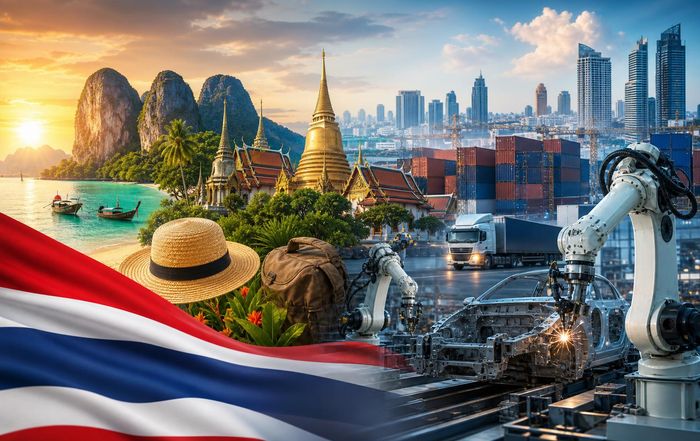
Thailand Tourism and Manufacturing Trends to Watch
Thailand stands at a pivotal moment in its modern economic history, with tourism and manufacturing once again emerging as twin engines of growth after a period of unprecedented global disruption. Many of our email newsletter subscribing members and online visitors are quite well travelled so they will understand that the country's trajectory offers a compelling case study in resilience, diversification, and adaptation, with important implications for investors, business leaders, entrepreneurs, and travelers across the United States and beyond.
From the revival of international arrivals on Bangkok's bustling streets to the quiet transformation of industrial estates in the Eastern Economic Corridor, Thailand is seeking to balance its traditional strengths with a forward-looking agenda that emphasizes technology, sustainability, and regional integration. While challenges remain, particularly in areas such as labor shortages, geopolitical uncertainty, and environmental pressures, the emerging trends in both tourism and manufacturing suggest a nation intent on reshaping its role in global value chains and the international visitor economy.
So join us as we explore these new changes in depth, drawing on publicly available data, cross-checked reporting, and analysis from reputable institutions to provide a comprehensive, top overview of where Thailand is headed and why it matters.
The Post-Pandemic Rebound: Tourism as a Strategic Engine
Thailand's tourism sector, long one of the most important in Asia, experienced one of the sharpest contractions during the pandemic years, followed by a robust if uneven recovery. According to data summarized by the World Bank and UN World Tourism Organization (UNWTO), international visitor numbers dropped dramatically in 2020, but have since been rebounding as borders reopened, vaccination campaigns expanded, and confidence gradually returned. While different sources offer slightly varying figures due to methodology and timing, they broadly agree that arrivals have climbed back into the tens of millions annually, with momentum strengthening as flight capacity and regional travel improve.
The Thai government, through agencies such as the Tourism Authority of Thailand (TAT) and the Ministry of Tourism and Sports, has been actively promoting a shift from volume-driven mass tourism toward higher-value, more sustainable segments. Interested readers can review official policy outlines on the TAT website and through analyses from organizations like the World Bank's country overview for Thailand. This strategic pivot reflects not only environmental and social concerns but also a recognition that dependence on low-margin mass tourism leaves the economy more vulnerable to shocks.
For the USA update audience, particularly those following global economy and sector dynamics, Thailand's experience demonstrates how a tourism-dependent nation can attempt to rebalance its visitor base, target higher-spending markets, and use tourism as a platform for broader service-sector upgrading. American travelers have historically been an important source market, and as long-haul travel normalizes, Thailand's positioning as a value-for-money yet increasingly premium destination may resonate with U.S. consumers seeking both affordability and quality.
Shifts in Visitor Profiles and Market Mix
One of the most notable trends has been the evolution in Thailand's visitor profile. Before the pandemic, China was the dominant source market, with millions of Chinese tourists visiting annually. Restrictions on outbound travel from China, combined with changing consumer preferences and evolving visa policies, temporarily reduced that share, while arrivals from other Asian countries, Europe, and North America played a relatively larger role in the early phases of recovery.
Reports from sources such as Reuters, Nikkei Asia, and Bangkok Post indicate that as travel restrictions eased, Chinese arrivals began to pick up again, but not always at the same pace or scale as in the pre-pandemic era. At the same time, markets like India, Russia, and various European countries have contributed to diversification. Data from UNWTO and the World Travel & Tourism Council (WTTC), while sometimes differing in exact totals, generally confirm that Thailand is regaining its place among the top global destinations by international arrivals and tourism receipts.
For American and European visitors, Thailand's value proposition has subtly evolved. There is a noticeable emphasis on wellness tourism, medical tourism, and longer-stay digital nomad segments, supported by improved connectivity, co-working infrastructure, and lifestyle offerings. Platforms like Lonely Planet's Thailand guide and travel advisories from the U.S. Department of State provide practical guidance for visitors, while business-focused readers can follow travel and hospitality investment trends through outlets such as the Financial Times and The Economist, which have periodically highlighted Thailand's tourism rebound and policy adjustments.
This diversification of source markets and visitor types is strategically important. It reduces overreliance on any single country, spreads demand more evenly across regions and seasons, and encourages development beyond traditional hotspots such as Phuket, Pattaya, and Chiang Mai. For stakeholders tracking international developments through usa-update, Thailand's case illustrates how a tourism-heavy economy can use targeted marketing, visa facilitation, and infrastructure investment to reshape its tourist base.
Experience-Driven, Sustainable, and High-Value Tourism
A key theme running through Thailand's tourism strategy is the shift toward experience-driven, sustainable, and higher-value offerings. This is evident in several policy and market developments that have been reported by Thai government sources, international organizations, and reputable media.
First, there is a growing emphasis on community-based tourism, cultural heritage, and nature-based experiences that distribute income to local communities and promote conservation. The UN Development Programme (UNDP) and various NGOs have documented pilot projects where local villages host small groups of visitors, offering homestays, handicraft workshops, and guided nature excursions. These initiatives aim to reduce over-tourism in saturated areas while creating new livelihoods in rural regions.
Second, Thailand is promoting wellness and medical tourism, leveraging its strong healthcare sector, competitive pricing, and reputation for hospitality. Reports from OECD and health industry analyses indicate that Thailand remains one of the leading destinations globally for elective procedures, wellness retreats, and rehabilitation services, particularly for patients from the Middle East, Europe, and North America. Hospitals in Bangkok and other major cities, many accredited by Joint Commission International (JCI), market packages that combine treatment with recovery stays in resort environments.
Third, sustainable tourism is increasingly central to Thailand's branding. Government plans, as summarized by organizations like UNWTO and WTTC, include measures to reduce plastic waste, regulate marine tourism, and encourage eco-certification for hotels and tour operators. While implementation is uneven and environmental groups sometimes criticize the pace of reform, the direction of policy is broadly aligned with global sustainability trends. Travelers can learn more about sustainable practices through resources such as the Global Sustainable Tourism Council and compare Thailand's efforts with other destinations.
For subscribers and online visitors of USA update who love lifestyle and travel trends, these shifts highlight how Thailand is positioning itself not merely as a budget-friendly getaway but as a sophisticated, experience-rich destination where wellness, culture, and environmental awareness are integral to the visitor journey.
Digital Nomads, Remote Work, and Long-Stay Segments
The global shift toward remote work has created new opportunities for countries that can attract long-stay visitors, and Thailand has moved to tap this trend. Although policies have evolved over time and sometimes generated debate, the general direction has been toward more flexible visa options for skilled professionals, retirees, and remote workers who can bring foreign income into the country.
Initiatives such as long-term resident visas, special economic zones for innovation, and co-working friendly regulations have been reported by outlets like Nikkei Asia, Bloomberg, and Bangkok Post, though exact eligibility rules and implementation details have varied and occasionally changed. Prospective long-stay visitors are advised to consult official sources like the Royal Thai Embassy or Consulate websites for the most current information, as visa categories and requirements can be updated frequently.
This focus on remote workers and long-stay residents intersects with Thailand's broader ambition to upgrade its service economy. Digital nomads and foreign professionals often demand high-quality internet connectivity, modern housing, international schools, and advanced healthcare, which in turn encourage investment in infrastructure and services that also benefit local residents. Cities such as Bangkok, Chiang Mai, and Phuket have seen growth in co-working spaces, serviced apartments, and lifestyle amenities catering to this demographic.
For U.S.-based professionals following employment and job trends via this premium daily updated website, Thailand's remote work strategies offer a glimpse into how emerging markets can attract international talent and spending without necessarily relying on traditional expatriate models. At the same time, they raise questions about housing affordability, cultural integration, and regulatory oversight that policymakers will need to manage carefully.
Manufacturing: From Assembly Hub to Value-Added Player
While tourism often captures the headlines, manufacturing remains a cornerstone of Thailand's economy, contributing significantly to exports, employment, and industrial capability. The country has long been a key node in regional supply chains, particularly in automotive, electronics, food processing, and petrochemicals. Over the past decade, and especially since the pandemic, Thailand has been working to move up the value chain, attract higher-tech investment, and position itself as a competitive alternative or complement to larger manufacturing centers in East and Southeast Asia.
According to analyses by the World Bank, Asian Development Bank (ADB), and OECD, Thailand's industrial base has benefited from its strategic location, relatively developed infrastructure, and participation in regional frameworks such as the Regional Comprehensive Economic Partnership (RCEP). The government's flagship Thailand 4.0 policy, overseen by agencies like the Board of Investment (BOI) and the Eastern Economic Corridor (EEC) Office, aims to foster advanced industries, including next-generation automotive, smart electronics, medical devices, and biotechnology. Readers can explore official investment incentives and sector priorities on the BOI's website and through EEC's official portal.
For our growing professional community engaged in business and investment analysis, Thailand's industrial policy represents an important case in how middle-income economies attempt to escape the so-called "middle-income trap" by encouraging innovation, automation, and skill upgrading. The success of this strategy will influence not only Thailand's domestic prosperity but also the configuration of global supply chains that serve U.S. and European markets.
Automotive and EV Manufacturing: A Strategic Pivot
Thailand has long been known as the "Detroit of Asia" due to its significant automotive production, especially for Japanese and other foreign manufacturers that use the country as a regional hub. Internal combustion engine (ICE) vehicles, pickup trucks, and related components have been major export earners. However, the global shift toward electric vehicles (EVs) is reshaping the industry, and Thailand is actively seeking to remain competitive by becoming a regional EV manufacturing center.
Government policies, as reported by Reuters, Nikkei Asia, and official Thai sources, include tax incentives for EV production, subsidies for EV purchases, and support for battery manufacturing and charging infrastructure. The International Energy Agency (IEA) has noted in its global EV outlooks that Southeast Asia is an emerging battleground for EV investment, with Thailand, Indonesia, and Vietnam all vying for position. Thailand's advantages include its established automotive ecosystem, supplier base, and logistics, while challenges include competition from neighboring countries, the need for skilled labor, and the pace of domestic EV adoption.
Several global automakers and battery producers have announced or expanded investments in Thailand for EV assembly and component manufacturing. While exact investment amounts and production capacities vary by company and are subject to change, multiple reputable news outlets have documented a clear trend toward increased EV-related activity. Interested readers can review broader EV market analysis via the IEA's Global EV Outlook and sector reports from institutions such as McKinsey & Company or BloombergNEF, which frequently highlight Thailand's evolving role.
For U.S. investors and analysts following energy and technology transitions here, Thailand's EV push underscores how global decarbonization trends are reshaping industrial strategies, supply chains, and regional competition. It also raises questions about environmental impacts, raw material sourcing, and the resilience of new manufacturing ecosystems.
Electronics, Semiconductors, and Digital Industries
Beyond automotive, Thailand is seeking to strengthen its position in electronics and digital industries. Historically, the country has hosted significant production of hard disk drives, consumer electronics, and components, often as part of Japanese and multinational supply chains. As global demand shifts toward advanced semiconductors, 5G equipment, and digital devices, Thailand faces both opportunities and challenges.
Reports from the World Bank, ADB, and industry publications indicate that Thailand is aiming to attract investment in higher-value segments such as integrated circuits packaging, sensors, and smart devices, while also promoting domestic innovation and startups in fields like fintech, e-commerce, and software. The Digital Economy and Society Ministry has launched initiatives to expand broadband access, encourage digital skills training, and support tech entrepreneurship. Interested readers can learn more about these policies through the Thai government's digital economy portals and comparative analyses from organizations like the International Telecommunication Union (ITU).
However, Thailand operates in an intensely competitive regional environment, with countries such as Vietnam, Malaysia, and Singapore also vying for high-tech investment. Geopolitical factors, including U.S.-China trade tensions and efforts to diversify semiconductor supply chains, create both openings and risks. Some multinational firms have considered or implemented "China+1" strategies, spreading production across multiple countries to reduce concentration risk. Thailand's ability to capture a share of this reconfiguration will depend on regulatory stability, logistics, energy reliability, and human capital.
For fans monitoring new technology and regulation through us, Thailand's digital and electronics ambitions illustrate the delicate balance between attracting foreign direct investment, nurturing domestic innovation, protecting data privacy, and aligning with evolving international standards.
Labor Market, Skills, and Employment Dynamics
The intersection of tourism and manufacturing trends with Thailand's labor market is critical. Both sectors are labor-intensive in different ways, and both are undergoing transformations that demand new skills and employment models.
In tourism, the shift toward higher-value, experience-driven offerings requires workers with language proficiency, digital literacy, and specialized knowledge in areas such as wellness, culinary arts, and sustainable practices. Many hospitality businesses have reported difficulties in rehiring or retraining staff after the pandemic, as some workers moved into other sectors or returned to rural areas. Organizations like the International Labour Organization (ILO) have highlighted the need for targeted training programs, social protection, and support for small and medium-sized enterprises (SMEs) in the tourism value chain.
In manufacturing, automation, robotics, and digitalization are changing job profiles in factories and supply-chain management. While these technologies can boost productivity and competitiveness, they also require more advanced technical skills and may reduce demand for certain low-skilled roles. The World Economic Forum (WEF) and OECD have published analyses on how emerging economies like Thailand can navigate the future of work by investing in education, vocational training, and lifelong learning. The Thai government has announced various reskilling initiatives, often in partnership with industry and educational institutions, though outcomes and coverage vary.
For U.S. folks interested in employment and workforce issues, Thailand's experience offers parallels to debates in the United States and Europe about how to prepare workers for technological change while maintaining social cohesion. It also provides insight into the labor conditions and capabilities underlying global supply chains that deliver goods and services to American consumers.
Infrastructure, Logistics, and the Eastern Economic Corridor
A significant pillar of Thailand's manufacturing and trade strategy is infrastructure development, particularly in the Eastern Economic Corridor, which spans parts of Chonburi, Rayong, and Chachoengsao provinces. The EEC is designed as a high-tech industrial and logistics hub, with upgraded ports, airports, rail links, and industrial estates intended to attract advanced manufacturing, research and development, and regional headquarters.
Official EEC plans, available on the EEC Office's website, outline projects such as the expansion of U-Tapao International Airport, upgrades to Laem Chabang Port, and high-speed rail connections linking Bangkok, the EEC, and other key areas. These initiatives are often implemented through public-private partnerships, with participation from domestic and international investors. Independent assessments by organizations like the World Bank and ADB generally view the EEC as a significant opportunity to enhance Thailand's connectivity and industrial sophistication, while also noting the importance of transparent governance, environmental safeguards, and community engagement.
For the USA update audience tracking business, logistics, and international trade, the EEC illustrates how infrastructure investment can be used as a strategic lever to reposition a country within regional supply chains. It also highlights the growing importance of multimodal transport, digital logistics, and energy infrastructure in determining where global companies choose to locate production and distribution facilities.
Regulatory Environment, Trade Agreements, and Investment Climate
Thailand's regulatory and trade environment plays a central role in shaping both tourism and manufacturing trends. Membership in frameworks such as the Association of Southeast Asian Nations (ASEAN) and the Regional Comprehensive Economic Partnership (RCEP) provides access to broader regional markets and can influence investment decisions by multinational corporations. Information on these agreements and their implications can be found through sources such as the ASEAN official website and the World Trade Organization (WTO).
Domestically, Thailand has undertaken various reforms aimed at improving the ease of doing business, streamlining customs procedures, and enhancing investor protection. Independent evaluations by organizations like the World Bank and Transparency International provide mixed but generally improving assessments of the business climate, while also pointing to areas where regulatory complexity, bureaucratic delays, or governance concerns may still pose challenges.
In tourism, regulatory issues include licensing, safety standards, environmental regulations, and digital platforms for accommodation and transport. Balancing innovation with consumer protection and community interests is an ongoing process, as seen in debates over ride-hailing services, short-term rentals, and online travel agencies.
For professional individuals who watch regulatory developments and consumer issues, Thailand's evolving legal framework offers insights into how emerging markets manage the interplay between openness to foreign investment, domestic competition, and social and environmental objectives.
Environmental and Energy Considerations
Sustainability and energy policy are increasingly intertwined with both tourism and manufacturing in Thailand. Coastal erosion, coral reef degradation, air pollution, and waste management challenges directly affect the attractiveness of tourist destinations and the quality of life in urban centers. At the same time, manufacturing growth raises questions about energy demand, emissions, and resource use.
Thailand has committed to various climate and energy goals, including expanding renewable energy capacity and improving energy efficiency. Reports from the International Renewable Energy Agency (IRENA) and the International Energy Agency (IEA) indicate that Thailand has made progress in deploying solar and biomass power, while also exploring wind and other clean energy sources. However, fossil fuels, particularly natural gas, still play a significant role in the energy mix, and the pace of transition is subject to economic, technological, and policy constraints.
In tourism, initiatives to reduce single-use plastics, regulate marine tourism, and promote eco-certification are part of a broader effort to align with global sustainability standards. Travelers and businesses can learn more about best practices through organizations such as the Global Sustainable Tourism Council and environmental NGOs operating in Thailand.
For those smart people focused on energy and environmental trends, Thailand's experience underscores how emerging economies are grappling with the dual imperatives of growth and sustainability, often under the scrutiny of international investors, rating agencies, and environmentally conscious consumers.
Geopolitics, Diversification, and Risk Management
Thailand's tourism and manufacturing trajectories cannot be fully understood without considering the broader geopolitical context. The country sits at the crossroads of continental and maritime Southeast Asia, with strong ties to China, Japan, the United States, and other major powers. Shifts in global trade patterns, supply-chain strategies, and security alignments inevitably influence investment flows, tourist arrivals, and policy choices.
The concept of "China+1" in manufacturing, where companies seek additional production bases beyond China to reduce risk, has been widely discussed by analysts at institutions such as McKinsey & Company, Boston Consulting Group (BCG), and OECD. Thailand, along with Vietnam, Indonesia, and others, is often cited as a potential beneficiary of this diversification, though competition is intense and outcomes vary by sector. At the same time, Thailand must navigate its own relationships with China, Japan, the United States, and regional partners, seeking to maintain strategic autonomy while remaining attractive to investors from all sides.
In tourism, geopolitical tensions, health concerns, and economic cycles in source markets can significantly affect arrivals. For example, fluctuations in Chinese outbound tourism, shifts in European consumer confidence, or changes in U.S. travel patterns can have immediate impacts on Thailand's visitor economy. Diversification of markets and products is therefore not just a commercial strategy but also a risk management tool.
Jet setting in individuals who like global news and international relations will recognize that Thailand's experience illustrates how mid-sized economies must constantly adapt to shifting external conditions while pursuing their own development goals.
Opportunities for U.S. and International Stakeholders
For American businesses, investors, and travelers, Thailand's evolving tourism and manufacturing landscapes present multiple avenues for engagement. In tourism, opportunities exist in hospitality management, wellness and medical partnerships, digital platforms, and sustainable travel solutions. U.S. companies with expertise in hotel branding, healthcare services, or travel technology can find receptive partners and growing markets, particularly as Thailand seeks to upgrade its service offerings.
In manufacturing and technology, collaboration opportunities include automotive and EV supply chains, electronics, smart manufacturing, and digital services. U.S. firms involved in industrial automation, clean energy, software, and logistics technology can contribute to Thailand's Thailand 4.0 agenda while gaining access to regional markets via Thailand's strategic location and trade agreements. Readers interested in exploring these themes further can consult resources from the U.S. International Trade Administration (ITA), which provides country-specific guidance, and from industry associations that track sector-specific developments.
For professionals and entrepreneurs, Thailand's efforts to attract skilled foreign workers, digital nomads, and long-stay residents create possibilities for cross-border careers and ventures. However, as with any international move, careful attention to visa regulations, tax implications, and cultural adaptation is essential. The U.S. Department of State's country information page for Thailand offers practical advice on safety, legal considerations, and consular services.
Through its super reporting of economy, business, jobs, and lifestyle, we can help U.S. readers contextualize these opportunities within broader global trends, providing a bridge between Thailand's evolving landscape and American decision-makers.
Travelling Around = Resilience, Innovation, and Inclusive Growth
As the world moves further beyond the immediate disruptions of the early 2020s, Thailand's twin pillars of tourism and manufacturing are entering a new phase characterized by resilience, innovation, and an ongoing search for more inclusive and sustainable growth. The country's ability to balance mass-market appeal with higher-value tourism, traditional manufacturing strengths with advanced industries, and economic ambition with environmental and social responsibility will shape its trajectory in the years ahead.
In tourism, continued investment in infrastructure, digitalization, and sustainability, combined with thoughtful management of visitor flows and community impacts, will be essential to maintaining Thailand's allure in an increasingly competitive global market. In manufacturing, success will depend on deepening technological capabilities, upgrading skills, and integrating more fully into high-value segments of regional and global supply chains.
For the well travelled readership of USA update, Thailand offers not only a compelling destination for travel but also a dynamic case study in economic transformation. By following new changes through top international sources, official Thai channels, and specialized analysis, and by leveraging daily resources across the site from economy and business to technology and international affairs, stakeholders can gain a nuanced understanding of how this Southeast Asian nation is navigating the complex interplay of tourism, manufacturing, and global change.
In many respects, Thailand's story is one of adaptation and aspiration: a country using its rich cultural heritage and industrial base as foundations for a more diversified, innovative, and sustainable future. That journey will continue to offer lessons and opportunities for the United States and the wider world.
