
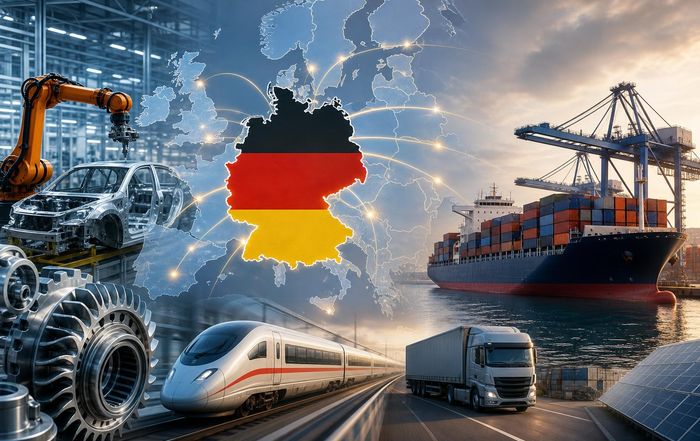
How Germany Shapes European Manufacturing and Trade
Germany occupies a central position in European manufacturing and trade, not only because of its geographic location at the heart of the continent but also due to the depth of its industrial capabilities, its role in the European Union's economic architecture, and its influence over standards, regulation, and innovation. For readers of USA update (usa-update.com), understanding how Germany's industrial power shapes European and global markets provides valuable context for developments in the United States economy, as well as for decisions in business, investment, employment, and technology.
Germany as the Industrial Core of Europe
Germany is widely regarded as the industrial core of Europe, with a manufacturing sector that is large, diversified, and deeply integrated into cross-border supply chains. According to data from Eurostat and the World Bank, manufacturing accounts for a significantly larger share of German GDP than in most other advanced economies, including the United States, France, or the United Kingdom. This industrial weight gives Germany an outsized influence on European economic performance, employment, and trade flows.
The German economy is particularly distinguished by its high-value, export-oriented manufacturing in sectors such as automotive, machinery, chemicals, electrical equipment, and medical technology. Brands like BMW, Mercedes-Benz Group, Volkswagen, Siemens, Bosch, BASF, and ThyssenKrupp are globally recognized, but much of the country's manufacturing strength resides in its network of medium-sized, often family-owned firms known as the Mittelstand. These companies, many of them "hidden champions," specialize in highly engineered components, industrial machinery, and niche technologies that feed into global supply chains.
For observers tracking the broader European economy through platforms such as USA update's economy section, Germany's industrial health serves as a bellwether for regional demand, cross-border investment, and currency dynamics within the euro area. When German manufacturing expands, suppliers from Central and Eastern Europe, as well as logistics hubs from the Netherlands to Italy, typically benefit; when it contracts, the effects can be felt across the continent.
The German Export Model and Its European Footprint
Germany's economic model has long been built around export competitiveness. The country consistently ranks among the world's leading merchandise exporters, often trading positions with China and the United States according to World Trade Organization statistics. Its export surplus with many partners, particularly within the European Union and with the United States, has been a recurring topic in international economic debates.
A key feature of this export model is Germany's use of the wider European Single Market as both a production base and a distribution platform. Under the rules of the European Single Market, goods and services can move freely between member states without customs barriers. German firms have leveraged this framework to organize highly integrated supply chains, sourcing intermediate goods from neighboring countries and assembling final products that are then sold across Europe and beyond.
This integration is visible in trade data. Central and Eastern European countries such as the Czech Republic, Poland, Hungary, Slovakia, and Romania have become major production partners for German industry, hosting plants that supply components for German automotive, electronics, and machinery manufacturers. Ports in the Netherlands and Belgium, particularly Port of Rotterdam and Port of Antwerp-Bruges, serve as key gateways for German exports and imports, linking European production networks to global shipping routes. Detailed trade patterns can be explored through Eurostat's trade statistics, which show Germany as a central node in intra-EU and extra-EU flows.
For readers of USA update's business coverage at usa-update.com/business.html, this export-centric model is relevant because German demand for specialized inputs and advanced equipment often involves American suppliers and investors, while German exports compete directly with U.S. firms in third markets. The interplay between German and U.S. industrial strategies, from electric vehicles to advanced machinery, increasingly shapes transatlantic trade discussions.
Industrial Clusters, Supply Chains, and Regional Integration
Germany's manufacturing influence in Europe is amplified by its role in structuring regional supply chains and industrial clusters. The country's industrial regions-such as Baden-Württemberg, Bavaria, North Rhine-Westphalia, and Lower Saxony-are tightly connected to neighboring areas in France, the Benelux countries, Austria, Switzerland, the Czech Republic, and Poland. These cross-border industrial ecosystems are supported by dense networks of suppliers, research institutes, logistics providers, and financial services.
Automotive manufacturing offers a clear example. German carmakers including Volkswagen, BMW, and Mercedes-Benz Group maintain major production sites not only in Germany but also in countries like Slovakia, Hungary, and Spain, where they assemble vehicles or key components. Engines, transmissions, electronic systems, and body parts may cross multiple borders before final assembly. The European Automobile Manufacturers' Association (ACEA) provides detailed data on production and employment patterns, illustrating how German brands anchor a pan-European automotive ecosystem.
Similar dynamics are visible in mechanical engineering and industrial equipment, where German companies such as Siemens, Trumpf, and KUKA collaborate with suppliers and customers across Europe to deliver customized machinery and automation solutions. The result is a deeply interconnected industrial base in which Germany often serves as the technological and organizational hub, coordinating design, engineering, and quality standards that ripple through the supply chain.
For international investors following developments through USA update's international section, understanding these clusters is critical. Investment decisions by major German manufacturers can quickly influence employment patterns in neighboring countries, alter trade balances, and reshape infrastructure priorities, from rail corridors to digital logistics platforms.
Germany's Role in Shaping European Trade Policy
Germany's economic weight gives it substantial influence over European Union trade policy, which in turn shapes the conditions under which European and U.S. firms compete globally. Trade agreements are formally negotiated by the European Commission's Directorate-General for Trade on behalf of all member states, but large economies like Germany and France play a central role in setting priorities and building consensus.
Germany has generally supported an open, rules-based multilateral trading system anchored in the World Trade Organization, while also advocating for bilateral and regional trade agreements that benefit European exporters. Agreements with partners such as Canada (CETA), Japan (EU-Japan Economic Partnership Agreement), and South Korea have been particularly important for German industry, facilitating reduced tariffs, regulatory cooperation, and improved intellectual property protections.
However, the country's export-oriented model has also attracted criticism. Some European partners and international organizations, including the International Monetary Fund, have periodically expressed concern about Germany's large current account surplus and its implications for global imbalances. Debates continue over whether Germany should stimulate more domestic demand and investment, thereby importing more from its neighbors and trading partners, or whether its surplus is primarily a reflection of competitiveness and demographic trends.
For readers interested in regulatory and trade developments from a U.S. perspective, USA update's regulation coverage offers context on how European trade positions intersect with American policy, particularly in areas like digital trade, environmental standards, and export controls. Germany's stance often shapes the broader European negotiation posture, influencing outcomes that affect global companies across sectors.
The Automotive Transformation: From Combustion Engines to Electric Mobility
The automotive sector is perhaps the most visible arena in which Germany's industrial leadership intersects with European trade and regulatory change. German carmakers have long dominated the European market for internal combustion engine vehicles, exporting large volumes to other regions, including North America and Asia. However, the global shift toward electric vehicles (EVs), driven by climate policy, technological advances, and changing consumer preferences, is reshaping the competitive landscape.
Following the diesel emissions scandal that affected several manufacturers, German policymakers and industry leaders committed to a more aggressive transition toward electrification. Companies like Volkswagen, BMW, and Mercedes-Benz Group have announced multibillion-euro investment plans in battery technology, software, and next-generation production facilities. Publicly available strategy documents and investor reports, accessible through corporate websites and analyses by organizations like the International Energy Agency, confirm this large-scale shift.
The transformation has both domestic and European dimensions. Germany is working with European partners to develop a competitive battery supply chain, with initiatives such as the European Battery Alliance, coordinated by the European Commission, aiming to reduce reliance on imported cells and materials from Asia. New battery plants and EV component factories are being built in Germany and neighboring countries, creating new industrial clusters while raising questions about the future of traditional engine and transmission plants.
From a trade perspective, the shift to EVs alters the pattern of imports and exports. Batteries and critical raw materials, including lithium, cobalt, and nickel, are increasingly important, drawing Germany and the wider EU into complex supply relationships with countries in South America, Africa, and Asia. At the same time, competition from Chinese EV manufacturers and U.S. companies like Tesla is intensifying, leading to policy debates in Europe about fair competition, subsidies, and potential trade defense measures. Readers seeking broader energy and mobility context can explore USA update's energy coverage, which links developments in Europe to parallel debates in the United States about the future of transportation and energy security.
Machinery, Industry 4.0, and Technological Leadership
Beyond automotive, Germany's influence in European manufacturing is closely linked to its strength in machinery, automation, and industrial software. The concept of "Industry 4.0," which refers to the integration of digital technologies such as sensors, cloud computing, artificial intelligence, and advanced robotics into industrial production, gained prominence in Germany before spreading across Europe and globally. The Platform Industrie 4.0 initiative, backed by the German government and industry associations, has been a central forum for defining standards, use cases, and best practices.
German engineering companies, including Siemens, Bosch, SAP, and Festo, play a leading role in providing the hardware and software that enable smart factories, predictive maintenance, and digital twins. These technologies increase productivity, improve quality, and support more flexible, customized manufacturing. They also shape European and global standards, as German firms collaborate with international bodies such as the International Organization for Standardization (ISO) and the International Electrotechnical Commission (IEC) to define interoperability and safety requirements.
For technology-oriented readers, USA update's technology section provides a useful lens through which to compare German and U.S. approaches to industrial digitalization. While American firms often dominate in cloud infrastructure and consumer-facing platforms, German and other European companies have carved out strong positions in industrial IoT, automation, and specialized software, creating a transatlantic ecosystem that is both cooperative and competitive.
Regulatory Influence: Standards, Safety, and Sustainability
Germany's impact on European manufacturing and trade also flows through its influence on regulation and standards. As the largest economy in the European Union, Germany plays a key role in shaping EU directives and regulations that affect everything from product safety and environmental performance to data protection and corporate governance. These rules often become de facto global standards, particularly when they apply to large markets and complex value chains.
One prominent example is the European Union's environmental and climate legislation, including the European Green Deal and the "Fit for 55" package of measures aimed at reducing greenhouse gas emissions. Germany has supported ambitious climate targets while also negotiating transitional arrangements to protect industrial competitiveness. The resulting regulations-such as stricter vehicle emissions standards, energy efficiency requirements, and carbon pricing mechanisms-have a direct impact on manufacturing practices and trade patterns.
Another important area is product safety and consumer protection. German authorities and industry associations often advocate for rigorous technical standards, reflecting a culture of engineering precision and risk management. These standards influence EU-wide rules that companies from around the world must meet if they wish to access the European market. Organizations like the European Committee for Standardization (CEN) and the European Chemicals Agency (ECHA) work closely with national bodies, including German institutions, to define and enforce these requirements.
Readers interested in how such regulatory frameworks interact with business and consumer interests can find additional context in USA update's consumer section and regulation coverage, where developments in European standards are often compared with U.S. approaches. The extraterritorial impact of EU regulations, sometimes described as the "Brussels effect," is frequently reinforced by Germany's advocacy for high technical and environmental benchmarks.
Labor Markets, Skills, and the German Employment Model
Germany's manufacturing success is closely tied to its labor market institutions and vocational training system. The country's dual education model, which combines classroom learning with on-the-job apprenticeships, is widely regarded as a key factor in maintaining a highly skilled industrial workforce. Organizations such as the German Federal Institute for Vocational Education and Training (BIBB) and employer associations work with trade unions to design curricula that align with industry needs, ensuring a steady supply of technicians, engineers, and skilled workers.
This system not only supports productivity but also contributes to relatively low youth unemployment compared with many other European countries, according to data from Eurostat. It has been studied and, in some cases, partially emulated by other nations seeking to strengthen their manufacturing bases. Germany's approach to co-determination, where workers have representation on company supervisory boards, also shapes corporate decision-making and industrial relations, emphasizing long-term stability and investment in skills.
For readers focused on jobs and employment trends, USA update's employment section and jobs coverage provide a platform to compare the German model with U.S. labor market structures. Discussions about apprenticeships, reskilling, and the future of work increasingly draw on German and European experiences, especially as automation and digitalization change the nature of industrial employment.
Resilience, Supply Chain Shocks, and Strategic Autonomy
In recent years, global events have tested the resilience of Germany's manufacturing and trade system. Disruptions from the COVID-19 pandemic, semiconductor shortages, geopolitical tensions, and energy price volatility have highlighted the vulnerabilities of complex, just-in-time supply chains. German manufacturers, like their peers worldwide, faced challenges in securing critical components and materials, leading to production delays and temporary shutdowns in sectors such as automotive and electronics.
These experiences have intensified debates in Germany and across Europe about "strategic autonomy" and the need to diversify supply sources, build domestic capacity in key technologies, and reduce over-reliance on single suppliers or regions, particularly in areas like semiconductors, pharmaceuticals, and critical raw materials. Policy initiatives at the EU level, such as the European Chips Act, seek to strengthen semiconductor manufacturing and research in Europe, with Germany hosting several major projects and research centers.
Energy security has become another central concern, especially following shifts in gas supply patterns and broader geopolitical developments. Germany's industrial competitiveness has historically benefited from reliable access to energy, and the transition toward renewable sources, hydrogen, and improved efficiency is now both an environmental and strategic priority. For a broader view of how these shifts intersect with global markets, readers can consult USA update's energy analysis, which places European developments alongside U.S. policy and investment trends.
Transatlantic Links: Germany, Europe, and the United States
The economic relationship between Germany, the wider European Union, and the United States is one of the most significant in the world, encompassing trade, investment, technology collaboration, and shared regulatory challenges. German companies are major investors and employers in the United States, particularly in manufacturing sectors such as automotive, chemicals, and machinery. At the same time, U.S. firms have a strong presence in Germany, contributing to its innovation ecosystem and export capacity.
According to data from the U.S. Bureau of Economic Analysis and the German Federal Statistical Office (Destatis), the transatlantic investment relationship often exceeds bilateral trade flows in value, underscoring the depth of industrial integration. Joint ventures, research partnerships, and supplier relationships connect German and American firms in fields ranging from aerospace to pharmaceuticals and renewable energy.
Trade policy disputes have occasionally arisen, particularly around issues such as steel and aluminum tariffs, digital taxation, and automotive trade. However, there has also been renewed interest in transatlantic cooperation on climate policy, technology standards, and supply chain resilience. Initiatives like the EU-U.S. Trade and Technology Council aim to align approaches on topics such as artificial intelligence, export controls, and secure supply chains.
For readers of USA update, which focuses on economic and business developments affecting the United States and its partners, Germany's role in these transatlantic dynamics is highly relevant. Developments in German industrial policy, energy transition strategies, and technology regulation can influence U.S. companies' market access, investment decisions, and competitive positioning.
Innovation, Research, and the Future of European Manufacturing
Germany's ability to shape European manufacturing and trade in the coming decade will depend heavily on its performance in research, innovation, and the commercialization of new technologies. The country invests substantially in research and development, with contributions from public institutions such as the Fraunhofer Society, the Max Planck Society, and leading universities, as well as private-sector R&D by large corporations and Mittelstand firms.
Key areas of focus include advanced materials, industrial AI, robotics, quantum technologies, green hydrogen, and sustainable process engineering. European initiatives such as Horizon Europe provide additional funding and coordination, enabling cross-border research collaborations that often involve German partners. The outcomes of these projects are expected to shape the next generation of manufacturing technologies, supply chain models, and trade patterns.
From the perspective of USA update's technology and business readers, the evolution of German and European innovation ecosystems will influence global competition in strategic sectors. Companies and policymakers in the United States closely monitor developments in areas like industrial AI, battery technology, and green hydrogen, where German research institutions and firms are active. Collaborative ventures, technology licensing, and joint standard-setting efforts will likely continue to tie together innovation agendas on both sides of the Atlantic.
Opportunities and Challenges Ahead
As the world navigates structural shifts in technology, climate policy, demographics, and geopolitics, Germany's role in European manufacturing and trade faces both opportunities and challenges. On the opportunity side, the transition to a low-carbon economy, the digitalization of industry, and the reconfiguration of global supply chains create demand for exactly the kinds of high-quality engineering, automation, and systems integration in which German firms excel. Germany's central position in the European Single Market, combined with its established industrial clusters and research institutions, provides a strong platform for leadership.
At the same time, demographic trends, including an aging population and skilled labor shortages, pose significant challenges for sustaining industrial capacity. Competition from emerging manufacturing powers, shifts in global demand, and the need to balance open trade with strategic security considerations add complexity to policy decisions. The success of Germany's energy transition will be critical in maintaining affordable, reliable power for industry, while also meeting climate commitments and supporting EU-wide goals.
Readers of USA update, particularly those following economic, financial, and business trends, will find that developments in German manufacturing and trade often foreshadow broader shifts in European and global markets. Whether in the form of new regulatory frameworks, technological breakthroughs, or changes in investment flows, Germany's choices resonate far beyond its borders.
Why Germany's Role Matters for USA Update Readers
For an audience focused on the United States and its global economic environment, Germany's shaping of European manufacturing and trade has several practical implications. First, it influences the competitive landscape for U.S. exporters and investors in sectors such as automotive, machinery, chemicals, and high-tech equipment. Understanding Germany's industrial strategies, regulatory preferences, and innovation priorities helps American firms anticipate market conditions and identify partnership opportunities.
Second, Germany's central role in European policy-making means that its positions on trade agreements, digital regulation, climate policy, and industrial standards often set the tone for the European Union as a whole. These policies can affect U.S. companies' operations in Europe, from data handling requirements under frameworks like the EU's data protection rules to product standards in sectors like medical devices and industrial equipment.
Third, Germany's experience with vocational training, industrial clusters, and the integration of small and medium-sized enterprises into global supply chains offers valuable lessons for policymakers and business leaders in the United States. Debates about how to revitalize manufacturing, support good jobs, and foster technological innovation increasingly draw on international comparisons, and Germany's model is frequently part of that conversation.
Finally, the broader context of transatlantic cooperation and competition, which USA update covers through its news and events sections, is deeply intertwined with Germany's trajectory. Whether in joint efforts to strengthen supply chain resilience, align climate policies, or manage relations with other major powers, Germany's industrial and trade policies will remain a key factor shaping the economic environment in which American businesses and workers operate.
Conclusion: A Pivotal Actor in a Changing Global Economy
Germany's role in European manufacturing and trade is the product of decades of investment in engineering, vocational training, industrial clusters, and export-oriented business strategies. Its central position in the European Single Market, its influence over EU regulation and trade policy, and its leadership in sectors such as automotive, machinery, and industrial technology make it a pivotal actor in the global economy.
As the world confronts the challenges and opportunities of digital transformation, climate change, and shifting geopolitical alignments, Germany's response will help determine the direction of European industry and its interaction with partners like the United States. For readers of USA update, staying informed about German developments is not a matter of distant curiosity but a practical necessity for understanding trends in trade, investment, technology, employment, and regulation that increasingly cross borders and shape shared futures.
By following the evolving story of how Germany shapes European manufacturing and trade, observers can gain deeper insight into the forces that are redefining prosperity, competitiveness, and cooperation in an interconnected world.
