
New Orleans Music Business in 2026: Heritage, Innovation, and the Economics of Sound
New Orleans in 2026 remains one of the most compelling case studies in the global music economy, a city where cultural heritage, entrepreneurial energy, and digital disruption intersect in ways that resonate far beyond the Gulf Coast. For readers of usa-update.com, the New Orleans music business is not simply a regional story about nightlife and festivals; it is a living laboratory in which questions of economic growth, employment, technology, regulation, and international competitiveness are being worked out in real time. The city's evolution from the birthplace of jazz to a diversified, tech-aware music hub mirrors wider shifts in the U.S. and global entertainment markets, making New Orleans a critical reference point for business leaders, policymakers, investors, and professionals tracking developments in the broader American and international economy.
A Century of Sound: Historical Foundations and Enduring Influence
The modern music economy of New Orleans in 2026 cannot be understood without acknowledging the deep historical roots that continue to shape its business models, branding, and global appeal. In the early twentieth century, Louis Armstrong, Jelly Roll Morton, and their contemporaries transformed the city into a crucible of jazz innovation, synthesizing African American musical traditions, Caribbean rhythms, brass band culture, and European instrumentation into a sound that would eventually influence every major genre of popular music. That formative period did more than produce iconic recordings; it created a durable narrative of authenticity and creativity that remains a powerful commercial asset today.
Over the decades, New Orleans expanded its sonic palette to include rhythm and blues, funk, zydeco, gospel, rock, and later hip-hop and bounce, with artists such as Professor Longhair, The Meters, Dr. John, and contemporary figures like Lil Wayne and Big Freedia pushing the city's sound into new markets. This multi-genre heritage has become institutionalized through organizations such as the New Orleans Jazz & Heritage Foundation, which funds education, festivals, and community programming while also functioning as a sophisticated cultural enterprise. Institutions like this provide a structured framework that turns intangible cultural capital into tangible economic value, a dynamic that is increasingly studied in creative-economy research by organizations such as UNESCO and the National Endowment for the Arts.
By 2026, this legacy is no longer just a matter of historical pride; it underpins tourism strategy, talent attraction, international branding, and investment decisions, positioning New Orleans as a unique asset within the broader U.S. cultural and economic landscape. Readers interested in how this fits into the national picture can find additional context on usa-update.com/economy.html and usa-update.com/business.html.
The Contemporary Music Business Ecosystem
The New Orleans music business in 2026 is a complex ecosystem that integrates traditional live performance with recording, publishing, streaming, tourism, hospitality, and technology. While the image of brass bands on Frenchmen Street and jazz quartets in the French Quarter remains accurate, it is only one component of a diversified industry that includes independent record labels, rights management firms, sync-licensing agencies, music-tech startups, event production companies, and content creators serving both local and global audiences.
At the core of this ecosystem are small and mid-sized enterprises that operate venues, manage artists, produce events, and develop digital content. These businesses often blend commercial goals with community-oriented missions, reinvesting profits into neighborhood revitalization, music education, and cultural preservation. That dual focus has become a competitive differentiator, especially as conscious consumers and corporate sponsors increasingly value authenticity and social impact. Research from organizations such as the Brookings Institution and the Kauffman Foundation has highlighted how creative clusters like New Orleans can drive inclusive growth when cultural entrepreneurship is supported by targeted policy and investment.
The ecosystem is also deeply interdependent with tourism, hospitality, and entertainment. Music is a key driver of hotel occupancy, restaurant traffic, and conference bookings, particularly during major events. For readers tracking sector-specific developments in these adjacent industries, coverage on usa-update.com/travel.html and usa-update.com/entertainment.html provides additional insight into how music-related demand shapes broader regional performance.
Festivals and Flagship Events as Economic Engines
Festivals remain the most visible and economically significant pillars of the New Orleans music business, functioning as both revenue generators and global marketing platforms. The New Orleans Jazz & Heritage Festival and the Essence Festival of Culture have matured into sophisticated, multi-stakeholder enterprises that combine live performance, media rights, sponsorship, merchandising, and hospitality services into integrated business models.
The Jazz & Heritage Festival, commonly known as Jazz Fest, has evolved far beyond its jazz origins to include rock, pop, world music, and cross-genre collaborations, while still anchoring its brand in the city's cultural heritage. It draws hundreds of thousands of visitors annually, generates substantial tax revenue, and creates seasonal employment opportunities across staging, logistics, security, food service, and retail. Economic impact analyses by organizations such as the U.S. Travel Association illustrate how events of this scale create multiplier effects across local economies, and New Orleans is a prime example of this dynamic in action.
The Essence Festival of Culture, produced in partnership with Essence Communications, has solidified its position as a premier global event celebrating Black music, entrepreneurship, and culture. It attracts attendees from across the United States, Europe, the Caribbean, and Africa, and has become a critical platform for brands seeking to engage diverse consumer segments. The festival's business model now includes multi-platform content distribution, thought-leadership programming, and year-round digital engagement, aligning with broader trends in experiential marketing and audience analytics. For readers interested in event-driven business strategies across the U.S., ongoing analysis is available on usa-update.com/events.html.
Beyond these headline events, Mardi Gras parades, neighborhood festivals, second lines, and smaller thematic gatherings collectively form a dense calendar that sustains year-round demand for performers, technicians, and service providers. This distributed event landscape contributes to resilience by diversifying revenue streams and reducing dependence on any single festival or season.
Tourism, Hospitality, and the Local Economy
Music is not a peripheral attraction in New Orleans; it is central to the city's economic identity and tourism proposition. Visitor surveys consistently indicate that live music, nightlife, and festivals rank among the primary reasons travelers select New Orleans over competing destinations in North America and Europe. This preference translates into a robust hospitality sector where hotels, short-term rentals, restaurants, bars, and tour operators design offerings around musical experiences.
The Louisiana Office of Tourism and local organizations like New Orleans & Company have strategically positioned music at the core of their branding campaigns, emphasizing the city's unique blend of sound, cuisine, and architecture. By 2026, digital marketing and social media storytelling have amplified this message globally, reaching potential visitors in Canada, the United Kingdom, Germany, Brazil, Japan, and beyond. The interplay between cultural branding and economic performance is increasingly evident in tourism data published by resources such as the U.S. Department of Commerce's National Travel and Tourism Office.
This tourism-music nexus has direct implications for employment and local business formation. Jobs in hospitality, retail, transportation, and event services are closely tied to the health of the music sector, reinforcing the importance of coordinated strategy across industries. Readers following labor market trends and sectoral employment patterns can explore related coverage at usa-update.com/jobs.html and usa-update.com/employment.html.
Digital Transformation, Streaming, and Emerging Revenue Models
The most significant structural shift in the global music business over the past decade has been the rise of streaming and the broader digitization of content distribution. New Orleans artists and businesses have had to adapt to an environment in which physical sales and traditional radio play are no longer primary revenue sources. Platforms such as Spotify, Apple Music, YouTube Music, and Amazon Music now shape discovery, consumption, and monetization, while social networks like Instagram, TikTok, and X (formerly Twitter) influence brand building and fan engagement.
By 2026, many New Orleans artists have embraced a hybrid strategy that combines live performance income with streaming royalties, sync licensing, direct-to-fan sales, and patronage models. Tools like Bandcamp, Patreon, and subscription-based fan clubs enable more granular audience segmentation and recurring revenue, while data analytics help artists and managers make informed decisions about touring, marketing, and release schedules. Industry organizations such as the Recording Industry Association of America and the IFPI provide macro-level insights into these trends, and their findings are reflected in local strategies across the New Orleans ecosystem.
The emergence of blockchain-based royalties, music NFTs, and decentralized platforms has also sparked experimentation, though the market volatility of digital assets has led many businesses to adopt a cautious, portfolio-based approach rather than relying solely on speculative technologies. For broader perspectives on how these innovations intersect with the U.S. technology sector, readers can refer to usa-update.com/technology.html.
Education, Talent Pipelines, and Professionalization
Sustaining a vibrant music economy requires more than iconic venues and festivals; it depends on continuous talent development, professional training, and knowledge transfer. New Orleans benefits from a robust educational infrastructure that spans universities, conservatories, high schools, and community-based programs.
Institutions such as Tulane University, Loyola University New Orleans, and the University of New Orleans offer degree programs in music performance, music industry studies, recording arts, and arts management. These programs combine artistic training with coursework in contracts, intellectual property, marketing, and entrepreneurship, equipping graduates to operate effectively in a complex, rights-driven marketplace. National resources like the College Music Society and the National Association of Schools of Music highlight New Orleans as a notable hub for integrated music-business education.
At the community level, organizations including Tipitina's Foundation, The Roots of Music, and the New Orleans Jazz & Heritage Foundation's education initiatives provide access to instruments, mentorship, and performance opportunities for children and teenagers, particularly in under-resourced neighborhoods. These programs not only nurture artistic talent but also promote social cohesion, academic achievement, and workforce readiness, reinforcing music's role as a driver of inclusive development.
🎺 New Orleans Music Economy 2026
Interactive Dashboard: Heritage, Innovation & Economics
Birth of Jazz
Louis Armstrong and contemporaries create jazz, synthesizing African American traditions with brass band culture
Funk & R&B Era
The Meters, Dr. John, and Professor Longhair expand the sonic palette
Hip-Hop & Bounce
Lil Wayne and Big Freedia push New Orleans sound into new markets globally
Digital Transformation
Streaming platforms reshape distribution; artists adopt hybrid revenue models
Diversified Ecosystem
Integration of live, digital, tourism, and tech-aware business models
Employment Structures and the Realities of the Gig Economy
The New Orleans music workforce is emblematic of broader shifts in labor markets across the United States, where project-based and freelance work are increasingly common. Performers, sound engineers, lighting technicians, tour managers, and event staff often operate as independent contractors, piecing together income from club dates, festival appearances, teaching, studio sessions, and digital content creation.
This gig-based structure offers flexibility and creative autonomy but also exposes workers to income volatility, limited benefits, and financial insecurity during downturns or disruptions. The COVID-19 pandemic underscored these vulnerabilities, prompting renewed discussions about safety nets, portable benefits, and collective bargaining. Industry organizations such as the American Federation of Musicians and advocacy groups like the Future of Music Coalition continue to push for policies that balance innovation with worker protections, a topic that intersects directly with regulatory coverage on usa-update.com/regulation.html.
Digital platforms have partially mitigated volatility by expanding market access. Services similar to GigSalad and Sonicbids connect musicians with event planners and private clients, while livestreaming and online teaching have opened new revenue channels. Yet, the fundamental challenge of creating predictable, sustainable careers in a project-based environment remains central to strategic planning for both artists and policymakers.
Key Venues and Institutions as Strategic Anchors
Certain venues and institutions in New Orleans function as strategic anchors within the music economy, combining cultural significance with sophisticated business operations.
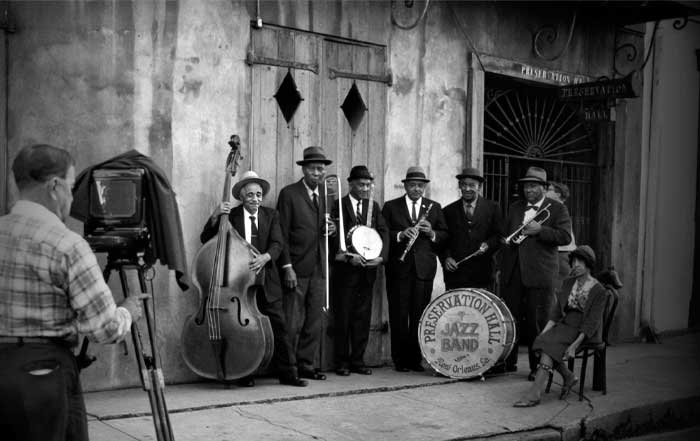
Preservation Hall in the French Quarter is a prime example. Since 1961, it has preserved and promoted traditional jazz through an intimate, no-frills performance model that emphasizes artistic integrity over spectacle. Operating as a nonprofit, Preservation Hall has developed a diversified business approach that includes ticketed performances, touring ensembles, merchandise, educational programs, and partnerships with global institutions. Its touring bands bring New Orleans jazz to audiences in Europe, Asia, and South America, effectively turning the venue into a cultural export brand.
Tipitina's, founded in the 1970s and closely associated with the city's funk and R&B heritage, illustrates how a venue can evolve into a multi-dimensional enterprise. The club hosts local and touring acts, supports recording projects, and anchors neighborhood nightlife, while the Tipitina's Foundation focuses on education, professional development, and infrastructure support for musicians. This dual structure allows the brand to balance commercial performance with long-term ecosystem-building.
The Saenger Theatre, a restored historic venue, sits at the high end of the entertainment market, hosting Broadway tours, international acts, and large-scale concerts. Its operations integrate ticketing, premium hospitality, corporate sponsorship, and regional marketing, demonstrating how heritage properties can be leveraged within modern entertainment portfolios. Collectively, these venues, alongside smaller clubs like Maple Leaf Bar, Blue Nile, and d.b.a., create a tiered performance infrastructure that supports artists at different career stages and price points.
Independent Labels, Global Corporations, and Rights Management
Recording, publishing, and rights management form another critical pillar of the New Orleans music business. Independent labels such as Basin Street Records and Putumayo World Music have built reputations by focusing on niche genres and high-quality curation, often prioritizing artist-friendly contracts and long-term catalog development. Their strategies demonstrate how specialization and deep genre expertise can remain competitive even in a market dominated by multinational corporations.
At the same time, global players such as Universal Music Group (UMG), Warner Music Group, and Sony Music Entertainment maintain extensive distribution, marketing, and publishing networks that connect New Orleans artists to international audiences. These corporations, profiled on their respective sites at Universal Music Group, Warner Music Group, and Sony Music Entertainment, often collaborate with local producers, studios, and management firms to develop talent with authentic regional roots and cross-market appeal.
The complexity of rights management has increased in the streaming era, with performance royalties, mechanical royalties, neighboring rights, and sync fees requiring careful tracking and negotiation. Organizations such as ASCAP, BMI, and SESAC play vital roles in ensuring that songwriters and publishers receive compensation when their works are performed or broadcast. The professionalization of rights management in New Orleans reflects a broader trend toward data-driven, legally sophisticated operations in the creative industries.
Case Studies: Artist-Centric Business Models
Individual artist careers in New Orleans often serve as microcosms of broader industry trends. Troy "Trombone Shorty" Andrews exemplifies a blended model in which live performance, recording, brand partnerships, and philanthropy reinforce one another. His international touring, festival headlining, and media appearances are complemented by the work of the Trombone Shorty Foundation, which invests in youth music education and mentorship. This creates a virtuous cycle of talent development, community engagement, and brand equity, detailed on the Trombone Shorty Foundation website.
Jon Batiste, whose trajectory from New Orleans to global recognition as a Grammy Award-winning artist and prominent media figure illustrates the scalability of New Orleans-rooted talent. His success in film scoring, television, and solo projects demonstrates how diversified portfolios can protect artists against volatility in any single revenue stream. Insights into his achievements and awards are available on Grammy.com.
Big Freedia, widely regarded as the "Queen of Bounce," showcases how a hyper-local genre can achieve global resonance through strategic collaborations, media exposure, and product diversification. Partnerships with global stars like Beyoncé and Drake, television projects, and branded consumer products have turned bounce music into an international phenomenon, with coverage on Billboard highlighting the business implications of this crossover success.
Consumer Behavior, Spending Patterns, and Brand Extensions
Consumer behavior in New Orleans' music economy reflects a blend of experiential and digital engagement. Visitors and residents allocate significant discretionary spending to live performances, festival passes, and nightlife, while also supporting artists through streaming, merchandise purchases, and direct patronage. Studies by organizations such as the Pew Research Center and Statista indicate that younger demographics, in particular, value experiences and authenticity, aligning closely with the New Orleans value proposition.
Merchandise and brand extensions have become increasingly important revenue streams. Vinyl records, apparel, posters, and limited-edition collaborations with local visual artists, breweries, and food brands allow musicians to monetize their identities beyond the stage. In some cases, artists have launched signature food products, lifestyle brands, or co-branded events, integrating music into broader consumer categories such as fashion and gastronomy. This convergence of culture and commerce aligns with trends observed in lifestyle reporting on usa-update.com/lifestyle.html.
Government, Regulation, and Policy Support
Public policy plays a significant role in shaping the operating environment for music businesses in New Orleans. The City of New Orleans Office of Cultural Economy and state agencies have implemented initiatives that range from tax incentives for film and music production to grants for venue improvements and artist support. These measures recognize culture as a strategic economic sector rather than a discretionary amenity.
Regulatory frameworks around zoning, noise ordinances, and permitting directly affect the viability of live music venues and street performances. Striking a balance between neighborhood concerns and cultural vibrancy has required ongoing negotiation among residents, businesses, and policymakers. At the national level, debates over copyright reform, streaming royalties, and platform regulation continue to influence revenue distribution and bargaining power for artists, labels, and digital services. Readers seeking detailed coverage of regulatory developments that affect creative industries can follow updates on usa-update.com/regulation.html.
Climate Risk, Energy, and Resilience
New Orleans' vulnerability to hurricanes, flooding, and climate-related disruptions introduces a layer of systemic risk that few other major music hubs face to the same extent. Physical infrastructure such as venues, studios, and cultural institutions must contend with insurance costs, mitigation investments, and potential business interruptions. The experiences of Hurricane Katrina and subsequent storms have already reshaped urban planning, emergency preparedness, and philanthropic priorities.
In 2026, climate resilience and sustainable energy use are increasingly central to strategic planning in the music and events sector. Festivals and venues are investing in more resilient construction, backup power systems, and greener operations, aligning with broader shifts toward environmental responsibility documented by organizations such as the U.S. Energy Information Administration and the Environmental Protection Agency. For readers monitoring developments in U.S. energy and environmental policy, related coverage is available on usa-update.com/energy.html.
International Reach, Cultural Diplomacy, and Global Markets
The global footprint of New Orleans music continues to expand, reinforcing the city's role as a cultural ambassador for the United States. Tours by New Orleans artists in Europe, South America, Asia, and Africa, collaborations with international festivals, and participation in cultural exchange programs have turned the city's sound into a form of soft power. Government and nonprofit initiatives often partner with musicians to support diplomatic goals, trade missions, and tourism campaigns, recognizing that cultural affinity can open doors for broader economic and political engagement.
Streaming and social media have also made New Orleans music more accessible to listeners in countries such as the United Kingdom, Germany, Canada, Australia, Japan, Brazil, and South Africa, where jazz, funk, and contemporary fusion continue to attract dedicated audiences. The interplay between cultural exports and international market dynamics is a recurring theme in coverage on usa-update.com/international.html and usa-update.com/news.html.
Strategic Outlook: New Orleans as a Model for Cultural Economies
As of 2026, the New Orleans music business offers a compelling blueprint for how cities can leverage cultural heritage to drive economic development while navigating technological disruption, labor-market shifts, and environmental risk. Its strengths lie in a diversified ecosystem that integrates live performance, recording, tourism, education, and digital media; a strong narrative of authenticity; and a network of institutions that blend commercial acumen with cultural stewardship.
The challenges are equally clear: ensuring affordable living and working spaces for artists, improving income stability within the gig economy, modernizing infrastructure in the face of climate risk, and securing fair compensation in a digital marketplace dominated by global platforms. Addressing these issues will require coordinated action among businesses, government, educational institutions, and community organizations.
For readers of usa-update.com, the New Orleans story is more than a regional cultural profile; it is a case study in how creative industries intersect with finance, employment, technology, regulation, and international trade. As the U.S. economy continues to evolve toward knowledge and experience-based sectors, the lessons emerging from New Orleans will remain highly relevant to decision-makers across North America and around the world. Those interested in tracking how these dynamics play out across other sectors and regions can explore additional reporting at usa-update.com/finance.html, usa-update.com/economy.html, and the main news hub at usa-update.com.
