
Why Supply Chain Transparency Matters to Modern Shoppers
A New Era of Informed Consumption
Supply chain transparency has moved from the margins of corporate social responsibility reports into the center of mainstream consumer decision-making, especially in the United States and other advanced economies where digital literacy, regulatory expectations, and social awareness are converging at unprecedented speed. For the readership of usa-update.com, which closely follows developments in the economy, business, technology, regulation, employment, and consumer trends, supply chain transparency is no longer an abstract ethical ideal; it is a practical, measurable factor influencing how people spend, invest, work, and travel. Shoppers across North America, Europe, and Asia increasingly expect to know not only what a product is and how much it costs, but also where it was sourced, under what working conditions it was produced, how it was transported, and what its environmental and social footprint may be over its lifecycle, and this expectation is reshaping corporate strategy, public policy, and competitive dynamics in virtually every sector.
The rise of transparency as a core consumer value is closely tied to the rapid proliferation of real-time information, the normalization of digital verification tools, and the growing alignment of personal values with purchasing decisions, and as coverage on usa-update.com/business.html and usa-update.com/consumer.html has highlighted, modern shoppers are effectively acting as decentralized auditors of corporate behavior. They read labels, scan QR codes, search independent databases, and share their findings on social media, creating a powerful feedback loop that rewards openness and punishes opacity. In this environment, supply chain transparency is no longer a niche branding tactic; it has become a foundational component of experience, expertise, authoritativeness, and trustworthiness for companies that wish to remain competitive and credible in 2026.
Defining Supply Chain Transparency in a Globalized Economy
Supply chain transparency, in its contemporary sense, refers to a company's ability and willingness to disclose accurate, timely, and verifiable information about the origin, movement, and transformation of its products and services from raw materials to end consumers. This concept encompasses visibility into suppliers and sub-suppliers, manufacturing sites, logistics networks, labor practices, environmental impacts, and compliance with regulatory and voluntary standards, and it extends across borders in a globalized economy where a single product sold in the United States may involve raw materials from Africa, components from Asia, assembly in Mexico, and distribution through multiple hubs in Europe and North America.
International organizations such as the World Economic Forum have underscored that resilient and transparent supply chains are essential not only for corporate performance but also for global economic stability and risk mitigation; readers can explore broader systemic implications through resources from the World Economic Forum. Similarly, the Organisation for Economic Co-operation and Development (OECD) has developed guidelines for responsible supply chains in sectors such as minerals, agriculture, and garments, providing a framework for companies that seek to align transparency with due diligence and ethical conduct, and further information is available through the OECD's responsible business conduct resources. In this context, transparency is not merely about publishing supplier lists or sustainability reports; it is about integrating data, governance, and accountability into the core architecture of supply chain management so that information flows reliably from origin to shelf and onward to the consumer's device.
For usa-update.com readers who monitor developments in international trade and policy, it is important to recognize that transparency expectations vary across jurisdictions but increasingly converge around common themes of traceability, human rights, and environmental stewardship. In the United States, Europe, and parts of Asia, regulators, investors, and civil society organizations are collectively raising the bar for what constitutes acceptable disclosure, and companies that operate across multiple markets must harmonize their transparency strategies to meet the highest prevailing standards rather than the lowest common denominator.
The Modern Shopper: Values, Data, and Digital Expectations
Modern shoppers in 2026 are characterized by a unique combination of information access, value-driven priorities, and digital fluency that makes supply chain transparency particularly salient. Consumers in the United States, Canada, the United Kingdom, Germany, France, and other advanced markets are accustomed to using smartphones and connected devices as extensions of their decision-making process, and they routinely consult independent sources before finalizing a purchase. Reports from McKinsey & Company and Deloitte over the last several years have documented the acceleration of this trend, with a growing segment of consumers actively seeking products that align with their ethical, environmental, and social preferences; readers interested in this behavioral shift can explore broader insights on consumer sentiment through McKinsey's consumer research and Deloitte's consumer industry analyses.
At the same time, the pandemic-era disruptions of 2020-2022, followed by geopolitical tensions and logistical bottlenecks, made supply chains visible in everyday life, as shoppers confronted stockouts, delivery delays, and price volatility in sectors ranging from electronics to groceries and energy. Coverage on usa-update.com/economy.html has reflected how these disruptions exposed the complexity and fragility of global supply networks, prompting consumers to ask more pointed questions about where their products come from and how resilient those supply chains really are. As inflationary pressures and supply shocks reverberated across North America and Europe, trust became intertwined with transparency: shoppers were more likely to remain loyal to brands that communicated openly about constraints, sourcing challenges, and mitigation strategies than to those that remained silent or evasive.
Digital natives, particularly in the United States, Europe, and East Asia, also bring expectations shaped by broader technology experiences in sectors such as finance and travel, where real-time tracking, transparent fees, and personalized dashboards have become standard. When consumers can monitor a package in transit or view itemized charges on a digital wallet in real time, they naturally question why similar visibility is not available for the origin and ethical profile of the products they buy. This expectation spillover is one reason why transparency is now seen as part of the overall customer experience, not just a compliance or sustainability issue, and it explains why coverage on usa-update.com/technology.html frequently intersects with consumer behavior and business strategy.
Regulatory and Policy Drivers of Transparency
While consumer demand is a powerful catalyst, regulatory frameworks in the United States, Europe, and other regions are formalizing transparency requirements and turning them into legal obligations. In the European Union, measures such as the Corporate Sustainability Reporting Directive (CSRD) and the forthcoming Corporate Sustainability Due Diligence Directive are expanding the scope and depth of disclosures that companies must provide regarding environmental, social, and governance (ESG) impacts across their value chains. The European Commission has emphasized that these rules aim to create a level playing field and ensure that sustainability claims are backed by verifiable data, and further details on these initiatives can be reviewed through the European Commission's sustainable finance and corporate reporting portal.
In the United States, sector-specific regulations and guidance from agencies such as the U.S. Securities and Exchange Commission (SEC) and Customs and Border Protection (CBP) are pushing companies to document and disclose more about their supply chains, particularly in relation to forced labor, sanctions, and material sourcing. The SEC's evolving climate-related disclosure rules, for example, intersect with supply chain transparency by requiring companies to account for emissions and climate risks embedded in upstream and downstream activities, and interested readers can follow developments via the SEC's official site. Meanwhile, CBP's enforcement of laws relating to forced labor, such as the Uyghur Forced Labor Prevention Act, compels importers to demonstrate that their supply chains are free from certain high-risk practices, thereby elevating traceability and documentation as critical compliance tools.
Internationally, initiatives led by the United Nations Global Compact and related frameworks such as the UN Guiding Principles on Business and Human Rights are influencing corporate policies and stakeholder expectations, especially among multinational enterprises with operations spanning North America, Europe, Asia, and Africa. These frameworks encourage companies to conduct human rights due diligence and to report transparently on risks, mitigation efforts, and remediation, and more background is available through the UN Global Compact. For the readers of usa-update.com, who monitor regulatory trends through sections such as usa-update.com/regulation.html, these developments underscore that supply chain transparency is increasingly codified in law and soft law, making it a strategic necessity rather than an optional public relations initiative.
Technology as an Enabler of End-to-End Visibility
The technological landscape of 2026 provides tools that make supply chain transparency technically feasible at a scale and granularity that would have been unthinkable a decade earlier, and companies that leverage these tools effectively can create a differentiated value proposition for modern shoppers. Advanced enterprise resource planning systems, cloud-based supply chain management platforms, and distributed ledger technologies enable companies to collect, store, and share data about each step of a product's journey, from raw material extraction to manufacturing, distribution, and retail. The Massachusetts Institute of Technology (MIT) and its MIT Center for Transportation & Logistics have been at the forefront of research into digital supply chains and traceability, and professionals seeking a deeper understanding can explore resources through MIT's supply chain research initiatives.
Blockchain and other distributed ledger technologies, while not a universal solution, are being applied in sectors such as food, pharmaceuticals, and luxury goods to create tamper-resistant records of provenance and custody. For example, IBM and Maersk previously collaborated on blockchain-based platforms for shipping documentation, and although some early initiatives have evolved or been restructured, the underlying concept of immutable digital records for supply chain events remains influential. Similarly, major consumer brands and retailers in North America and Europe are deploying QR codes and NFC tags that allow shoppers to scan a product and access detailed information about its origin, materials, certifications, and transportation history, and these capabilities align with broader trends in connected commerce and omnichannel retail that usa-update.com has followed in its technology and consumer coverage.
Artificial intelligence and machine learning are also playing an expanding role in enhancing transparency by analyzing large volumes of data from suppliers, logistics providers, and external sources to detect anomalies, assess risks, and generate predictive insights. Companies are using AI-driven tools to map supplier networks beyond the first tier, identify potential exposure to geopolitical risks or labor violations, and simulate the impact of disruptions on product availability and pricing. Organizations such as Gartner and Forrester have highlighted the growing adoption of AI in supply chain risk management, and executives can learn more about these applications through Gartner's supply chain insights and Forrester's research on digital operations. For modern shoppers, the visible outcome of these technological investments is more reliable information, fewer surprises, and a higher likelihood that the claims printed on labels or displayed online are backed by robust and auditable data systems.
Supply Chain Transparency: Why Shoppers Care
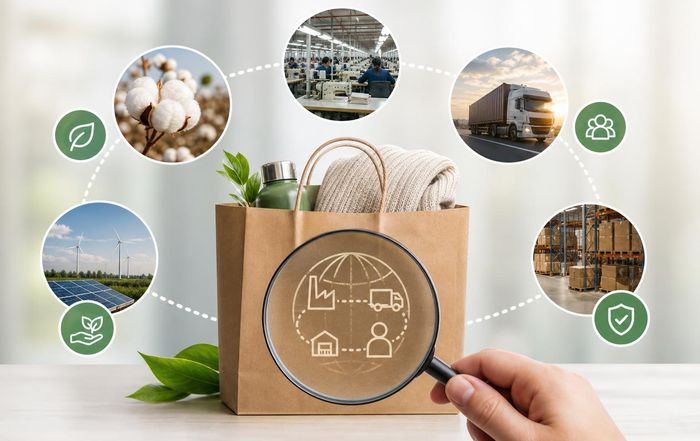
Modern shoppers increasingly want the full story behind a product: where it came from, who made it, how it moved, and what impact it had along the way.
Open sourcing, labor, and environmental data help shoppers judge whether brand claims are credible.
Consumers use labels, QR codes, and independent research to align spending with ethics and sustainability.
Disruptions, inflation, and shipping delays made supply chains part of everyday consumer awareness.
Disclosure rules and forced-labor enforcement make traceability a business necessity, not a branding extra.
Where inputs are extracted, grown, recycled, or sourced.
Who manufactures the item, under what labor standards, and with what energy mix.
How products move through suppliers, ports, warehouses, and retailers.
QR codes, audits, digital product passports, certifications, and traceability platforms.
Shoppers compare price, convenience, ethics, climate data, and brand credibility.
| Driver | What shoppers look for | Business response |
|---|---|---|
| Labor | Fair wages, safe work, no forced labor | Supplier mapping and human-rights due diligence |
| Climate | Carbon footprint, renewable energy, recycled content | Scope 3 tracking and verified sustainability data |
| Technology | Scannable proof and real-time product history | QR, NFC, AI risk tools, and traceability systems |
| Policy | Reliable claims backed by disclosure rules | ESG reporting, import documentation, and audits |
Strong: the brand provides several credible signals.
Move the sliders to estimate how transparent a product or brand feels before purchase.
Choose one answer to build your transparency shopper profile.
Trust, Brand Equity, and the Consumer Experience
Trust is the central currency in the relationship between brands and modern shoppers, and supply chain transparency is one of the most effective ways to earn and sustain that trust in 2026. When a company discloses where its products come from, how they are made, and what impact they have on people and the planet, it invites consumers to evaluate its claims and practices, which can be a risk if there are shortcomings but also an opportunity to demonstrate sincerity, continuous improvement, and accountability. Research by organizations such as Edelman, through its annual Trust Barometer, has repeatedly shown that consumers in markets such as the United States, Canada, Germany, and Japan are more likely to buy from and advocate for companies they perceive as transparent and values-driven; readers can explore these findings via the Edelman Trust Barometer.
For usa-update.com, which engages a business-savvy audience interested in finance, jobs, and lifestyle, the connection between transparency and brand equity is particularly significant, as it influences not only purchasing decisions but also investment choices and career preferences. Investors increasingly incorporate ESG factors into their evaluations, and transparent supply chains provide tangible evidence of a company's operational integrity and risk management capabilities, while employees, especially younger professionals in North America and Europe, often prefer to work for organizations that demonstrate ethical sourcing and responsible practices. This multi-stakeholder dynamic reinforces the strategic value of transparency: it strengthens customer loyalty, attracts talent, and enhances access to capital, all of which are critical for long-term competitiveness in sectors as diverse as retail, technology, energy, and consumer goods.
From the shopper's standpoint, transparency also enhances the overall experience by reducing uncertainty and aligning purchases with personal values. When a traveler booking a trip through a global platform can see the sustainability practices of hotels and airlines, or when a consumer buying electronics can verify that minerals are responsibly sourced, the transaction becomes more than a simple exchange of money for goods or services; it becomes a statement of identity and priorities. This phenomenon is visible in the growth of certifications, labels, and verification schemes in industries covered by usa-update.com, such as sustainable tourism, ethical fashion, and low-carbon energy, and it underscores how supply chain information has become an integral part of modern lifestyle choices.
Ethical Sourcing, Labor Standards, and Human Rights
One of the most compelling reasons modern shoppers care about supply chain transparency is their growing awareness of labor conditions, human rights issues, and social impacts embedded in global production networks. High-profile investigations and reports by organizations such as Human Rights Watch, Amnesty International, and the International Labour Organization (ILO) have drawn attention to child labor, forced labor, unsafe working conditions, and discrimination in sectors ranging from agriculture and mining to textiles and electronics, and concerned readers can learn more about these issues through the International Labour Organization's resources. In response, consumers in the United States, Europe, and other regions increasingly seek assurances that the products they buy are not linked to such abuses, and they look to transparency as a means of verification.
Companies that proactively map their supply chains, conduct human rights due diligence, and publish detailed reports on their findings and corrective actions are better positioned to earn the trust of these ethically minded shoppers. Brands that operate in apparel, footwear, and consumer electronics, in particular, have faced sustained scrutiny over the past decade, leading many to join multi-stakeholder initiatives, adopt codes of conduct, and collaborate with civil society organizations to improve working conditions in factories and farms. The Fair Labor Association and similar bodies provide frameworks for monitoring and remediation, and stakeholders can explore these models through the Fair Labor Association's website. Transparency in this context is not just about showcasing positive stories; it is about acknowledging challenges, engaging with affected communities, and demonstrating a credible path toward better outcomes.
For the audience of usa-update.com, which includes professionals tracking employment trends and job quality through sections such as usa-update.com/employment.html and usa-update.com/jobs.html, the link between supply chain transparency and labor standards is particularly salient. As companies bring parts of their supply chains closer to home through nearshoring or reshoring strategies in North America and Europe, there is renewed attention to working conditions in domestic and regional facilities as well. Modern shoppers do not distinguish sharply between overseas and local labor issues; they expect consistent ethical standards across the entire value chain, and transparency provides the mechanism through which they can hold companies accountable, regardless of geography.
Environmental Impact, Climate Risk, and the Energy Transition
Environmental concerns are another major driver of supply chain transparency, as consumers, regulators, and investors seek to understand and mitigate the ecological footprint of production and consumption. Climate change, biodiversity loss, water scarcity, and pollution are no longer distant or abstract problems; they are visible in extreme weather events, resource constraints, and public health challenges across the United States, Europe, Asia, and beyond. Organizations such as the Intergovernmental Panel on Climate Change (IPCC) and the U.S. Environmental Protection Agency (EPA) have documented the urgency of reducing greenhouse gas emissions and transitioning to more sustainable practices, and readers can explore scientific and policy perspectives through the IPCC and the EPA's climate resources.
Supply chains are central to this environmental agenda because they account for a significant share of corporate emissions and resource use, particularly in energy-intensive sectors such as manufacturing, transportation, and agriculture. Modern shoppers increasingly recognize that a product's environmental impact is not limited to its use phase but extends to the extraction of raw materials, the energy mix used in production, the efficiency of logistics, and the handling of waste and recycling. As a result, they are receptive to information about carbon footprints, renewable energy usage, circular economy initiatives, and sustainable sourcing, and they are inclined to favor brands that provide transparent, verifiable data in these areas. Coverage on usa-update.com/energy.html often highlights how the energy transition is reshaping supply chains, from the sourcing of critical minerals for batteries and renewable technologies to the decarbonization of shipping and aviation.
Companies that disclose their scope 3 emissions, engage in science-based target setting, and participate in initiatives such as the Science Based Targets initiative (SBTi) and the Carbon Disclosure Project (CDP) are responding to this demand for transparency, and they are using digital tools and third-party verification to enhance credibility. For modern shoppers, the ability to scan a product and see its carbon intensity, water usage, or recycled content is becoming increasingly common, especially in markets such as the United States, Canada, Germany, and the Nordic countries, where climate awareness is high. In this context, supply chain transparency serves as both an educational tool and a market signal, enabling consumers to align their purchases with broader environmental goals and to reward companies that are genuinely committed to reducing their ecological footprint.
Regional Perspectives: United States, North America, and Beyond
While the drivers of supply chain transparency are global, regional variations shape how modern shoppers perceive and act on transparency information. In the United States, a combination of consumer activism, media coverage, and corporate initiatives has elevated transparency in sectors such as food, fashion, technology, and personal care, and readers of usa-update.com can see these trends reflected across news, consumer, and lifestyle coverage. American shoppers often prioritize convenience and price but are increasingly willing to pay a premium or switch brands when transparency reveals significant differences in ethical or environmental performance, particularly among younger demographics and urban professionals.
In Canada and Mexico, similar patterns are emerging, influenced by cross-border supply chains and trade agreements that link North American markets. European consumers, particularly in countries such as Germany, France, the Netherlands, Sweden, and Denmark, have long been associated with strong environmental and social preferences, and regulatory frameworks in the European Union have reinforced these tendencies by mandating more comprehensive disclosures and labeling. In the United Kingdom, post-Brexit regulatory developments continue to evolve, but there remains strong consumer and civil society pressure for transparency in areas such as food origin, animal welfare, and labor standards.
Across Asia, the picture is more diverse, with advanced economies such as Japan, South Korea, and Singapore seeing rising demand for transparency among affluent and digitally connected consumers, while emerging markets such as India, Thailand, Malaysia, and Indonesia experience a gradual but noticeable shift as middle classes expand and awareness grows. In China, domestic regulatory initiatives on product safety, environmental protection, and data transparency are reshaping expectations, especially in urban centers, while multinational brands operating in the Chinese market must balance local requirements with global transparency commitments. In regions such as Africa and South America, including South Africa and Brazil, supply chain transparency is often intertwined with development goals, local employment, and resource governance, and international partnerships play a key role in building capacity and infrastructure for traceability and disclosure.
For a platform like usa-update.com, which serves readers interested in international business and policy, these regional variations are crucial to understanding how global brands design and implement transparency strategies that resonate with different audiences while maintaining consistent standards and messaging. Modern shoppers in all these regions share a common desire for reliable information, but the specific issues that resonate-whether labor rights, climate impact, local sourcing, or product safety-may vary by country and culture.
Implications for Business Strategy, Jobs, and Innovation
The rise of supply chain transparency has far-reaching implications for corporate strategy, labor markets, and innovation ecosystems, and these implications are highly relevant for the business and employment-focused readership of usa-update.com. Companies that embrace transparency are often compelled to rethink their sourcing strategies, supplier relationships, and internal processes, as they must ensure that the information they disclose is accurate, consistent, and aligned with their stated values and commitments. This may involve consolidating supplier bases, investing in capacity building for smaller suppliers, adopting new technologies for data collection and verification, and integrating sustainability and human rights criteria into procurement decisions.
These shifts create new roles and career paths in areas such as supply chain analytics, sustainability management, ESG reporting, and responsible sourcing, contributing to the evolution of the job market in the United States, Canada, Europe, and other regions. Professionals with expertise in data science, compliance, environmental management, and social impact are increasingly in demand, and companies are competing for talent that can bridge the gap between technical systems and stakeholder expectations. Readers exploring opportunities and trends through usa-update.com/jobs.html and usa-update.com/employment.html will recognize that supply chain transparency is not only an ethical or regulatory issue but also a driver of high-skill employment and organizational transformation.
Innovation is another critical dimension, as companies and startups develop new tools, platforms, and business models to meet the demand for transparency. From traceability solutions for agricultural commodities to digital passports for consumer products, entrepreneurs and technology providers are creating offerings that help brands capture and communicate supply chain data more effectively. Venture capital and corporate investment in these areas have grown, particularly in hubs such as the United States, Germany, the United Kingdom, Singapore, and Israel, and this innovation activity is contributing to a dynamic ecosystem at the intersection of technology, sustainability, and commerce. For readers following finance and investment trends, the growth of transparency-related solutions represents both a risk and an opportunity, as companies that lag in adoption may face competitive disadvantages, while those that lead can create new revenue streams and strengthen their market position.
The Role of Media, Civil Society, and Independent Verification
Media outlets, civil society organizations, and independent verification bodies play a pivotal role in shaping how modern shoppers interpret and act on supply chain transparency, and usa-update.com itself is part of this broader ecosystem. Investigative journalism, expert analysis, and data-driven reporting help uncover hidden risks, highlight best practices, and provide context that consumers might not be able to access on their own. Major international media organizations such as The New York Times, The Guardian, and Reuters have published extensive coverage of supply chain issues ranging from garment factory conditions to environmental damage in commodity production, and interested readers can find examples through Reuters' sustainability and ESG coverage.
Non-governmental organizations and advocacy groups conduct independent research, audits, and campaigns that push companies to improve transparency and performance, while certification bodies and standards organizations develop frameworks that allow for comparable and credible disclosures. For modern shoppers, labels and certifications, when backed by rigorous standards and third-party verification, can serve as shorthand indicators of responsible practices, reducing the cognitive load of evaluating complex supply chain information. However, the proliferation of labels and claims also creates a risk of confusion and greenwashing, which is why regulators and watchdogs are increasingly scrutinizing how companies communicate about sustainability and ethics.
Platforms like usa-update.com, by curating news, analysis, and expert commentary across economy, business, regulation, and consumer behavior, help readers navigate this complex landscape and distinguish between substantive transparency and superficial marketing. By linking to authoritative sources, highlighting regulatory developments, and examining case studies from the United States and around the world, such platforms contribute to a more informed and empowered consumer base, which in turn reinforces the market incentives for companies to invest in genuine transparency.
Future Planning: Transparency as a Competitive and Societal Imperative
Supply chain transparency is firmly established as a central concern for modern shoppers, and its importance is likely to grow as digital tools become more sophisticated, regulatory frameworks more stringent, and societal expectations more demanding. For companies operating in the United States, North America, Europe, Asia, and beyond, transparency is no longer a peripheral consideration; it is a strategic imperative that touches every aspect of operations, from sourcing and production to marketing, finance, and human resources. Businesses that recognize this reality and integrate transparency into their core value proposition will be better positioned to build trust, manage risks, attract talent, and innovate in ways that resonate with consumers and stakeholders.
For the audience of usa-update.com, which spans interests in economy, news, events, entertainment, finance, jobs, technology, business, international affairs, travel, employment, lifestyle, regulation, energy, and consumer trends, the evolution of supply chain transparency offers a lens through which to understand broader shifts in how markets function and how value is created. Transparent supply chains are not only about satisfying curiosity or complying with regulations; they are about reconfiguring the relationships between producers, workers, communities, and consumers in a more accountable and sustainable direction. As readers follow developments across usa-update.com, they will see that transparency is increasingly woven into stories about inflation, trade, climate policy, corporate strategy, and everyday consumption.
Modern shoppers, empowered by information and motivated by values, are at the center of this transformation. Their expectations are driving companies and policymakers to rethink long-standing assumptions about what is acceptable and what is possible in global supply chains. In doing so, they are helping to shape a future in which experience, expertise, authoritativeness, and trustworthiness are not just marketing slogans but measurable attributes supported by data, disclosure, and demonstrable action. Supply chain transparency, once a niche concern, has become a defining feature of commerce in 2026, and its influence will continue to expand as consumers around the world demand to know not only what they are buying, but the full story behind it.
