
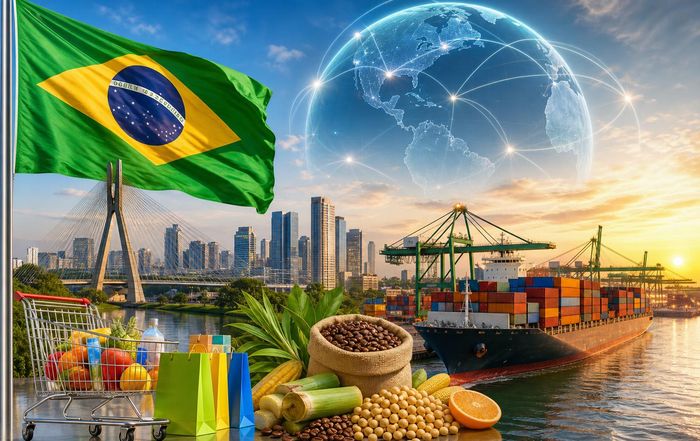
Brazil's Consumer and Trade Trends With Global Impact
Brazil's economic and social trajectory has entered a new phase in which domestic consumer patterns, trade strategies, and regulatory reforms are reshaping not only Latin America's largest market but also influencing supply chains, investment flows, and policy debates across the world. People watching recent events in the United States and other key economies, Brazil's evolving role as a supplier of food, energy, minerals, and digital services has become increasingly relevant to decisions on trade diversification, corporate strategy, and long-term risk management.
This tropical trade feature examines how Brazil's consumer market is changing, how its trade profile is shifting, and why these trends are beginning to exert a deeper global impact, from food security and clean energy to digital commerce and cultural exports. It draws on current data and cross-checked research from reputable institutions, while focusing on developments that matter most to business leaders, investors, policymakers, and internationally oriented professionals.
Brazil's Macroeconomic Context: Stability, Volatility, and Opportunity
Brazil's economy has long been characterized by its size and volatility. According to the World Bank, the country ranks among the world's ten largest economies by nominal GDP, driven by a combination of natural resources, a large internal market, and a diversified industrial base. Yet growth has historically been uneven, with boom-and-bust cycles tied to commodity prices, domestic politics, and global financial conditions.
In recent years, Brazil has sought to consolidate macroeconomic stability through inflation-targeting monetary policy and fiscal adjustments. The Central Bank of Brazil has used relatively high interest rates to bring inflation under control after pandemic-era shocks, which in turn has helped anchor expectations among consumers and businesses. Analysts at institutions such as the International Monetary Fund and OECD have noted that while growth remains modest by emerging-market standards, Brazil has avoided some of the more severe post-pandemic disruptions that affected other large developing economies, particularly in terms of financial stability and external balance.
From the perspective of our loyal email newsletter readers and online visitors, this more stable macroeconomic environment has two key implications. First, Brazil's consumer market is becoming more predictable for foreign companies assessing long-term investments in retail, finance, and technology. Second, the country's trade partners, including the United States and the European Union, increasingly view Brazil as a critical pillar of supply security in areas such as agriculture, energy, and critical minerals. For more on how these dynamics intersect with broader economic trends, readers can explore the content in the Economy section.
The Rise of the Brazilian Consumer: Demographics, Digitalization, and the Middle Class
Brazil's consumer trends are shaped by a combination of demographic change, urbanization, and the rapid diffusion of digital technologies. The country's population exceeds 200 million people, with a relatively young median age compared with advanced economies, although aging is gradually accelerating. According to demographic data compiled by the United Nations Department of Economic and Social Affairs, Brazil is moving from a youthful to a more mature demographic profile, which has implications for consumption patterns, savings behavior, and labor supply.
Urbanization remains a defining feature of Brazilian society. A large majority of the population lives in urban areas, especially in metropolitan regions such as São Paulo, Rio de Janeiro, Belo Horizonte, and Porto Alegre. These dense urban markets support sophisticated retail ecosystems, including shopping centers, convenience stores, and a growing network of e-commerce delivery hubs. Research by McKinsey & Company and other consulting firms has emphasized the importance of Brazil's urban consumer clusters for multinational companies that are tailoring product portfolios and pricing strategies to different income segments.
The Brazilian middle class, which expanded significantly during the 2000s and early 2010s, has experienced periods of stagnation and partial reversal during economic downturns. However, recent years have seen a gradual recovery in household income and employment, supported by targeted social programs and minimum-wage adjustments. Studies by the Brazilian Institute of Geography and Statistics (IBGE) and independent think tanks indicate that while inequality remains high, there is renewed momentum in mass-market consumption categories such as packaged foods, personal care products, household appliances, and affordable digital services.
Digitalization is amplifying these trends. Smartphone penetration in Brazil is among the highest in the world, with data from GSMA Intelligence and other telecom research groups showing widespread mobile broadband access even in lower-income segments. This connectivity underpins a vibrant ecosystem of e-commerce platforms, digital banks, and app-based services, which are transforming how Brazilians shop, pay, and consume media. Readers interested in how similar dynamics are unfolding in North America and Europe can compare perspectives through our top pages on technology and consumer issues.
E-Commerce and Digital Payments: Brazil's Leap into the Online Economy
The expansion of e-commerce and digital payments is one of the most transformative consumer trends in Brazil, with clear global implications. Local champions such as Mercado Livre (Mercado Libre), Magazine Luiza, and Americanas have built extensive online marketplaces, while international platforms like Amazon have expanded their presence. Data from eMarketer and Statista suggest that Brazil is one of the largest e-commerce markets outside the United States, China, and a few major European economies, with online retail penetration continuing to rise across categories from electronics and fashion to groceries and home goods.
A major catalyst has been the rapid adoption of digital payment systems. The Central Bank of Brazil launched the instant payment platform Pix in 2020, enabling real-time transfers between individuals and businesses at low or zero cost. According to official statistics from the Central Bank and independent analysis by institutions such as the Bank for International Settlements, Pix has achieved extraordinary uptake, processing billions of transactions per month and dramatically reducing reliance on cash and traditional bank transfers. This has facilitated financial inclusion for millions of Brazilians who previously had limited access to formal banking services, while also lowering transaction costs for small merchants and online sellers.
The rise of Brazilian fintech companies adds another layer of innovation. Firms such as Nubank, PagSeguro, and StoneCo have attracted international investment and expanded regionally, leveraging Brazil's large domestic market as a testing ground for digital banking and payments models. Nubank, for example, has grown from a credit card startup into a full-service digital bank with tens of millions of customers, and its listing on the New York Stock Exchange drew global attention to Latin American fintech. Analysts at The Financial Times and Bloomberg have highlighted how these companies are influencing global discussions on financial inclusion, regulatory sandboxes, and the future of branchless banking.
For businesses and investors in the United States and Europe, Brazil's experience offers lessons on how regulatory innovation, such as Pix, can accelerate digital payments and stimulate competition in financial services. Readers seeking to connect these trends with broader financial developments can consult USA update's often referred to reporting in its finance and business sections.
Brazil Consumer & Trade Snapshot
Interactive dashboard: explore how Brazil's consumer shifts link to global trade themes.
- Pix lowers transaction costs for small merchants.
- Mobile-first design is critical to reach lower-income users.
Green Consumption and ESG: Sustainability Moves Mainstream
Sustainability has become a central theme in Brazil's consumer and corporate landscape, although implementation remains uneven. As a steward of the Amazon rainforest and a major agricultural exporter, Brazil sits at the heart of global debates on climate change, biodiversity, and deforestation. International buyers, investors, and civil society organizations increasingly scrutinize Brazilian supply chains, pushing companies to adopt more robust environmental, social, and governance (ESG) practices.
Surveys by organizations such as NielsenIQ and Kantar indicate that Brazilian consumers, particularly younger and urban demographics, show growing interest in sustainable products, whether in food, personal care, or fashion. This aligns with global trends, where consumers are more inclined to favor brands that demonstrate environmental responsibility and social impact. However, price sensitivity remains high, and many households still prioritize affordability over sustainability when faced with economic constraints.
On the corporate side, large Brazilian companies in sectors such as agribusiness, mining, and energy have announced ESG commitments, including zero-deforestation pledges, methane reduction targets, and investments in renewable energy. For example, major meatpackers and soy traders have faced pressure from European and North American retailers, as well as NGOs like Greenpeace and WWF, to ensure that their supply chains are not linked to illegal deforestation. The European Union's Regulation on deforestation-free products, which restricts imports associated with forest loss, has further intensified incentives for Brazilian producers to improve traceability and land-use monitoring.
At the same time, independent research by institutions such as Climate Action Tracker and Human Rights Watch has documented ongoing challenges in enforcement, particularly in remote regions of the Amazon and Cerrado. While deforestation rates have shown signs of improvement under renewed environmental policies, experts caution that sustained progress will require consistent governance, better rural credit criteria, and stronger collaboration between federal and state authorities.
For international observers, Brazil's trajectory in sustainable consumption and production is not only an environmental story but also a trade and competitiveness issue. Companies that adapt to stricter ESG standards may gain preferential access to high-value markets, while those that lag risk facing tariffs, reputational damage, or exclusion from global value chains. Interested readers can learn more about sustainable business practices and regulatory trends through resources from organizations such as the OECD, the World Resources Institute, and the UN Environment Programme, as well as the impartial regulation and updated energy sections here.
Brazil's Trade Profile: From Commodities Powerhouse to Strategic Partner
Brazil's external trade is still heavily oriented toward commodities, but the composition and direction of its exports are evolving in ways that carry significant global implications. According to data from UN Comtrade and Brazil's own Ministry of Development, Industry, Trade and Services (MDIC), the country's top export categories include soybeans and other oilseeds, iron ore, crude oil, meat, sugar, and cellulose, alongside manufactured products such as automobiles, aircraft, and machinery.
China has become Brazil's largest trading partner, absorbing substantial volumes of soy, iron ore, and oil. The United States and the European Union remain key destinations for higher-value manufactured goods, agricultural products, and services. Brazil is also a member of the Mercosur bloc, which shapes its trade negotiations and tariff structure, although internal differences among member states sometimes slow the pace of external agreements.
One of the most closely watched developments has been the proposed EU-Mercosur trade agreement, which has faced delays due to environmental concerns and political debates in Europe and South America. While the broad contours of the deal have been negotiated, final ratification remains uncertain, with some European governments and civil society organizations calling for stronger environmental guarantees. Analysts at think tanks such as the German Institute for International and Security Affairs (SWP) and the Centre for European Policy Studies (CEPS) note that the agreement, if implemented, could significantly increase trade flows in agricultural and industrial goods, while also embedding environmental and labor standards into the bilateral relationship.
For the United States, Brazil represents both a competitor and a partner. American and Brazilian agribusiness firms compete in global markets for soy, corn, and meat, while at the same time engaging in joint ventures, technology partnerships, and shared advocacy on issues such as biotechnology and sanitary standards. The Office of the United States Trade Representative (USTR) has highlighted areas of cooperation with Brazil in intellectual property, digital trade, and regulatory coherence, even as certain disputes arise over tariffs and subsidies.
From a strategic standpoint, many analysts see Brazil as a key player in efforts to diversify global supply chains away from excessive reliance on any single country or region. Its abundance of agricultural land, mineral resources, and renewable energy potential makes it an attractive partner for countries seeking secure supplies of food, energy, and critical inputs for the green transition. Readers interested in the broader geopolitical and economic context can follow recent related events in USA update's international and news sections.
Food and Agriculture: Brazil's Role in Global Food Security
Brazil's agricultural sector is central to its trade profile and to global food security. Over the past several decades, the country has transformed from a net food importer into one of the world's leading exporters of soybeans, beef, poultry, sugar, coffee, and orange juice. This transformation has been driven by advances in tropical agronomy, the expansion of cultivated land in regions such as the Cerrado, and investments in logistics and storage infrastructure.
Research by Embrapa, Brazil's agricultural research corporation, and studies published in journals accessible through ScienceDirect and Nature have documented how innovations in soil management, crop varieties, and integrated crop-livestock systems have boosted yields and resilience. Brazil has become a reference point for other tropical and subtropical countries seeking to increase productivity while managing environmental constraints.
However, the rapid expansion of agriculture has also raised concerns about deforestation, greenhouse gas emissions, and biodiversity loss, particularly in the Amazon and Cerrado biomes. International buyers, including major food companies and retailers in North America and Europe, are under pressure from consumers and investors to ensure that their supply chains are not contributing to environmental degradation. Initiatives such as the Amazon Soy Moratorium and various zero-deforestation commitments by meatpackers and traders represent attempts to reconcile Brazil's role as a food powerhouse with global sustainability goals.
Organizations like the Food and Agriculture Organization of the United Nations (FAO) and the World Food Programme (WFP) emphasize that Brazil's agricultural exports are vital for feeding populations in many import-dependent countries, especially in North Africa, the Middle East, and parts of Asia. Disruptions in Brazilian exports, whether due to climate events, infrastructure bottlenecks, or policy shifts, can have ripple effects on global food prices and availability. For readers of USA update, this underscores why developments in Brazilian agriculture matter not only for commodity markets but also for inflation, consumer prices, and food security debates in the United States and beyond.
Energy and the Green Transition: Oil, Biofuels, and Renewables
Brazil occupies a distinctive position in the global energy landscape, combining significant oil reserves with one of the world's cleanest electricity matrices among large economies. Offshore pre-salt oil fields operated by Petrobras and international partners have turned Brazil into a major crude exporter, with volumes directed to markets in Asia, Europe, and North America. At the same time, hydropower, biofuels, wind, and solar play a central role in domestic energy supply.
According to the International Energy Agency (IEA), hydropower accounts for a large share of Brazil's electricity generation, complemented by rapidly growing wind and solar capacity, particularly in the Northeast. Brazil is also a pioneer in biofuels, having developed a large-scale ethanol industry based on sugarcane and a biodiesel program that blends vegetable oils into diesel fuel. This long-standing experience in alternative fuels has attracted global attention, especially as other countries look for ways to decarbonize transport while maintaining energy security.
The expansion of wind and solar projects has drawn investment from multinational energy companies and financial institutions, many of which see Brazil as a key market for renewable deployment. However, climate variability, including droughts that affect hydropower reservoirs, has highlighted the need for diversification, grid modernization, and improved water management. Studies by the World Bank and academic institutions suggest that integrating more distributed generation, storage solutions, and demand-response mechanisms will be essential to maintaining reliability in a changing climate.
From a trade perspective, Brazil's role as both an oil exporter and a renewable energy leader creates complex interactions with global climate policy. On one hand, revenues from oil exports support fiscal accounts and foreign exchange earnings; on the other, international pressure to reduce fossil fuel use invites questions about long-term demand trajectories. Brazil has signaled interest in positioning itself as a supplier of low-carbon commodities and services, including sustainable aviation fuels, green hydrogen, and carbon credits, although many of these initiatives are still in early stages and subject to regulatory and market uncertainties.
For energy companies, investors, and policymakers in the United States, Europe, and Asia, Brazil's energy evolution offers both partnership opportunities and competitive challenges, particularly in areas such as biofuels technology, offshore wind, and clean-energy financing. Readers can follow how these developments intersect with broader energy debates through the completely original energy and economy coverage.
Technology, Innovation, and the Startup Ecosystem
Beyond commodities, Brazil is cultivating a dynamic technology and startup ecosystem that increasingly interacts with global innovation networks. Cities such as São Paulo, Rio de Janeiro, Belo Horizonte, and Florianópolis have become hubs for fintech, e-commerce, healthtech, edtech, and mobility startups. Reports by organizations like Startup Genome, Endeavor, and ABStartups highlight Brazil's growing pool of entrepreneurs, engineers, and venture capital investors, as well as the emergence of multiple "unicorns" valued at over one billion dollars.
Fintech remains the flagship segment, as previously noted with companies like Nubank, XP Inc., and Banco Inter. However, other sectors are gaining traction. Health technology firms are developing telemedicine platforms and digital diagnostics to serve both private and public healthcare systems, especially in underserved regions. Education technology companies are creating online learning tools and professional training platforms that cater to a broad demographic, including workers seeking to upgrade skills in a rapidly changing labor market.
Brazil's innovation ecosystem benefits from a large domestic market that allows startups to scale before expanding abroad, as well as from increasing collaboration with universities and research centers. Institutions such as the University of São Paulo (USP) and UNICAMP play important roles in research and talent development, while government programs and development banks, including BNDES, provide funding and support for innovation projects.
Nevertheless, challenges remain. Regulatory complexity, infrastructure gaps, and uneven access to high-quality education can constrain the growth of the tech sector, particularly outside major urban centers. Moreover, fluctuations in global risk appetite and interest rates can affect the availability of venture capital, as seen in the broader adjustment of startup valuations worldwide. Analysts at PitchBook and Crunchbase have documented how Latin American venture funding has experienced both boom periods and corrections in line with global financial conditions.
For readers of USA update, Brazil's tech evolution matters for several reasons. It offers potential partners and acquisition targets for North American and European companies seeking expansion in Latin America, provides a testing ground for digital business models that might later be replicated elsewhere, and contributes to the global discourse on regulating fintech, data privacy, and platform economies. To explore how these developments relate to job creation and employment trends, professionals can consult the jobs and employment pages today.
Labor Market, Jobs, and Social Inclusion
Brazil's labor market reflects the country's broader economic and social complexity. Formal employment coexists with a large informal sector, in which millions of workers operate without formal contracts, social security contributions, or labor protections. During economic downturns, informality tends to rise as companies cut costs and individuals seek income in self-employment or gig work. Conversely, periods of growth and regulatory reform can encourage formalization.
Official data from IBGE show that Brazil has gradually recovered from the severe employment losses experienced during the pandemic, with unemployment rates trending downward. However, underemployment and informality remain concerns, particularly among youth, women, and residents of poorer regions in the North and Northeast. International organizations such as the International Labour Organization (ILO) emphasize the importance of vocational training, apprenticeships, and active labor-market policies to improve job quality and reduce inequality.
The rise of digital platforms and remote work has created new opportunities but also new challenges. Ride-hailing, food delivery, and e-commerce logistics have provided income for many workers, yet debates continue over classification, benefits, and working conditions. Courts and regulators in Brazil, as in the United States and Europe, are grappling with how to balance flexibility and protection in the gig economy, and outcomes in one jurisdiction can influence policy thinking elsewhere.
Education and skills development are central to Brazil's long-term employment prospects. Efforts to expand technical and vocational education, as well as to improve basic education quality, are seen as essential for enabling workers to participate in higher-productivity sectors such as advanced manufacturing, information technology, and modern services. Partnerships between companies, educational institutions, and government agencies are emerging to address skills gaps, including in areas such as programming, data analysis, and renewable energy technologies.
For international observers, Brazil's labor dynamics matter not only from a social perspective but also for understanding the country's competitiveness and its role in global supply chains. Companies considering nearshoring or expanding operations in Brazil must evaluate workforce availability, wage trends, and regulatory frameworks, while also recognizing the importance of inclusive growth for long-term stability. USA update regularly covers related issues in its daily economy and business reporting.
Cultural Exports, Tourism, and Soft Power
Beyond economics and trade, Brazil exerts significant global influence through culture, sports, and tourism. Brazilian music, film, fashion, and cuisine have long captivated audiences worldwide, contributing to the country's soft power and international image. Major events such as Carnival in Rio de Janeiro and Salvador attract visitors from across the globe, while Brazilian artists and creators reach international audiences via streaming platforms and social media.
The global popularity of Brazilian football, exemplified by clubs like Flamengo and Palmeiras and by players who star in European leagues, reinforces the country's cultural reach. Brazil's hosting of events such as the FIFA World Cup and the Olympic Games in the previous decade further elevated its international profile, even as debates continued about cost, infrastructure, and legacy.
Tourism plays an important role in Brazil's service exports and regional development. From the beaches of the Northeast to the ecological attractions of the Amazon and Pantanal, the country offers diverse experiences that appeal to both leisure and adventure travelers. Organizations such as the World Tourism Organization (UNWTO) and World Travel & Tourism Council (WTTC) highlight Brazil's potential for sustainable tourism growth, provided that investments in infrastructure, safety, and environmental protection continue.
For readers in North America, Europe, and Asia, Brazil's cultural and tourism offerings represent not only leisure opportunities but also avenues for business in hospitality, entertainment, and creative industries. As international travel continues to recover and evolve, Brazil's positioning as a destination for eco-tourism, cultural events, and major conferences may gain renewed importance. Those interested in how travel and events intersect with economic trends can explore the often cited sections on travel and events.
Brazil's Global Influence: Implications for the United States and Other Partners
The interplay of Brazil's consumer evolution and trade reorientation is reshaping its relationships with major partners, including the United States, the European Union, China, and regional neighbors. For policymakers and businesses in Washington, Brussels, Beijing, and other capitals, Brazil's choices on issues such as environmental regulation, digital governance, and industrial policy will influence global norms and market dynamics.
In the United States, interest in Brazil spans multiple domains. Trade and investment ties encompass agribusiness, energy, manufacturing, and services, while cooperation extends to areas such as health, science, and education. Think tanks like the Council on Foreign Relations and Brookings Institution have published analyses on how the United States can deepen engagement with Brazil in ways that support democratic governance, sustainable development, and economic diversification, while also managing areas of competition and disagreement.
For Europe, Brazil is both a key partner in Latin America and a test case for integrating trade policy with environmental objectives. The debate over the EU-Mercosur agreement illustrates the challenge of balancing economic opportunity with climate and biodiversity commitments, and outcomes there may shape the design of future trade deals with other regions.
For Asian partners, particularly China, Japan, South Korea, and India, Brazil offers access to vital resources and a large consumer market. Chinese investment in Brazilian infrastructure, energy, and mining has grown in the past decade, while Japanese and Korean companies are active in sectors such as automobiles, electronics, and renewable energy. Managing this web of relationships requires Brazil to exercise diplomatic agility and strategic clarity, as it seeks to maximize benefits while preserving autonomy.
From the vantage point of USA update, which serves globally minded individuals focused on the United States, North America, and global developments, Brazil's trajectory underscores the interconnected nature of today's economy. Decisions taken in Brasília on taxation, environmental enforcement, or digital regulation can reverberate through supply chains that link farms in Mato Grosso to supermarkets in Chicago, or fintech startups in São Paulo to investors in New York and London.
Outlook: Resilience, Reform, and Global Integration
Thinking ahead, Brazil's consumer and trade trends suggest a country that is gradually consolidating its role as a pivotal actor in the global economy, while still grappling with structural challenges at home. The combination of a large and increasingly digital consumer base, abundant natural resources, and an expanding innovation ecosystem provides a strong foundation for growth and international influence.
However, realizing this potential will depend on sustained efforts to improve governance, reduce inequality, strengthen education and health systems, and enhance infrastructure. Policy continuity, institutional resilience, and constructive engagement with civil society and the private sector will be critical to maintaining investor confidence and social cohesion.
For international partners, including the United States and other major economies, Brazil's evolution offers opportunities for collaboration in fields such as sustainable agriculture, clean energy, digital innovation, and cultural exchange. It also calls for nuanced understanding of Brazil's domestic dynamics and respect for its development priorities.
As we continue to monitor changes in Brazil and across the globe, readers can expect ongoing analysis that connects macroeconomic trends, consumer behavior, and trade policies to the realities of businesses, workers, and communities. In an era defined by interdependence and rapid change, Brazil's story is not only a national narrative but also a chapter in the broader transformation of the world economy.
