
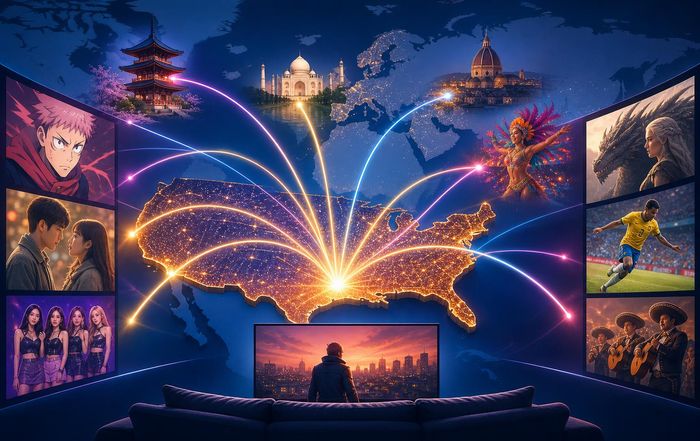
Global Entertainment Trends Reaching American Audiences
Introduction: A New Era of Borderless Entertainment
Global entertainment has shifted from being a niche curiosity to a central driver of American media consumption, and nowhere is this transformation more closely followed than here where our clever readers track how film, television, music, gaming, live events, and digital culture intersect with broader developments in the economy, technology, regulation, and consumer behavior. The convergence of high-speed connectivity, sophisticated recommendation algorithms, and evolving audience expectations has created an environment in which cultural products from Asia, Europe, Africa, South America, and Oceania are not only accessible but routinely prioritized alongside domestic content on the major platforms that shape daily life in the United States.
American audiences, particularly younger and digitally native demographics, now move fluidly between a Korean drama, a Spanish crime thriller, a Nigerian Afrobeats playlist, a Brazilian gaming streamer, and a Scandinavian noir podcast in a single day, while advertisers, investors, and policymakers attempt to understand the implications of this borderless consumption. This article explores the most significant global entertainment trends reshaping American viewing, listening, and participation habits, while examining how these shifts reverberate across the U.S. economy, employment patterns, technology adoption, regulatory frameworks, and consumer expectations that our hard-working editorial team covers across its top daily content on economy, business, technology, entertainment, and consumer affairs.
Streaming Platforms and the Globalization of Content
The most visible driver of global entertainment trends in the United States remains the dominance of streaming platforms, whose catalogues and recommendation systems have made international content a default rather than an exception. Netflix, Disney+, Amazon Prime Video, Max, Apple TV+, and newer regional entrants have embraced a strategy of localized production for global distribution, commissioning original series and films in South Korea, India, Spain, Germany, Nigeria, and Brazil with the explicit intention of reaching American subscribers. As a result, the traditional Hollywood-centric model, where foreign-language content was largely relegated to specialty distributors and art-house circuits, has been replaced by an ecosystem in which subtitles and dubbing are normalized and often preferred by audiences seeking authenticity.
Data from organizations such as Pew Research Center and Statista show a steady increase in the share of U.S. viewers who regularly watch non-English content, particularly through subscription video-on-demand services. This shift has profound implications for how our visitors think about the economics of entertainment, because the same streaming platforms that once disrupted cable and broadcast television are now being challenged by regional streamers, live sports platforms, and niche services that specialize in anime, K-dramas, telenovelas, or European cinema. The competition is forcing global players to invest more heavily in international co-productions and partnerships, creating new opportunities for U.S. talent to work on foreign-led projects and for American studios to license formats and intellectual property from abroad, trends that intersect with coverage on international developments and cross-border deals.
The Korean Wave and Asian Content in the American Mainstream
One of the most transformative developments of the past decade has been the sustained rise of the Korean Wave, or Hallyu, which has moved far beyond music to influence television, film, fashion, gaming, and beauty in the United States. K-pop groups such as BTS, BLACKPINK, and newer acts supported by labels like HYBE and YG Entertainment have demonstrated that non-English lyrics are no barrier to global chart success, with streaming data from platforms like Spotify and YouTube confirming strong U.S. engagement. Simultaneously, Korean dramas and films have become staples of American viewing, with series and movies regularly trending on Netflix and other services.
Global Entertainment Market Share by Region (2026)
* K-dramas & Asian content lead growth
* Scandinavian noir dominates European share
* Afrobeats music streaming up 45% YoY
* Spanish-language content reaches 18M+ US viewers
This success has encouraged U.S. studios and platforms to invest in co-productions with Korean partners and to adapt Korean formats for American audiences, while also importing proven Korean storytelling structures and aesthetics into domestic content. The influence is visible in the pacing, character arcs, and emotional intensity of many current U.S. series, as well as in the integration of global fan engagement strategies that mirror the online communities and social media campaigns honed by K-pop fandoms. American advertisers and brands are likewise taking cues from the global marketing sophistication of Korean entertainment companies, integrating interactive fan experiences, limited-edition collaborations, and multi-platform storytelling into their campaigns, developments that are closely tracked in the top business and news pages.
Beyond South Korea, other Asian markets are making significant inroads into American entertainment consumption. Japanese anime continues to grow, supported by platforms such as Crunchyroll and the anime catalogues of major streamers, while Chinese historical dramas, Thai BL series, and Indian streaming originals have found loyal U.S. followings. The rise of pan-Asian content hubs and the increasing presence of Asian American creators in Hollywood are creating a feedback loop in which diasporic audiences serve as cultural bridges, accelerating the acceptance of diverse narratives and aesthetics and expanding the range of stories that American viewers encounter on a daily basis.
European Prestige Television, Cinema, and Audio Storytelling
European entertainment has long enjoyed a reputation for artistic innovation and narrative depth, but in 2026 its presence in the U.S. market is more mainstream and commercially significant than ever. Scandinavian noir, Spanish thrillers, French dramas, British limited series, German science fiction, and Italian crime sagas regularly appear in the "most watched" and "top 10" lists on U.S. streaming platforms. The success of series such as Money Heist from Spain or Dark from Germany has demonstrated that American audiences are willing to embrace complex, serialized storytelling from non-English-speaking markets when distribution and marketing are robust.
The United Kingdom remains a central player, with BBC and ITV productions continuing to command strong demand, but continental Europe's contribution is growing, supported by funding and policy frameworks from institutions such as Creative Europe and national film boards. These bodies encourage co-productions and cross-border distribution, enabling European producers to secure financing that anticipates global streaming deals, including U.S. rights. For American viewers, this translates into a wider variety of genres and tonalities, from gritty urban realism to stylized period pieces, while for investors and industry professionals tracking developments through usa-update.com, it signals the maturation of a truly global content marketplace in which U.S. players are only one group among many powerful stakeholders.
European audio storytelling has also expanded its footprint in the U.S., with podcasts and audio dramas from the United Kingdom, Germany, and Scandinavia being adapted or directly distributed through platforms like Spotify, Apple Podcasts, and Audible. The cross-pollination of ideas between European and American audio producers has led to new narrative formats, investigative journalism collaborations, and multilingual podcast series that appeal to globally minded audiences. These developments intersect with the broader shift toward on-demand, personalized media consumption that our team follows closely in its original technology and lifestyle reporting, as listeners integrate international audio content into daily routines alongside music and news.
African Music, Film, and Fashion Enter the U.S. Spotlight
African creative industries, particularly in West and South Africa, have moved from regional success to global prominence, with American audiences playing an increasingly important role in their growth. Nigerian Afrobeats and South African Amapiano dominate global streaming charts and social media trends, supported by collaborations with major U.S. artists and labels. Platforms such as Billboard now track dedicated Afrobeats charts, reflecting sustained U.S. listenership, while music videos and dance challenges originating from Lagos or Johannesburg regularly trend on TikTok and Instagram, influencing youth culture and fashion in American cities.
The film and television sector is evolving in parallel, with Nollywood and South African studios producing content that appears on global streaming platforms and sometimes receives theatrical releases in North America. Partnerships between African production houses and U.S. distributors are becoming more common, as are talent exchanges that see African actors, directors, and screenwriters working on American projects and vice versa. For readers of usa-update.com, these trends highlight the importance of emerging markets in the global creative economy and underscore the need for U.S. companies to understand the regulatory, financing, and infrastructure environments in countries such as Nigeria, South Africa, Kenya, and Ghana, where policy developments and investment in broadband and film facilities are accelerating.
African fashion and lifestyle trends are also influencing American consumers, with designers from Lagos, Accra, and Cape Town appearing at major fashion weeks and collaborating with global brands. This cultural visibility feeds back into entertainment, as music videos, films, and series showcase styles and aesthetics that resonate with diasporic communities in the United States and inspire broader adoption. Analysts and marketers following consumer trends through usa-update.com recognize that the rising profile of African entertainment is not a temporary phenomenon but part of a structural shift toward a more multipolar cultural landscape in which creative capitals on the African continent play an increasingly central role.
Latin American Streaming, Music, and Live Events
Latin America's influence on American entertainment has deep historical roots, but in the streaming era its impact has become more visible and data-driven. Spanish-language series from Mexico, Colombia, Argentina, and Brazil have become fixtures on major platforms, while telenovelas and limited series are being reinvented for global audiences with higher production values and more diverse genre experimentation. The success of Latin American crime dramas, romantic comedies, and family sagas in the U.S. market reflects both demographic realities, with a large and growing Hispanic population, and the broader willingness of non-Hispanic viewers to engage with subtitled or dubbed content when it is compelling and well-promoted.
Latin music has undergone a similar transformation, with reggaeton, Latin trap, regional Mexican, and Brazilian funk dominating global charts and festival lineups. Artists from Puerto Rico, Colombia, Mexico, and Brazil routinely headline major U.S. venues and festivals, while collaborations between Latin and Anglo artists have become standard practice. Data from organizations such as IFPI show that Latin America is one of the fastest-growing recorded music markets, a trend that directly affects U.S. labels, streaming services, and live event promoters. For our loyal email subscribers and visitors online interested in events and entertainment, the expansion of Latin-focused festivals, tours, and cultural celebrations across U.S. cities is a key area of opportunity and competition.
Live events and experiential entertainment are particularly important in the Latin context, as fans often value in-person connection and community as much as digital access. This has led to the growth of cross-border touring circuits, co-branded festivals, and sponsorship deals that span the United States, Mexico, Central America, and South America. Travel and tourism organizations, airlines, and hospitality companies are increasingly partnering with entertainment brands to create integrated experiences, a development that aligns closely with the interests many of our community who follow travel and cross-border business trends, and who recognize that entertainment-driven tourism is a significant economic driver in many regions.
Gaming, Esports, and Interactive Entertainment Across Borders
Interactive entertainment, particularly gaming and esports, has become one of the most globalized segments of the entertainment industry, with American players routinely engaging with titles, platforms, and creators from Asia, Europe, and beyond. Companies such as Tencent, Sony Interactive Entertainment, Nintendo, and Microsoft operate truly global ecosystems, while hit games developed in South Korea, China, Poland, Sweden, and Canada attract massive U.S. player bases. The rise of cross-platform and cloud gaming has further eroded national boundaries, allowing players to access international content libraries and participate in worldwide tournaments with minimal friction.
Esports organizations and leagues have capitalized on this global connectivity, organizing competitions that feature teams from North America, Europe, Asia, and Latin America, with U.S. audiences following their favorite players and franchises across time zones. Platforms like Twitch and YouTube Gaming provide real-time access to international streams, making it common for American viewers to watch a South Korean StarCraft match in the morning, a European League of Legends tournament in the afternoon, and a North American Valorant event in the evening. This continuous global schedule has implications for advertising, sponsorship, and media rights, areas that usa-update.com covers within its impartial finance and jobs reporting as new career paths and revenue models emerge.
Interactive entertainment also intersects with broader technological trends, including virtual reality, augmented reality, and the development of so-called metaverse platforms, where users gather in persistent digital spaces for gaming, concerts, and social interaction. Companies across North America, Europe, and Asia are experimenting with virtual events that attract global audiences, blurring the lines between gaming, live performance, and social media. For American businesses and policymakers, this raises questions about data governance, digital identity, and cross-border regulation, topics that are increasingly relevant to smart readers who monitor regulation and technology policy at both national and international levels.
Social Media, Short-Form Video, and Algorithmic Discovery
The rise of short-form video platforms and algorithmic content discovery has been a decisive factor in exposing American audiences to global entertainment trends. TikTok, Instagram Reels, YouTube Shorts, and similar services use recommendation systems that prioritize engagement over geography, meaning that a dance trend from Brazil, a comedy sketch from Nigeria, a cooking video from Thailand, or a fashion clip from France can go viral in the United States within hours. This algorithmic globalization has democratized cultural influence, enabling creators outside traditional media centers to reach massive international audiences without the backing of major studios or labels.
For creators and brands, understanding how these algorithms surface content has become a strategic imperative. Many American marketers and entertainment companies now monitor global social media trends to identify emerging genres, aesthetics, and influencers that could resonate domestically, turning to analytics and social listening tools provided by firms such as Hootsuite and Sprout Social. This real-time feedback loop allows entertainment companies to adjust marketing campaigns, content development, and partnership strategies quickly, while also creating new opportunities for cross-border collaborations between U.S. and international creators.
From our perspective tracking both news and consumer behavior, the key issue is how algorithmic discovery reshapes the traditional gatekeeping functions of broadcasters, studios, and critics. As more American consumers rely on personalized feeds to discover music, video, and live events, the influence of global audiences on what becomes popular domestically increases. A song that goes viral in Southeast Asia or a comedy format that takes off in Europe can quickly be adopted, remixed, or localized by U.S. creators, leading to a more fluid and participatory entertainment culture that transcends national borders.
Economic and Employment Implications for the United States
The globalization of entertainment is not only a cultural phenomenon; it is also an economic and employment story that affects multiple sectors of the U.S. economy. American studios, labels, and platforms are expanding their international operations, investing in foreign production hubs, and forming partnerships with overseas companies, even as foreign entities increase their presence in the U.S. market through acquisitions, joint ventures, and direct-to-consumer services. This dynamic creates both opportunities and challenges for domestic workers, investors, and policymakers, who must navigate a landscape in which capital, talent, and intellectual property are increasingly mobile.
For professionals in the entertainment and media industries, familiarity with global markets and cross-cultural storytelling has become a valuable skill. Writers, directors, producers, marketers, and technologists who can collaborate across languages and regulatory regimes are in high demand, and remote work arrangements allow U.S.-based specialists to contribute to projects headquartered in Europe, Asia, or Africa. These developments intersect with broader trends in the employment and jobs markets that usa-update.com follows, including the rise of freelance and project-based work, the need for digital skills, and the importance of continuous learning in a rapidly evolving industry.
At the macroeconomic level, entertainment exports and imports influence trade balances, foreign direct investment, and tourism flows. Data from organizations such as the U.S. Bureau of Economic Analysis and the World Trade Organization highlight the growing contribution of cultural and creative services to international trade, while studies from bodies like UNESCO emphasize the role of cultural industries in sustainable development. For American policymakers and business leaders, understanding these dynamics is essential for crafting strategies that support domestic creative ecosystems while engaging constructively with global partners, a theme that recurs across fresh and original content around economy, business, and international affairs.
Regulatory, Cultural, and Ethical Considerations
As global entertainment flows intensify, regulatory and ethical questions have moved to the forefront of public debate. Governments in North America, Europe, and Asia are revisiting media ownership rules, content quotas, data protection laws, and platform responsibilities in response to the growing power of multinational streaming services and social media platforms. For example, discussions at institutions like the European Commission and regulatory bodies in Canada, Australia, and the United Kingdom focus on ensuring that local content remains visible and financially supported in an environment dominated by global players, while U.S. policymakers consider how to balance innovation with the need to protect consumers and creators.
Cultural sensitivity and representation are also central concerns. As American audiences consume more global content, questions arise about how different societies portray gender, race, religion, and politics, and how those portrayals interact with U.S. norms and legal frameworks. Content that is acceptable in one jurisdiction may be controversial or restricted in another, leading to complex decisions for platforms and distributors about localization, age ratings, and editorial policies. Organizations such as the Electronic Frontier Foundation and Human Rights Watch contribute to debates about freedom of expression, censorship, and digital rights, while industry associations and unions advocate for fair compensation and working conditions in a globalized production environment.
For the growing community here, who are accustomed to examining the intersection of regulation, consumer interests, and business strategy, these issues underscore the importance of staying informed about policy developments in multiple jurisdictions. American companies operating in entertainment must comply with a patchwork of rules regarding data privacy, advertising standards, intellectual property, and content classification, and missteps can result in legal penalties, reputational damage, and loss of market access. At the same time, thoughtful engagement with regulatory frameworks can create competitive advantages, particularly for firms that prioritize transparency, ethical practices, and respect for local cultures.
Sustainability, Energy Use, and the Environmental Footprint of Entertainment
The environmental impact of global entertainment, once a relatively niche concern, has become an important topic in 2026 as streaming, gaming, and digital production consume significant amounts of energy and generate substantial data traffic. Data centers, content delivery networks, and high-performance devices all contribute to the sector's carbon footprint, prompting scrutiny from regulators, investors, and consumers who are increasingly aware of climate risks. Reports from organizations such as the International Energy Agency and Carbon Trust highlight both the challenges and opportunities associated with making digital entertainment more sustainable.
Major entertainment and technology companies are responding by investing in renewable energy, improving the energy efficiency of data centers, and optimizing compression and streaming technologies to reduce bandwidth requirements. For example, initiatives to adopt more efficient video codecs and adaptive streaming protocols can significantly lower data usage without compromising user experience, while partnerships with green energy providers help offset emissions associated with cloud infrastructure. These developments are highly relevant to usa-update.com readers interested in energy and corporate sustainability, as they illustrate how entertainment firms are integrating environmental considerations into their long-term strategies.
On the production side, film and television shoots, live tours, and festivals are adopting greener practices, from sustainable set design and waste reduction to low-emission transportation and responsible sourcing. Industry guidelines and certification schemes encourage producers and event organizers to track and reduce their environmental impact, while fans increasingly reward artists and brands that demonstrate a genuine commitment to sustainability. Learn more about sustainable business practices and their implications for the entertainment sector through resources provided by organizations such as the World Resources Institute, which offers frameworks that companies can adapt to their specific operational contexts.
Travel, Cultural Exchange, and the Hybrid Future of Events
The relationship between entertainment and travel has deepened as global fans seek immersive experiences that go beyond digital consumption. Concert tours, film festivals, esports tournaments, and fan conventions draw attendees from multiple continents, supporting airlines, hotels, restaurants, and local service providers. Cities such as Los Angeles, New York, London, Seoul, Tokyo, Berlin, São Paulo, and Johannesburg position themselves as global entertainment hubs, hosting events that attract international visitors and media coverage. For usa-update.com readers focused on travel and urban development, these trends underscore the economic significance of cultural tourism and the competition among cities to secure marquee events.
At the same time, the pandemic-era expansion of virtual and hybrid events has not fully receded. Many festivals, conferences, and fan gatherings now offer digital components that allow remote participation, extending their reach and creating new revenue streams. Virtual meet-and-greets, live-streamed panels, and interactive online experiences complement in-person attendance, enabling fans who cannot travel to engage meaningfully with artists and communities. Platforms specializing in virtual events, as well as general-purpose services like Zoom and Microsoft Teams, have become integral to the event ecosystem, and organizers are experimenting with formats that blend physical and digital elements in innovative ways.
This hybrid model aligns with broader lifestyle shifts that usa-update.com covers, as consumers balance the desire for physical experiences with the convenience and inclusivity of digital access. It also raises questions about infrastructure investment, as venues and cities upgrade connectivity, audiovisual capabilities, and security to support high-quality streaming and interactive features. For American businesses and policymakers, understanding how global entertainment events influence travel patterns, local economies, and international perceptions of U.S. destinations is increasingly important in strategic planning.
Helping You in Navigating a Global Entertainment Landscape
As global entertainment trends continue to reshape American culture, business, and policy, usa-update.com occupies a distinctive position as a platform that connects these developments to the broader themes of economy, technology, regulation, lifestyle, and consumer behavior that matter to U.S. decision-makers. By covering daily international entertainment stories not as isolated curiosities but as integral components of shifts in economy, business, technology, entertainment, and consumer expectations, the site helps readers understand how a viral Korean drama, a rising Nigerian artist, a European podcast sensation, or a global esports league can influence investment decisions, hiring strategies, marketing campaigns, regulatory debates, and even international relations.
In 2026, the essential lesson for American audiences and enterprises is that entertainment is no longer a peripheral or purely domestic concern; it is a central arena in which economic power, technological innovation, cultural identity, and geopolitical influence intersect. The choices that U.S. companies, policymakers, and consumers make about what to create, distribute, regulate, and watch will shape not only the domestic media landscape but also the country's role in an increasingly interconnected cultural economy. By providing timely analysis and context across its various sections, usa-update.com supports active readers in navigating this complex environment, recognizing that global entertainment trends are not a passing fad but a defining feature of the contemporary world.
