
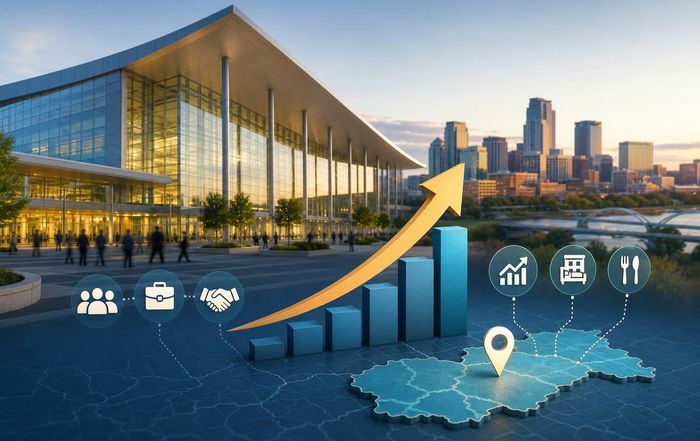
How Business Events Support Regional Economic Activity
Business events have shifted into powerful engines of regional growth, innovation and global visibility. From major trade shows and conventions to smaller sector-specific conferences, investor summits and corporate retreats, these gatherings now sit at the intersection of economic development, workforce strategy, technology adoption and place branding. For intelligent people who watch changes across the economy, business, finance, jobs, technology and regulation, understanding how business events support regional economic activity is increasingly important to interpreting broader trends in both the United States and key global markets.
The Economic Logic of Business Events
Economists and policymakers increasingly recognize that business events represent one of the most efficient mechanisms for concentrating economic activity within a defined time and space. When thousands of attendees converge on a city for a major convention or trade fair, they generate a surge in direct spending on hotels, restaurants, transportation, retail and entertainment. Organizations such as U.S. Travel Association and American Hotel & Lodging Association regularly highlight that meetings and events are among the highest-yield segments for hospitality and travel, because business travelers typically spend more per day than leisure travelers and are often less price-sensitive when traveling on corporate or institutional budgets. Readers can explore broader context on travel-related economic trends through USA update's travel coverage.
Beyond direct spending, there are important indirect and induced effects. Local suppliers provide services to venues, caterers, audiovisual companies, transportation firms and security providers, which then spend their income within the community. This multiplier effect, analyzed in depth by organizations such as the World Travel & Tourism Council and OECD, helps explain why cities compete intensely to attract flagship events. Learn more about how these multiplier dynamics shape regional economies through broader analyses of economic trends and policy.
In recent years, economic impact studies from cities such as Las Vegas, Orlando, Chicago and Houston have consistently shown that large-scale conventions can generate hundreds of millions of dollars in regional economic activity annually, depending on the size and frequency of events. Methodologies vary across studies and are periodically debated by academic researchers and think tanks, but there is broad agreement that properly measured, business events are a significant driver of local and regional GDP, employment and tax revenues.
Business Events as Catalysts for Jobs and Employment
Business events support jobs across a surprisingly wide spectrum of skills and wage levels, making them a critical component of employment strategies for many metropolitan areas. On the front lines, they sustain positions in hotels, restaurants, convention centers, transportation providers and event management companies. Behind the scenes, they support professional roles in marketing, logistics, technology implementation, security planning, financial management and regulatory compliance. Readers interested in the intersection of events and labor markets can explore related new changes through USA update's jobs coverage and employment insights.
In the United States, industry groups and research organizations have documented that the meetings and events sector supports millions of jobs when considering both direct and indirect employment. While exact figures vary by methodology and time period, there is consistent evidence from sources such as U.S. Bureau of Labor Statistics, U.S. Travel Association and regional tourism boards that cities with strong convention and events infrastructure, such as Las Vegas, Orlando and New York, maintain sizable employment bases tied to this activity. Similar patterns are observed in international hubs like London, Frankfurt, Singapore and Dubai, where government agencies and convention bureaus often publish detailed data on employment supported by business tourism.
The jobs supported by business events are not limited to entry-level service roles. Large events increasingly require sophisticated digital infrastructure, hybrid event production expertise, data analytics capabilities and advanced security planning. This has created new opportunities for technology specialists, audiovisual engineers, cybersecurity professionals and data analysts. As hybrid and virtual components become standard, demand for platform developers, user experience designers and digital content producers continues to grow. For readers following shifts in the labor market and skills demand, USA update regularly examines how technology and service industries intersect in its new technology section.
Business events also play a role in workforce development beyond immediate job creation. Conferences and trade shows frequently include training sessions, certification programs and continuing education workshops, which allow local professionals to upgrade their skills without leaving their region. Professional associations, universities and training providers collaborate with event organizers to deliver accredited courses in fields ranging from engineering and healthcare to finance and project management. Organizations such as Project Management Institute, Institute of Electrical and Electronics Engineers (IEEE) and American Bar Association use conferences as platforms for professional development, which in turn enhances the human capital base of host regions.
Supporting Local Businesses and Entrepreneurship
One of the most direct ways business events support regional economic activity is by connecting local businesses with national and international buyers, partners and investors. When a city hosts a major trade fair or industry conference, small and medium-sized enterprises (SMEs) can showcase their products and services to audiences they might not otherwise reach, reducing the cost of customer acquisition and accelerating market entry.
For example, sector-specific events in technology, clean energy, medical devices, aerospace or advanced manufacturing often include exhibition areas where local firms can present innovations alongside global competitors. Organizations such as Consumer Technology Association, which organizes the CES trade show in Las Vegas, and BIO (Biotechnology Innovation Organization), which runs the BIO International Convention, actively work with regional economic development agencies to highlight local innovation ecosystems. Internationally, events like Hannover Messe in Germany or Mobile World Congress in Spain serve similar roles as global marketplaces for technology and industrial solutions.
Local chambers of commerce, startup accelerators and regional development agencies frequently coordinate "pavilions" or group exhibits that bring together promising local companies under a unified regional brand. These collaborative efforts help small firms appear more substantial and credible to global buyers, while enabling them to share costs and resources. Learn more about how such regional business strategies shape broader economic trajectories in USA update's business coverage.
Business events are also fertile ground for entrepreneurship. Pitch competitions, innovation challenges and investor forums embedded within conferences give startups direct access to venture capital, corporate venture arms and angel investors. Organizations like Techstars, Startup Grind and Web Summit partner with cities around the world to host events that attract founders, investors and ecosystem builders. Reports from Kauffman Foundation and other entrepreneurship research institutions have emphasized the importance of dense, face-to-face networking environments for startup formation and growth, even as digital platforms make remote connections easier.
For local service providers, business events can be transformative. Event planners, marketing agencies, caterers, translation services, audiovisual technicians, transportation companies and security firms often rely on major conferences and exhibitions for a significant portion of their annual revenue. Many of these businesses are small, locally owned enterprises that depend on recurring events to maintain stable operations and employment. When a region successfully positions itself as a reliable host for high-quality events, it creates a more predictable pipeline of work for these firms, encouraging investment in equipment, training and staff.
Business Events and Regional Branding
Beyond immediate economic impact, business events play a strategic role in shaping how regions are perceived by investors, talent and visitors. When a city becomes known as the regular host of a major industry gathering, it gains visibility and credibility in that sector, which can influence long-term investment decisions and talent migration.
Examples of this phenomenon are visible across North America, Europe, Asia and beyond. Las Vegas has built a reputation as a global hub for large-scale conventions, supported by extensive hotel inventory and purpose-built venues. San Francisco and the broader Bay Area have long been associated with technology conferences and developer events, while Austin's SXSW has evolved into a global platform for innovation, media and creative industries. Internationally, Singapore positions itself as a neutral, well-connected location for Asia-Pacific business summits, while Davos in Switzerland is closely identified with the World Economic Forum's annual meeting, which convenes political, business and civil society leaders to discuss global challenges.
Regional branding through events is not limited to major global hubs. Mid-sized cities in the United States, such as Denver, Nashville, Charlotte and Minneapolis, have pursued strategies to attract specialized conferences that align with their economic strengths, whether in healthcare, fintech, energy, logistics or advanced manufacturing. Similar strategies are visible in European cities like Stockholm, Copenhagen and Barcelona, and in Asia-Pacific centers such as Melbourne, Seoul and Bangkok. Economic development agencies often collaborate with convention bureaus and industry associations to align event attraction with sectoral priorities.
Business events also contribute to place branding by showcasing local culture, cuisine, architecture and natural attractions. Delegates who attend conferences often extend their stays for leisure or return later with family, a phenomenon that tourism researchers refer to as "business events legacy tourism." Destination marketing organizations, such as Visit Orlando, NYC & Company or Tourism Australia, frequently highlight the role of meetings and conventions in driving repeat visitation and word-of-mouth promotion. Readers can explore how such dynamics intersect with broader news events in our independent USA update's news section, which often touches on tourism, travel and regional development.
Knowledge Exchange, Innovation and Technology Adoption
While spending and employment effects are critical, the impact of business events on regional innovation capacity may be even more significant over the long term. Conferences, trade shows and summits serve as concentrated forums for knowledge exchange, where researchers, entrepreneurs, policymakers and practitioners share new ideas, technologies and business models. This cross-pollination accelerates the diffusion of innovation and can influence the direction of regional economic development.
Academic research published in journals associated with organizations such as Elsevier, Springer Nature and Wiley has examined how conferences contribute to scientific collaboration and knowledge diffusion. Studies in fields ranging from medicine and engineering to economics and social sciences demonstrate that researchers who meet at conferences are more likely to collaborate on future projects, co-author papers and share data. For host regions with strong universities and research institutions, attracting major academic conferences can enhance the visibility of local expertise and foster international partnerships.
In the business sphere, trade shows are critical venues for product launches, demonstrations and buyer-supplier negotiations. Many of the world's largest technology, automotive, aerospace, energy and healthcare companies time their announcements to coincide with major industry events, ensuring maximum exposure to media, investors and potential customers. Industry observers can follow these developments through outlets such as Bloomberg, Financial Times, The Wall Street Journal, CNBC and Reuters, which regularly cover major announcements from global events.
Business Event Impact Estimator
Adjust the sliders to explore how a single event can support regional economic activity.
The rise of digital transformation and hybrid work has changed how knowledge is shared at events, but it has not diminished the importance of in-person interaction. Instead, many organizers have adopted hybrid models that combine physical gatherings with virtual components, extending their reach to global audiences while maintaining the serendipitous networking and informal conversations that are difficult to replicate online. Technology providers such as Zoom, Microsoft, Cisco and specialized event platforms have invested heavily in tools that support hybrid formats, including interactive streaming, virtual exhibition booths and AI-driven matchmaking.
For regions that host innovation-focused events, these gatherings can also serve as laboratories for testing smart city technologies, digital infrastructure and sustainability solutions. Cities like Singapore, Amsterdam and Barcelona have used major events to pilot advanced mobility systems, energy-efficient building technologies and data-driven crowd management tools. In the United States, similar approaches are emerging in cities that integrate event planning with broader smart city strategies, as documented by organizations such as Smart Cities Council and National League of Cities. Readers interested in how such technological experimentation influences wider economic patterns can explore the impartial USA update's technology coverage.
Financial Flows, Investment and Capital Markets
Business events play a nuanced role in finance and capital markets by facilitating connections between investors, companies and policymakers. Investor conferences organized by major banks, stock exchanges and financial media companies bring together institutional investors, analysts and corporate executives to discuss earnings, strategies and macroeconomic conditions. Events hosted by organizations such as Goldman Sachs, J.P. Morgan, Morgan Stanley, Nasdaq and New York Stock Exchange serve as platforms where companies present to investors, often influencing capital allocation decisions.
Specialized events in private equity, venture capital, infrastructure investment and sustainable finance create opportunities for regional projects to attract funding. Infrastructure and energy investment forums, for example, connect project developers and public-sector agencies with global investors seeking opportunities in transportation, renewable energy, digital infrastructure and social assets. Organizations like World Bank, International Finance Corporation, OECD and regional development banks frequently participate in or sponsor such events, highlighting pipelines of projects and discussing regulatory frameworks.
For emerging companies, especially in technology and high-growth sectors, startup and scale-up events provide critical exposure to venture capital and growth equity funds. Conferences such as TechCrunch Disrupt, Collision, Slush, Money20/20 and regional startup festivals in North America, Europe and Asia bring together founders and investors in concentrated settings, accelerating deal-making and partnership formation. While not every pitch results in funding, the overall effect is to make capital more accessible and to shorten the time between innovation and commercialization.
Regions that position themselves as hosts for investment-focused events can benefit from increased visibility among global investors, which may lead to follow-up visits, due diligence activities and eventual capital deployment. In this way, business events complement long-term investment promotion strategies pursued by economic development agencies and sovereign investment authorities. Readers following these intersections of finance and regional growth can find related analysis in our finance coverage.
Regulatory Dialogue and Policy Development
Another dimension of business events that significantly influences regional economic activity is their role in regulatory dialogue and policy development. Industry conferences often feature sessions where regulators, policymakers and industry leaders discuss upcoming rules, compliance expectations and best practices. These interactions help reduce information asymmetry, clarify regulatory intent and give stakeholders opportunities to provide feedback before formal rules are finalized.
For example, financial sector events frequently host representatives from institutions such as U.S. Securities and Exchange Commission, Federal Reserve, European Central Bank, Bank of England and other national regulators, who explain evolving frameworks for banking, capital markets, digital assets, cybersecurity and consumer protection. Similarly, healthcare conferences bring together agencies like U.S. Food and Drug Administration, European Medicines Agency and national health authorities to discuss clinical trial standards, medical device regulations and digital health policies.
In technology and digital economy domains, conferences and summits provide venues for discussing issues such as data protection, artificial intelligence governance, platform regulation and cross-border data flows. Organizations like World Economic Forum, Internet Governance Forum, OECD and UNESCO often convene or participate in events that bring together governments, companies and civil society to debate emerging norms. These dialogues influence the regulatory environment in which businesses operate, shaping investment decisions and innovation strategies.
Regions that host major policy-oriented events gain visibility as centers of thought leadership and governance innovation. They also benefit from the presence of global experts who may advise local institutions or participate in regional advisory councils. For clever individuals tracking how regulation intersects with economic performance, USA update provides ongoing coverage in its regulation section, which often touches on the implications of such policy dialogues for businesses and consumers.
The Role of Business Events in Consumer and Energy Markets
Business events do not only influence business-to-business transactions; they also shape consumer markets and energy transitions in ways that have direct implications for households and communities. Major consumer-focused trade shows and expos, such as technology fairs, auto shows, home and building exhibitions and food industry events, introduce new products and trends that ultimately reach retail shelves and online marketplaces. Organizations like Consumer Technology Association, National Retail Federation and Specialty Food Association organize events where retailers, distributors and media discover innovations that will shape consumer choices in the coming years. Readers can explore how such developments affect everyday purchasing decisions in the consumer coverage.
In the energy sector, conferences and trade shows play a central role in advancing the transition to cleaner and more resilient energy systems. Events organized by entities such as CERAWeek by S&P Global, World Energy Congress, RE+ (formerly Solar Power International) and Offshore Technology Conference bring together energy companies, technology providers, policymakers and financiers to discuss the future of oil and gas, renewables, grid modernization, hydrogen, carbon capture and energy storage. These gatherings often serve as launchpads for new technologies, partnerships and investment commitments that shape regional energy strategies.
Regions with strong energy industries, such as Texas, Alberta, the North Sea region and parts of the Middle East and Asia-Pacific, rely on these events to maintain their positions in global supply chains and to attract investment in next-generation projects. Host cities gain not only from visitor spending but also from the clustering of expertise and capital that accompanies major energy forums. For deeper insight into how energy markets intersect with regional development, readers can consult USA update's energy coverage.
Sustainability has become a central theme across both consumer and energy events, reflecting growing public and investor expectations around climate responsibility, circular economy principles and social impact. Conferences increasingly feature dedicated tracks on environmental, social and governance (ESG) strategies, sustainable supply chains and green finance. Organizations like UN Environment Programme, Global Reporting Initiative, CDP and Sustainability Accounting Standards Board (now part of the Value Reporting Foundation, integrated into IFRS Foundation) participate in or support events that promote standardized reporting and responsible business practices. Regions that host sustainability-focused events can strengthen their reputations as leaders in the green transition, attracting investment and talent aligned with these values.
Global and Regional Trends Reshaping Business Events
In the current decade, several structural trends are reshaping how business events support regional economic activity across the United States, North America and worldwide. Understanding these trends helps policymakers, businesses and communities adapt strategies to maximize benefits while managing risks.
One major trend is the normalization of hybrid formats that blend physical and virtual participation. While the initial acceleration of virtual events was driven by public health constraints earlier in the decade, organizers have since recognized the advantages of wider reach, accessibility and data collection offered by digital components. Hybrid events allow participants from Europe, Asia, Africa and the Americas to engage without always traveling, reducing costs and environmental impact while preserving the value of in-person networking for those who attend physically. Technology companies and specialized event platforms continue to refine tools that support interactive experiences, real-time translation, AI-driven networking recommendations and advanced analytics.
Another trend is the growing emphasis on resilience and risk management. Event organizers, venues and host cities have invested in more robust contingency planning, health and safety protocols, cybersecurity measures and insurance products. Organizations such as World Health Organization, International Air Transport Association, Global Business Travel Association and Events Industry Council have published guidelines and best practices that help standardize approaches across regions. This focus on resilience aims to ensure that business events can continue to operate even amid disruptions, preserving their role as economic stabilizers and connectors.
Sustainability is also reshaping event design, logistics and infrastructure. Many organizers now pursue certifications and standards such as ISO 20121 for sustainable event management, as well as voluntary commitments to reduce waste, minimize carbon emissions and support local communities. Venues invest in energy-efficient systems, waste reduction programs and responsible sourcing policies. Delegates increasingly expect organizers to address environmental impact, and sponsors often prefer events that align with their own sustainability commitments. Learn more about sustainable business practices and their economic implications through top reporting in USA update's economy section.
Finally, there is a notable shift toward more inclusive and diverse participation in business events. Organizations and host regions are placing greater emphasis on representation across gender, race, geography, industry segment and organizational size. This includes efforts to feature diverse speakers, support participation from underrepresented entrepreneurs, offer scholarships or reduced fees for smaller businesses and ensure accessibility for people with disabilities. Research from institutions such as McKinsey & Company, Harvard Business Review and World Economic Forum underscores that more diverse networks and decision-making environments tend to produce better outcomes, which reinforces the value of inclusive event design for long-term regional prosperity.
Strategic Considerations for Regions Competing for Events
As cities and regions across the United States, Europe, Asia, Africa and other areas compete to attract high-impact business events, strategic planning becomes essential. Successful regions typically combine several elements: modern and flexible venues, reliable transportation infrastructure, sufficient hotel capacity, strong digital connectivity, favorable regulatory and tax environments, and compelling cultural and leisure offerings. They also benefit from coordinated efforts among public agencies, private sector stakeholders and community organizations.
Convention and visitors bureaus, economic development agencies and chambers of commerce often collaborate to craft bids for major events, offering packages that may include venue discounts, marketing support, logistical assistance and, in some cases, financial incentives. These efforts are increasingly aligned with broader economic strategies that prioritize specific sectors, such as technology, life sciences, advanced manufacturing, clean energy or creative industries. By targeting events that reinforce existing strengths, regions can deepen clusters of expertise and investment, rather than pursuing a purely volume-based approach.
Data and analytics play a growing role in these strategies. Regions use visitor tracking, spending analysis, surveys and impact modeling to demonstrate value to stakeholders and to refine their offerings. Organizations like Destinations International, Meetings Mean Business Coalition and Skift Meetings provide research, benchmarking and case studies that help cities understand best practices and evolving expectations. For readers following how these strategic choices play out in different markets, USA update regularly examines related changes in its international coverage and across its main often cited news portal.
Community engagement is another critical factor. While business events bring economic benefits, they can also create challenges related to congestion, noise, resource use and housing markets, especially in popular urban centers. Transparent communication with residents, equitable distribution of benefits and investments in public infrastructure help ensure that local communities view events as assets rather than burdens. Some cities have developed community legacy programs that link events to local education, skills training, volunteering and cultural initiatives, reinforcing social cohesion and long-term impact.
The Role of Media, Entertainment and Lifestyle!
Business events increasingly intersect with media, entertainment and lifestyle sectors, creating additional layers of economic and cultural impact. Major conferences often feature high-profile speakers, live performances, film screenings, art installations and experiential marketing campaigns that blur the boundaries between professional and entertainment experiences. Media organizations, including global outlets and specialized trade publications, provide extensive coverage of flagship events, amplifying their reach and shaping narratives about host regions.
Events like SXSW in Austin, Web Summit in Lisbon, Cannes Lions International Festival of Creativity in France and Art Basel fairs in Switzerland, Miami Beach and Hong Kong exemplify this convergence of business, culture and lifestyle. These gatherings attract not only industry professionals but also artists, creators, influencers and tourists, generating diverse revenue streams and enhancing the cultural vibrancy of host cities. For readers interested in how such events influence entertainment and lifestyle trends, USA update offers related stories in its updated entertainment and inspirational lifestyle sections.
In the United States and other major markets, there is also a growing ecosystem of niche events that cater to specific communities and interests, from e-sports and gaming to wellness, culinary arts, design and outdoor recreation. These events may be smaller in scale than massive trade shows, but they can have outsized impact on particular neighborhoods or regions, especially when they recur annually and build loyal followings. The rise of influencer marketing and social media has amplified the visibility of such gatherings, turning them into platforms for product discovery, brand storytelling and community building.
Business Events as Long-Term Economic Infrastructure
For regions seeking sustainable and inclusive prosperity, business events should be viewed not merely as episodic gatherings but as long-term economic infrastructure that supports innovation, employment, investment and global connectivity. In an era defined by rapid technological change, shifting geopolitical dynamics and evolving work patterns, the ability to convene diverse stakeholders around shared challenges and opportunities is a strategic asset.
The United States, Canada and other North American economies, alongside leading centers in Europe, Asia-Pacific, the Middle East, Africa and Latin America, are likely to continue investing in event infrastructure, digital capabilities and policy frameworks that enable high-value gatherings. As hybrid models mature, regions that combine physical excellence with digital sophistication will be best positioned to attract global audiences and to translate events into enduring economic relationships.
The story of how business events support regional economic activity is deeply intertwined with broader themes that define modern economies: the evolution of work, the geography of innovation, the future of cities, the transition to sustainable energy systems and the quest for inclusive growth. By following daily or recent events in economy, business, finance, jobs, technology, regulation and related areas, everyone can better understand how the meetings and events ecosystem will continue to shape opportunities across the United States and around the world in the years ahead.
In this context, business events are more than conferences on a calendar; they are dynamic platforms where ideas, capital, talent and communities converge. Their capacity to generate economic value, foster innovation, strengthen regional brands and support inclusive employment makes them an essential component of modern economic strategy, and their evolution will remain a vital topic for informed analysis and reporting on USA update.
