
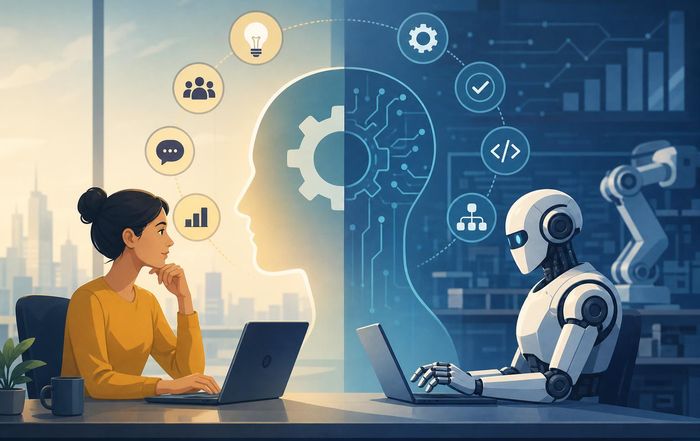
How Automation Is Redefining Skills Needed in Modern Workplaces
Introduction: Automation Moves From the Periphery to the Core
Automation has moved decisively from the margins of business operations to the center of strategic planning, reshaping how organizations across the United States and worldwide think about talent, competitiveness, and long-term value creation. What was once framed narrowly as a question of robots replacing human labor has evolved into a more complex and nuanced transformation of work itself, where software, robotics, artificial intelligence, and data-driven systems augment human capabilities, reconfigure job roles, and demand a new mix of technical, cognitive, and interpersonal skills. For many of our loyal visitors this shift is not an abstract tech trend but a hard hitting reality that is quickly influencing the economy, employment prospects, corporate decision-making, and personal career trajectories.
Automation now permeates sectors as diverse as manufacturing, healthcare, logistics, financial services, retail, energy, and professional services, with tools ranging from robotic process automation and autonomous vehicles to generative AI and advanced analytics platforms. Organizations that once experimented with isolated pilots are increasingly deploying automation at scale, guided by frameworks from institutions such as the World Economic Forum and the OECD, which offer forward-looking perspectives on the future of work and skills. As businesses navigate these changes, they must balance productivity gains and cost efficiencies with a strong commitment to workforce development, ethical governance, and social responsibility, recognizing that sustainable competitive advantage in an automated era rests on the quality, adaptability, and resilience of their people as much as on the sophistication of their technologies.
The Current State of Automation in the Global and U.S. Economy
In the United States, automation is tightly interwoven with broader economic trends that usa-update.com covers in its dedicated economy section, including moderate but uneven growth, persistent labor shortages in key industries, and ongoing debates about productivity stagnation and wage dynamics. According to analyses from sources such as the U.S. Bureau of Labor Statistics, automation is both displacing certain routine tasks and generating new categories of work, often at higher skill levels and with different competency requirements than traditional roles. This dual impact complicates simplistic narratives of job loss, highlighting instead a process of occupational reshaping in which many roles are neither fully automated nor untouched, but fundamentally reconfigured.
Globally, organizations like the International Labour Organization and the World Bank have emphasized that automation's effects vary significantly by region, sector, and demographic group, with advanced economies in North America and Europe experiencing different patterns of disruption and opportunity than emerging markets in Asia, Africa, and South America. In manufacturing hubs such as Germany, South Korea, and Japan, high levels of industrial automation coexist with robust employment, suggesting that strategic investment in skills and innovation can mitigate displacement risks. In contrast, some developing economies face the challenge of "premature deindustrialization," where automation in advanced markets reduces the traditional path of labor-intensive manufacturing as a development engine. For business leaders watching these shifts through premium daily updated sites like usa-update.com and pages on international coverage, the central question is not whether automation will transform work, but how to prepare people and organizations for that transformation.
From Tasks to Capabilities: How Automation Reconfigures Work
One of the most important conceptual shifts in understanding automation's impact on skills is moving from a job-level view to a task-level view. Research from institutions such as MIT and McKinsey & Company has shown that few occupations are entirely automatable; instead, a significant percentage of the activities within many jobs can be automated, particularly those that are routine, predictable, and rules-based. This means that automation tends to unbundle roles into components, with machines taking over specific tasks while humans focus on those requiring judgment, creativity, empathy, and complex problem-solving.
In finance and professional services, for example, software bots and AI tools now handle data entry, document processing, basic compliance checks, and routine customer inquiries, freeing human employees to concentrate on advisory work, relationship management, and strategic analysis. Similar patterns are visible in logistics, where autonomous systems optimize routing and warehouse operations, while human workers oversee exceptions, manage client relationships, and coordinate cross-functional activities. Observers following these changes through our often recomended business coverage can see how task-level automation is gradually elevating the importance of higher-order capabilities, even in roles that were historically defined by manual or repetitive work.
Crucially, this reconfiguration of work blurs traditional boundaries between "blue-collar" and "white-collar" roles, as highly automated factories require technicians who can interpret data from sensors and predictive maintenance systems, while office environments employ digital tools that standardize and automate knowledge-intensive tasks. As a result, workers at all levels need a baseline of digital literacy, data fluency, and comfort with technology, combined with the human skills that are hardest to codify and replicate in software. Companies that recognize this shift are redesigning job descriptions, performance metrics, and career paths to emphasize capabilities over narrow task execution, aligning talent strategies with the realities of an increasingly automated workplace.
The New Core Skill Set: Technical, Cognitive, and Human
Automation's advance has made clear that future-ready workers require a blend of technical, cognitive, and human skills, rather than a singular focus on any one domain. Technical skills remain important, especially in areas such as data analysis, software integration, and system oversight, but they are most valuable when combined with the ability to interpret results, make nuanced decisions, and collaborate across disciplines. Reports from the World Economic Forum and OECD Skills initiatives underscore that analytical thinking, creativity, and complex problem-solving are among the fastest-growing skills in demand, alongside resilience, flexibility, and emotional intelligence.
In practice, this means that a finance professional may need to understand how to work with automated forecasting tools and AI-enhanced risk models, while still exercising human judgment in assessing geopolitical developments, regulatory changes, or client-specific circumstances. A healthcare worker interacting with AI-driven diagnostic systems must be able to interpret recommendations, communicate clearly with patients, and integrate algorithmic insights with holistic clinical judgment. Business readers exploring the always updated finance, employment, and jobs reporting online here will recognize that employers are increasingly seeking candidates who combine domain expertise with comfort in working alongside intelligent systems.
Human skills, often labeled as "soft skills," are in fact becoming critical differentiators in an automated environment. Negotiation, leadership, empathy, cultural intelligence, and ethical reasoning are essential in roles that require coordinating cross-border teams, navigating regulatory complexities, and managing stakeholder expectations across North America, Europe, Asia, and beyond. As automation handles more of the routine and transactional interactions, the remaining human-to-human engagements often involve higher stakes and more ambiguity, making the ability to build trust, resolve conflict, and communicate with clarity more important than ever. Organizations that invest in these capabilities, both through hiring and through ongoing development, position themselves to extract greater value from their automation investments while maintaining strong relationships with employees, customers, and regulators.
Skills Demand by Category (2026)
Sector-Specific Transformations Across the U.S. and Key Regions
Automation's redefinition of skills is not uniform; it varies across sectors and regions, reflecting differences in technology adoption, regulatory frameworks, and labor market structures. In the United States, manufacturing has long been at the forefront of automation, with industrial robots and advanced control systems reshaping production lines in states like Michigan, Ohio, and Texas. Companies such as General Motors, Ford, and Tesla rely on sophisticated robotics and predictive analytics, which in turn require technicians, engineers, and operators capable of programming, maintaining, and optimizing these systems. Learn more about industrial robotics and standards from organizations like the Robotics Industries Association and ISO to understand how technical requirements are evolving.
In the services sector, automation has accelerated in banking, insurance, and retail, where digital channels and AI-driven personalization have become standard. JPMorgan Chase, Bank of America, and other major financial institutions have deployed AI for fraud detection, customer support, and back-office automation, leading to rising demand for data scientists, cybersecurity experts, and compliance professionals who can interpret complex regulatory requirements from bodies like the Securities and Exchange Commission and the European Central Bank. In Europe, banks in Germany, France, and the Netherlands are undergoing similar transitions, while Asian financial hubs such as Singapore and Hong Kong are positioning themselves as leaders in fintech innovation, supported by proactive regulatory sandboxes and digital infrastructure investments.
Healthcare and life sciences have also seen significant automation, from AI-assisted diagnostics and robotic surgery to automated pharmacy systems and hospital logistics. Organizations like the Mayo Clinic and Cleveland Clinic have pioneered the integration of AI into clinical workflows, which requires not only technical staff but also clinicians trained to interpret algorithmic outputs and manage patient expectations. Internationally, systems in the United Kingdom, Canada, and Australia are experimenting with similar models, guided by ethical frameworks from entities like the World Health Organization and National Institutes of Health. As we expand the international coverage, globally aware readers can observe how different health systems balance innovation with equity and privacy concerns.
In logistics, e-commerce, and supply chain management, automation is reshaping distribution centers, ports, and last-mile delivery. Companies such as Amazon, UPS, and Maersk leverage robotics, AI-driven demand forecasting, and autonomous vehicles to increase efficiency and resilience. This transformation has implications not only for workers in the United States but also for partners and suppliers in Europe, Asia, and South America, where automated ports and smart warehouses are becoming more common. Professionals in these sectors need skills in systems thinking, data interpretation, and cross-border collaboration, as supply chains increasingly rely on integrated digital platforms and real-time analytics.
The Role of AI and Data in Shaping Skill Requirements
Artificial intelligence and data analytics represent the most dynamic drivers of changing skill requirements, influencing nearly every sector that we cover, from technology and business to consumer markets and energy. Generative AI, natural language processing, computer vision, and machine learning models are automating tasks that were once considered uniquely human, such as drafting documents, analyzing complex datasets, and generating code. Organizations like OpenAI, Google DeepMind, and Microsoft have pushed the boundaries of what AI systems can do, prompting businesses to rethink job design, training, and governance.
As AI systems become more capable, the skills required to work effectively with them shift from basic tool usage to deeper understanding of model behavior, limitations, and ethical considerations. Data literacy is no longer confined to analysts; managers, marketers, HR professionals, and operations leaders need to interpret dashboards, question algorithmic recommendations, and understand how data quality, bias, and model drift can affect decisions. Resources such as the Harvard Business Review and MIT Sloan Management Review offer frameworks for building data-driven cultures, emphasizing that technical tools must be accompanied by organizational capabilities in critical thinking, cross-functional collaboration, and change management.
At the same time, AI's growing role raises questions about transparency, fairness, and accountability that demand legal, ethical, and regulatory expertise. Professionals versed in privacy regulations like the EU's General Data Protection Regulation and emerging AI governance frameworks in the United States, Canada, and Asia are increasingly valuable, as companies seek to avoid reputational and legal risks associated with opaque or biased decision-making systems. This intersection of technology, law, and ethics creates new career paths and skill combinations, from AI policy advisors to algorithmic auditors, underscoring that automation does not merely replace existing roles but also creates new ones that require interdisciplinary knowledge and a strong sense of responsibility.
Regulation, Governance, and Trust in an Automated Era
Automation's expansion has brought regulatory and governance issues to the forefront, particularly in regions with strong consumer protection and labor standards such as the United States, the European Union, and the United Kingdom. Regulatory bodies including the Federal Trade Commission, the European Commission, and national data protection authorities have issued guidelines and enforcement actions related to algorithmic transparency, workplace monitoring, and automated decision-making, shaping how companies design and deploy automation tools. Subscribers and visitors following recent regulation reporting can see that compliance is no longer a narrow legal function but a strategic consideration that influences technology choices, vendor relationships, and internal skill development.
Trustworthiness has emerged as a critical dimension of automation strategy, encompassing not only regulatory compliance but also ethical principles, stakeholder engagement, and risk management. Organizations that adopt clear governance frameworks, conduct impact assessments, and involve employees in the design of automated workflows are more likely to build trust and secure long-term benefits from their investments. Institutions such as the National Institute of Standards and Technology and the IEEE have developed guidelines for trustworthy AI and cyber-physical systems, emphasizing robustness, transparency, and human oversight. These frameworks require skilled professionals who understand both the technical and human dimensions of automation, reinforcing the importance of cross-disciplinary education and continuous learning.
From a labor perspective, governments and social partners in countries like Germany, Sweden, and Denmark have experimented with co-determination and tripartite dialogue to manage technological transitions, providing examples for North American and Asian policymakers seeking to balance innovation with social stability. The role of unions and worker councils in shaping automation strategies varies across regions, but in all cases, open dialogue and shared planning can reduce resistance and align skill development initiatives with actual business needs. For a business audience, understanding these governance models is not merely a matter of compliance; it is a component of strategic risk management and reputation building in a world where stakeholders increasingly scrutinize how companies treat their people during periods of technological change.
Reskilling, Upskilling, and Lifelong Learning
As automation reshapes task profiles and job requirements, reskilling and upskilling have become central to workforce strategy. Employers, educational institutions, and governments are increasingly aligned in recognizing that traditional models of front-loaded education followed by decades of relatively stable employment no longer fit the realities of modern careers. Instead, workers must engage in lifelong learning, periodically acquiring new skills and updating existing ones to remain relevant in a labor market where technology cycles are accelerating. Platforms such as Coursera, edX, and LinkedIn Learning have grown rapidly by providing flexible, modular learning opportunities, often developed in partnership with leading universities like Stanford, MIT, and INSEAD.
For U.S. workers and employers tracking latest employment trends, this shift means that career resilience depends on the ability to learn continuously, navigate transitions between roles, and translate existing strengths into new contexts. Companies across sectors are investing in internal academies, mentorship programs, and rotational assignments that expose employees to automation tools and data-driven decision-making, while also reinforcing human skills such as leadership and communication. Public policy initiatives, including workforce development grants and community college partnerships, aim to support displaced workers and underrepresented groups in accessing new opportunities in technology-enabled fields, from advanced manufacturing and clean energy to healthcare technology and digital marketing.
Internationally, countries like Singapore, Finland, and Canada have implemented national lifelong learning strategies, offering individuals training credits, guidance services, and recognition of prior learning to facilitate career transitions. These models highlight the importance of coordinated approaches that involve employers, educators, and government agencies, rather than leaving individuals to navigate complex skill requirements alone. For multinational companies operating across North America, Europe, and Asia, aligning corporate learning strategies with local policy frameworks can create synergies that benefit both the business and the broader labor market, reinforcing their reputation as responsible and forward-looking employers.
Implications for Hiring, Career Paths, and Organizational Design
Automation's influence on skills is reshaping not only individual roles but also broader patterns of hiring, career progression, and organizational design. Traditional linear career ladders are giving way to more dynamic career lattices, where employees move across functions, geographies, and project teams, accumulating diverse experiences that prepare them for leadership in complex, technology-rich environments. Talent acquisition strategies increasingly emphasize potential, adaptability, and learning agility over narrow experience in a single role, as employers recognize that specific technical tools may change rapidly while underlying cognitive and interpersonal strengths remain valuable.
Recruiters and hiring managers are adopting skills-based hiring approaches, supported by competency frameworks and assessments that focus on capabilities such as problem-solving, collaboration, and digital fluency. Organizations like SHRM and WorldatWork provide guidance on designing job architectures and reward systems that reflect these evolving priorities. For folks interested in jobs and business trends and events, this means that career planning should focus on building a portfolio of transferable skills and experiences, rather than relying solely on traditional job titles or industry labels.
Organizational structures are also evolving to support cross-functional collaboration between IT, operations, HR, and business units, recognizing that successful automation projects require input from multiple stakeholders. Agile methodologies, product-oriented teams, and centers of excellence for automation and AI are becoming more common, demanding leadership skills that combine technical literacy with the ability to manage diverse, often globally distributed teams. As companies in the United States, Europe, and Asia adopt these models, they create new leadership pathways for individuals who can bridge the gap between technology and business outcomes, further reinforcing the premium placed on hybrid skill sets.
Automation, Lifestyle, and the Human Experience of Work
Beyond formal skills and organizational structures, automation is influencing the lived experience of work and lifestyle choices, themes that resonate with readers of usa-update.com's exciting lifestyle coverage and new travel section. Remote and hybrid work arrangements, enabled in part by digital tools and automated workflows, have altered how professionals balance work and personal life, where they choose to live, and how they engage with colleagues across time zones and cultures. Automation can reduce drudgery and free time for higher-value tasks, but it can also introduce new forms of stress, such as constant digital monitoring, algorithmic performance evaluation, and the need to remain perpetually "up to date" with evolving tools.
Addressing these lifestyle implications requires skills in self-management, digital wellbeing, and boundary setting, as well as organizational policies that support healthy work practices. Companies that integrate automation thoughtfully, with attention to human factors and mental health, are likely to attract and retain talent in a competitive global market. Resources from organizations like the American Psychological Association and the World Health Organization provide evidence-based guidance on promoting wellbeing in technology-intensive environments, emphasizing the importance of autonomy, social support, and meaningful work. For individuals, cultivating resilience, time management, and reflective practices becomes part of the broader skill set needed to thrive in an automated world.
Automation is also influencing consumer behavior and expectations, as personalized recommendations, instant service, and frictionless digital experiences become standard across sectors. Professionals in marketing, customer experience, and product design must understand how automated systems shape user journeys and perceptions of value, while also being sensitive to concerns about privacy, manipulation, and digital fatigue. This interplay between automation, lifestyle, and consumer expectations reinforces the need for holistic skills that combine technical understanding with empathy, storytelling, and ethical awareness.
Strategic Considerations for Leaders and Policymakers
For business leaders, and analysts who rely us for impartial news, events, and key insights, automation's redefinition of skills presents both opportunities and responsibilities. At the organizational level, leaders must craft coherent strategies that align automation investments with workforce development, ensuring that productivity gains are accompanied by meaningful opportunities for employees to grow and contribute. This involves transparent communication about the purpose and impact of automation, participatory design processes that involve frontline workers, and metrics that track not only efficiency but also engagement, innovation, and inclusion.
At the policy level, governments and social partners must design frameworks that support equitable access to reskilling opportunities, protect workers from exploitative practices, and encourage responsible innovation. International cooperation through forums such as the G20, OECD, and World Economic Forum can help align standards and share best practices, particularly in areas like AI governance, cross-border data flows, and labor market transitions. For regions such as North America, Europe, and Asia, where automation is advancing rapidly, coordinated approaches can reduce fragmentation and uncertainty, benefiting both businesses and workers.
Leaders in education, from K-12 systems to universities and vocational institutions, must also adapt curricula and teaching methods to prepare students for an automated world. This includes integrating computational thinking, data literacy, and project-based learning with strong foundations in communication, ethics, and civic engagement. Partnerships between industry and education can ensure that training programs remain relevant to evolving skill demands, while also exposing students to real-world applications of automation in sectors such as energy, healthcare, and manufacturing. For a business audience, engaging with these educational ecosystems is not only a matter of corporate social responsibility but also a strategic investment in the future talent pipeline.
Conclusion: Building a Human-Centered Automated Future
By 2026, it is evident that automation is not a distant prospect but a defining feature of contemporary workplaces, reshaping skills, jobs, and organizational strategies across the United States and around the world. The narrative has shifted from fear of replacement to recognition that the most successful companies and economies will be those that combine technological sophistication with a deep commitment to human development, ethical governance, and inclusive opportunity. For active and smart readers with us, this transformation touches every area of interest, from the economy and business to employment, technology, and lifestyle.
The skills needed in modern workplaces are increasingly hybrid, blending technical literacy with advanced cognitive abilities and distinctly human strengths such as empathy, judgment, and creativity. Automation amplifies the value of these capabilities by taking over routine tasks and creating space for higher-order contributions, but it also demands continuous learning, adaptability, and a willingness to engage with complex systems. Organizations that recognize this reality are redesigning roles, investing in reskilling, and building governance frameworks that prioritize trustworthiness and human wellbeing, while policymakers and educators work to create enabling environments that support smooth transitions and broad-based participation in the benefits of technological progress.
Ultimately, the redefinition of skills in an automated era is not merely a technical or economic issue; it is a question of how societies choose to organize work, distribute opportunities, and define progress. A human-centered approach to automation, grounded in responsible safety and control, offers a path toward workplaces that are not only more efficient but also more meaningful, resilient, and inclusive. As automation continues to evolve, sites like this will hopefully play a vital role in informing business leaders, helping them navigate the challenges and seize the opportunities of a future in which human and machine capabilities are increasingly intertwined.
