
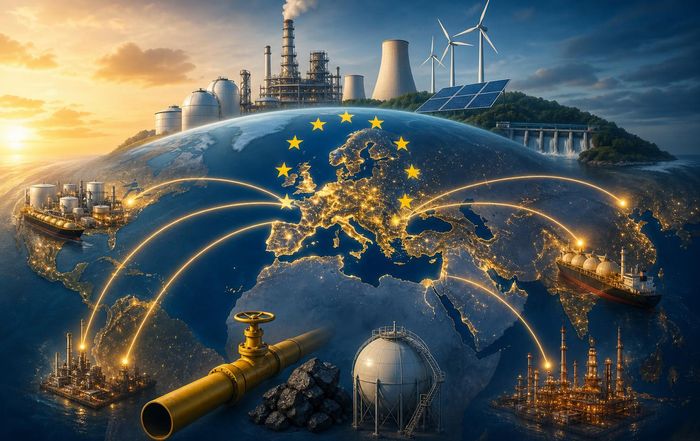
How European Energy Choices Affect Global Markets Today
Why European Energy Policy Matters to a Global Audience?
Decisions made in European capitals about how to heat homes, power factories, fuel transport, and decarbonize heavy industry are reshaping energy prices, investment flows, and strategic alliances across the world. For the online community of usa-update.com, whose interests are wide and often include the economy, business, technology, jobs, regulation, and international affairs, understanding Europe's evolving energy strategy has become essential to interpreting market volatility, corporate risk, and geopolitical shifts from the United States to Asia, Africa, and beyond.
As Europe accelerates its pivot away from fossil fuels and restructures its energy mix following the gas supply shock of the early 2020s, the continent is not acting in isolation; instead, it is exporting price signals to global gas and oil markets, redirecting capital into renewable technologies, influencing supply chains for critical minerals, and reshaping the competitive landscape for American and Asian manufacturers. Readers following broader economic trends through platforms such as the usa-update.com economy section and business coverage increasingly recognize that European energy choices are now embedded in the earnings calls of multinational corporations, the strategic plans of energy-intensive industries, and the regulatory outlook for cross-border trade.
By 2026, the interplay between European energy policies and global markets has crystallized into a defining feature of the post-pandemic, post-energy-crisis world. From the rise of liquefied natural gas (LNG) trade to the rapid expansion of offshore wind in the North Sea, and from the introduction of carbon border measures to the intensifying race for green hydrogen, Europe's decisions are reverberating through commodity markets, financial sectors, labor markets, and consumer prices. This article examines those dynamics in depth, focusing on how they affect businesses, investors, workers, and policymakers in the United States and other key regions, and why the editorial team at usa-update.com continues to treat European energy as a central lens for interpreting global economic developments.
The Post-2022 Turning Point: Europe's Energy Shock and Structural Shift
The watershed moment for European energy policy was the supply shock triggered by the sharp reduction of Russian pipeline gas deliveries after 2022, which forced governments, companies, and households across Germany, Italy, France, Spain, the Netherlands, and the United Kingdom to reconsider long-standing assumptions about energy security and price stability. According to the International Energy Agency (IEA), Europe had previously relied on Russia for a substantial share of its natural gas imports, and the abrupt disruption led to soaring prices, emergency policy measures, and a renewed sense of vulnerability that fundamentally altered the trajectory of energy planning. Readers can review the IEA's evolving assessments of energy security to better understand how this transition unfolded by exploring resources such as the IEA's analysis of global energy security.
This crisis catalyzed a dual response: a short-term scramble to secure alternative gas supplies and stabilize power markets, and a longer-term commitment to accelerate the clean energy transition under frameworks such as the European Green Deal. Governments introduced measures ranging from mandatory storage targets and demand-reduction campaigns to subsidies for heat pumps and fast-tracked permitting for renewable projects. For businesses tracking these developments through outlets like usa-update.com news and regulation coverage, it became clear that the emergency response was evolving into a structural reorientation of the European energy system, with significant implications for global trade and investment.
The result has been a profound rebalancing of Europe's energy mix. Coal, which had seen a temporary resurgence in 2022 and 2023 as a backstop for power generation, is now being phased out more aggressively in many countries, while gas demand has been structurally reduced through efficiency measures, industrial adaptation, and fuel switching. At the same time, renewables have expanded rapidly, with offshore wind and solar photovoltaics playing a central role in new capacity additions, supported by improved grid planning and interconnection across the continent. To track these changes, analysts often consult data and projections from organizations such as the European Commission's energy directorate, which provides detailed insights on EU energy policy and markets.
For global markets, the key takeaway is that Europe has moved from a relatively stable, pipeline-gas-centered system to a more diversified, flexible, and increasingly electrified energy ecosystem that is tightly interconnected with global LNG markets, critical-mineral supply chains, and advanced clean-tech manufacturing. This structural shift, while primarily driven by European policy choices, has redefined price formation and investment strategies worldwide.
LNG and Global Gas Markets: Europe as a Price-Setting Buyer
One of the most immediate and visible impacts of Europe's energy choices has been its transformation into a dominant buyer in the global LNG market. As Russian pipeline gas supplies dwindled, European utilities and energy companies turned aggressively to LNG imports from suppliers in the United States, Qatar, Nigeria, Norway, and other producers, outbidding Asian buyers at critical moments and effectively resetting the global price floor for natural gas. For readers monitoring energy and commodity trends through usa-update.com energy coverage, this shift has been a central storyline shaping both corporate strategy and consumer costs.
The surge in European LNG demand has had several key consequences. First, it has driven a wave of investment in liquefaction capacity in North America, particularly in the U.S. Gulf Coast, where companies such as Cheniere Energy and other developers have advanced new export terminals to meet long-term European contracts. Market observers often turn to the U.S. Energy Information Administration (EIA) for data on these developments and to understand how LNG exports affect domestic prices and supply, as detailed in the EIA's coverage of U.S. LNG export trends. Second, competition between Europe and Asia for spot cargoes has increased price volatility, forcing buyers in Japan, South Korea, China, and emerging Asian economies to rethink their fuel mix, long-term contracts, and exposure to global benchmarks such as the Dutch TTF hub.
Third, Europe's preference for contracts that balance flexibility with security has influenced the structure of LNG deals worldwide. European buyers have sought to avoid excessive dependence on any single supplier or rigid destination clauses, pushing the market toward more liquid and tradable arrangements. This evolution has strengthened the role of trading houses and financial intermediaries, while also creating new hedging instruments and derivatives that link gas prices more closely to global financial markets. Platforms such as Bloomberg and the Financial Times regularly analyze how these instruments shape risk management for energy-intensive industries, and interested readers can explore detailed market commentary through resources like global commodity market analysis.
For the United States, Europe's LNG pivot has been both an opportunity and a strategic consideration. American producers have benefited from expanded export volumes and long-term contracts, but policymakers must also balance export growth with domestic affordability and climate objectives. The U.S. Department of Energy has continued to evaluate export approvals and their implications for national interests, and stakeholders can review policy frameworks and licensing decisions through official resources on U.S. LNG export policy. The interplay between European demand, U.S. export capacity, and Asian competition will remain a defining factor in global gas markets through the late 2020s, ensuring that European energy choices continue to influence fuel costs and investment decisions far beyond the continent's borders.
The Acceleration of Renewables: Europe as a Clean Energy Benchmark
Beyond gas, Europe's strategic decision to accelerate the deployment of renewable energy has reshaped global supply chains and technology markets. The continent has positioned itself as a leading region for offshore wind, utility-scale solar, and increasingly for grid-scale batteries and demand-response systems, creating a large and sophisticated market that sets standards for project finance, regulatory frameworks, and technical integration. Businesses and investors following clean energy opportunities through platforms like usa-update.com technology and finance coverage increasingly look to European policies and auctions as bellwethers for global trends.
The European Union's climate and energy package, underpinned by targets to reduce greenhouse gas emissions and increase the share of renewables in final energy consumption, has driven member states to expand support mechanisms such as contracts for difference, feed-in premiums, and competitive tenders. This policy environment has fostered the growth of major European energy companies, including Ørsted, Iberdrola, Enel, RWE, and EDF Renewables, which now operate across multiple continents and shape best practices in project development, grid integration, and community engagement. Organizations like the International Renewable Energy Agency (IRENA) have documented the global spillover of these practices, and interested readers can explore comparative data on renewable energy deployment worldwide.
Europe's emphasis on integrating high shares of variable renewables has also spurred advances in grid management, interconnection, and digitalization. Transmission system operators have invested heavily in cross-border links, battery storage, and advanced forecasting tools, while regulators have encouraged new market designs that reward flexibility and ancillary services. This experience has become a reference point for other regions grappling with similar challenges, from California to Australia and South Korea, and technical institutions such as ENTSO-E provide valuable insights into how Europe is managing these complexities through resources on electricity market integration and system operation.
For global markets, the scale of Europe's renewable build-out has created substantial demand for solar modules, wind turbines, inverters, cables, and transformers, influencing manufacturing strategies in China, India, the United States, and Southeast Asia. European procurement standards, sustainability criteria, and lifecycle assessments have also pushed suppliers to improve transparency and environmental performance, reinforcing the broader trend toward sustainable business practices. Organizations like the World Business Council for Sustainable Development offer detailed guidance on how companies can align with these expectations, and readers can learn more about sustainable business practices that are increasingly shaped by European norms.
How Europe’s Energy Choices Move Global Markets
Explore how LNG demand, renewables, carbon pricing, critical minerals and clean-tech policy ripple through prices, trade, jobs and geopolitics.
Market pressure
Europe’s shift from Russian pipeline gas to global LNG made it a major price-setting buyer, increasing competition with Asia and supporting U.S. export growth.
Decision path
Russian gas disruption forces Europe to prioritize security, storage and alternative supply.
LNG, renewables, efficiency and carbon rules reshape investment, supply chains and industrial strategy.
Europe’s policy mix becomes a global signal for trade, manufacturing, inflation, jobs and geopolitics.
Quick check:Which European policy tool most directly affects carbon-intensive imports?
Carbon Pricing and the CBAM: Redefining Trade and Competitiveness
One of the most consequential European policy innovations for global markets is the expansion and deepening of carbon pricing mechanisms, particularly the EU Emissions Trading System (EU ETS) and the introduction of the Carbon Border Adjustment Mechanism (CBAM). These instruments are designed to internalize the cost of carbon emissions, incentivize decarbonization, and prevent "carbon leakage" by ensuring that imported goods face similar carbon costs as domestically produced ones. For multinational companies and trade partners, including those in the United States, Canada, Brazil, Japan, South Korea, and China, these measures have become a central consideration in supply chain planning and market access strategies.
The EU ETS, which covers power generation, heavy industry, and aviation within the European Economic Area, has seen tightening caps and rising carbon prices over the past decade, sending strong signals to invest in cleaner technologies and energy efficiency. As the system expands to include additional sectors such as maritime transport and potentially buildings and road transport, its influence on investment decisions will only grow. Detailed information on the design and evolution of the ETS is available from the European Commission, which provides comprehensive resources on EU carbon markets and climate policy.
The CBAM, introduced in a phased manner, extends this logic to imports of carbon-intensive goods such as steel, cement, aluminum, fertilizers, and electricity. Exporters to the EU must now account for the embedded emissions in their products, either by paying a carbon price aligned with the EU level or demonstrating equivalent carbon constraints in their home jurisdictions. This has profound implications for producers in regions with weaker carbon policies, as it effectively turns European climate ambition into a trade lever that can reshape global industrial competitiveness. Legal and policy analysts frequently consult organizations such as the World Trade Organization (WTO) to assess how such measures interact with international trade rules, and readers can explore broader debates about trade and environment to understand the evolving framework.
For U.S. and Asian manufacturers, the CBAM and related measures raise strategic questions about where to locate production, how to decarbonize processes, and how to document emissions across complex value chains. They also create incentives for other jurisdictions to develop their own carbon pricing or regulatory mechanisms to maintain competitiveness and avoid trade frictions. In this sense, Europe's energy and climate choices are not only affecting fuel markets but also shaping the regulatory environment in which global trade operates, reinforcing the need for businesses to closely monitor European developments through specialized media and analysis, including the international coverage provided by usa-update.com international section.
Industrial Policy, Clean Tech, and the Transatlantic Dynamic
European energy choices are increasingly intertwined with industrial policy, as the continent seeks to build domestic capacity in critical clean technologies while maintaining competitiveness vis-à-vis the United States, China, and other major economies. The introduction of frameworks such as the EU Green Deal Industrial Plan and the Net-Zero Industry Act reflects a desire to secure value chains for batteries, hydrogen electrolyzers, heat pumps, and other strategic technologies, mirroring elements of the U.S. Inflation Reduction Act (IRA) and triggering a more explicit global race for clean-tech leadership.
This industrial strategy has direct implications for global investment flows, jobs, and technology development. European governments are offering subsidies, tax incentives, and regulatory support to attract manufacturing plants and research facilities, while also emphasizing sustainability and circularity. In response, companies must evaluate the relative attractiveness of locating production in Europe versus the United States or Asia, taking into account not only financial incentives but also energy prices, regulatory stability, and access to skilled labor. Organizations such as the World Economic Forum provide comparative analysis of industrial competitiveness and innovation ecosystems, and readers can delve into their resources on energy, materials, and infrastructure to understand how these dynamics are playing out.
The transatlantic relationship has become particularly important in this context. The United States and the European Union are both seeking to reduce dependence on Chinese supply chains for critical minerals and clean-tech components, while also avoiding a subsidy race that could fragment markets and distort competition. Dialogues through forums such as the EU-U.S. Trade and Technology Council have aimed to coordinate approaches to standards, export controls, and supply chain resilience, although tensions remain over local content requirements and state aid. Analysts following these developments often consult think tanks like the Center for Strategic and International Studies (CSIS), which offers in-depth commentary on transatlantic energy and climate policy.
For the readership of usa-update.com, which includes business leaders, investors, and professionals across the United States and other priority regions, this evolving industrial landscape presents both risks and opportunities. European incentives can attract American companies to invest in manufacturing or research facilities in countries such as Germany, France, Spain, Italy, and the Netherlands, creating new transatlantic partnerships and technology transfer. At the same time, differences in regulatory approaches and state support can affect the competitiveness of U.S.-based producers in global markets, necessitating careful strategic planning and ongoing monitoring of policy changes on both sides of the Atlantic.
Critical Minerals, Supply Chains, and Global Resource Politics
The shift toward renewable energy, electrification, and digitalization has increased global demand for critical minerals such as lithium, cobalt, nickel, rare earth elements, and copper, making supply chains for these resources a central concern in energy and industrial policy. Europe's decision to accelerate its clean energy transition has amplified this demand and pushed the continent to develop a more coherent strategy for securing access to these materials, diversifying suppliers, and promoting recycling and substitution.
European initiatives such as the Critical Raw Materials Act aim to reduce dependence on single-country suppliers, particularly China, and to encourage domestic extraction, processing, and refining where feasible, as well as strategic partnerships with resource-rich countries in Africa, South America, Canada, Australia, and the United States. This has significant implications for global resource politics, investment in mining projects, and the environmental and social standards applied to extraction and processing. Organizations like the International Monetary Fund (IMF) have analyzed how the energy transition is reshaping commodity markets and macroeconomic stability, and readers can explore their research on critical minerals and the energy transition for a broader macroeconomic perspective.
For countries such as Brazil, South Africa, Chile, Indonesia, and Democratic Republic of Congo, European demand offers opportunities for export revenues and development, but it also raises questions about governance, local value creation, and environmental protection. European regulations increasingly require due diligence on human rights and environmental impacts in supply chains, which can raise compliance costs but also support higher standards and long-term sustainability. Companies across the value chain, from miners to battery manufacturers and automakers, must adapt to these requirements and provide greater transparency to maintain access to European markets.
The United States has a particular interest in how Europe structures these relationships, as Washington seeks to build its own alliances for critical minerals and to coordinate with like-minded partners. Cooperation between the U.S. and Europe on standards, certification, and strategic stockpiles could help stabilize markets and reduce the risk of supply disruptions, while competition for investment and resource access could also intensify. For businesses and policymakers, tracking these developments through specialized coverage, including the international and economy pages of usa-update.com, is essential to understanding how resource security and geopolitical risk are evolving in parallel with the energy transition.
Energy Prices, Inflation, and Consumer Impacts Worldwide
European energy choices have a direct bearing on global inflation dynamics and consumer welfare, as changes in European demand and policy affect the prices of oil, gas, electricity, and key industrial inputs. The energy price spike that followed the 2022 gas crisis contributed to higher inflation in advanced and emerging economies alike, prompting central banks, including the U.S. Federal Reserve, the European Central Bank, and others, to tighten monetary policy more aggressively than previously anticipated. As Europe has gradually stabilized its energy markets and diversified its supply, the immediate inflationary pressure has eased, but structural changes in energy pricing continue to influence cost structures across industries.
For households and businesses in the United States, Canada, and other regions, the linkage between European energy policy and local energy bills may not always be obvious, yet it is increasingly significant. When Europe competes for LNG cargoes, for instance, the resulting price movements can affect natural gas benchmarks in North America and Asia, with knock-on effects on electricity prices, heating costs, and industrial competitiveness. Analysts and policymakers often rely on institutions such as the Bank for International Settlements (BIS) for insights into how energy prices feed into global inflation and financial stability, and interested readers can explore their work on commodity prices and monetary policy.
In Europe itself, the push toward renewables and efficiency is gradually reducing exposure to volatile fossil fuel markets, but the transition involves substantial upfront investment in infrastructure, grid modernization, and new technologies. These costs are often recovered through tariffs, taxes, or levies on energy bills, raising concerns about affordability and social equity. European governments have responded with targeted support for vulnerable consumers, reforms to market design, and attempts to smooth the cost trajectory over time. The balance between decarbonization, competitiveness, and social acceptance remains delicate, and the way Europe manages this balance will influence how other regions approach their own transitions.
For readers of usa-update.com, particularly those interested in consumer trends and lifestyle impacts through the site's consumer and lifestyle sections, the European experience offers lessons about how energy policy can shape everyday life, from the adoption of electric vehicles and heat pumps to changes in housing standards, urban planning, and work arrangements. As more countries move toward electrification and digital energy management, the European case provides a rich source of insights into both the opportunities and the challenges of transforming how societies use and pay for energy.
Jobs, Skills, and the Labor Market Transformation
The transformation of Europe's energy system is also reshaping labor markets, creating new job opportunities in clean energy sectors while challenging traditional roles in fossil fuel industries. From offshore wind technicians in the North Sea to engineers working on hydrogen infrastructure in Germany and Netherlands, and from building retrofit specialists in France to battery manufacturing workers in Sweden and Norway, the energy transition is driving demand for new skills and changing the geographic distribution of employment.
European institutions and national governments have recognized that a successful transition requires not only investment in technology but also in human capital, prompting initiatives to support reskilling, vocational training, and education programs aligned with the needs of the clean energy economy. Organizations such as the International Labour Organization (ILO) have emphasized the importance of a "just transition" that protects workers and communities affected by structural change, and readers can explore their guidance on green jobs and just transition to understand the broader labor implications.
For the United States and other regions, Europe's experience offers a preview of how energy policy can influence employment patterns and the types of skills that will be in demand. American companies operating in Europe, as well as those competing with European firms in global markets, must adapt their workforce strategies to align with evolving technologies and regulatory requirements. Policymakers and educators in North America, Asia, and elsewhere are increasingly studying European models of apprenticeship, technical education, and public-private partnerships to inform their own approaches to preparing workers for a low-carbon economy.
Within the context of usa-update.com, which maintains dedicated coverage of jobs and employment, these developments underscore how European energy choices intersect with career opportunities, labor mobility, and workforce planning. As multinational corporations adjust their investment and hiring strategies in response to European regulations and market signals, job seekers and professionals worldwide need to stay informed about where new roles are emerging, what skills are most valued, and how to navigate a labor market increasingly shaped by the global energy transition.
Geopolitics, Security, and Strategic Alliances
Energy has always been a central element of geopolitics, and Europe's evolving energy choices are reshaping strategic relationships and security considerations across multiple regions. The decision to reduce dependence on Russian fossil fuels has had major implications for NATO allies, Eastern European countries, and neighboring regions, altering patterns of influence and leverage that had persisted for decades. At the same time, Europe's growing reliance on LNG imports and critical mineral supply chains has created new dependencies and strategic challenges, prompting a re-evaluation of alliances and partnerships with countries such as the United States, Norway, Qatar, Algeria, Canada, Australia, and various African and Latin American states.
Security analysts and policymakers are increasingly viewing energy policy through the lens of resilience and strategic autonomy, considering not only the physical security of infrastructure but also cyber risks, supply disruptions, and the geopolitical implications of technological standards and regulatory choices. Institutions like the Atlantic Council and the German Marshall Fund provide extensive analysis of these issues, and readers seeking a deeper understanding of the intersection between energy and security can consult resources such as the Atlantic Council's work on global energy and security.
For the United States, European energy decisions influence the strategic calculus in multiple ways. U.S. LNG exports to Europe have strengthened transatlantic ties and underscored the role of American energy in supporting allies, while also raising questions about the long-term alignment between U.S. climate goals and fossil fuel infrastructure. Cooperation on clean energy technologies, grid resilience, and critical minerals has become a key component of broader diplomatic engagement, shaping discussions in forums ranging from the G7 to the COP climate conferences.
From the perspective of usa-update.com readers, who follow international developments through the platform's international news and events coverage, the geopolitical dimension of European energy policy is not an abstract matter; it affects defense planning, sanctions regimes, development assistance, and diplomatic priorities, all of which feed back into business risk assessments and long-term investment strategies. As energy systems become more interconnected and digitalized, the boundary between energy policy and national security will continue to blur, making it even more important to track European choices and their global ramifications.
Travel, Lifestyle, and the Changing Face of European Cities
European energy choices are also reshaping the way people live, travel, and experience cities, with knock-on effects for tourism, transportation, and lifestyle trends that are relevant to international travelers and global consumers. The expansion of low-emission zones, the promotion of public transit and cycling, the deployment of electric vehicle charging networks, and the retrofitting of buildings for energy efficiency are transforming urban environments from Paris and Berlin to Copenhagen, Amsterdam, Barcelona, and Stockholm.
For international visitors from the United States, Canada, Asia, and elsewhere, these changes affect how they move through European cities, which services they use, and what expectations they bring back to their home countries. The growth of high-speed rail networks and night trains, for example, is providing alternatives to short-haul flights within Europe, aligning with climate goals while offering new travel experiences. Organizations like the European Environment Agency (EEA) track the environmental impacts of transport and urban planning, and readers can explore their assessments of transport and environment in Europe to understand these trends in greater detail.
From a lifestyle perspective, the energy transition is influencing consumer choices in housing, appliances, mobility, and leisure. The adoption of heat pumps, rooftop solar panels, smart thermostats, and energy-efficient appliances is changing how households manage energy use, while the growth of sustainable tourism and eco-labels is affecting how people choose destinations and accommodations. For readers of usa-update.com who follow travel, entertainment, and lifestyle content, Europe's evolving energy and climate policies offer a preview of how similar trends may unfold in North America and other regions, as cities and regions adapt to new environmental and regulatory realities.
Pointing Ahead: Strategic Implications for a Global Audience
Europe's energy choices are no longer simply regional policy decisions; they are central drivers of global market dynamics, industrial strategies, trade frameworks, labor markets, and geopolitical alignments. The continent's accelerated shift toward renewables, its reconfiguration of gas supply, its pioneering of carbon pricing and border adjustments, and its assertive industrial policy for clean technologies collectively form a powerful set of signals that businesses, investors, policymakers, and consumers around the world must interpret and respond to.
For the diverse audience of USA update, covering interests in the economy, finance, jobs, technology, business, regulation, international affairs, travel, and lifestyle, these developments underscore the importance of integrating European energy analysis into broader decision-making and strategic planning. An American manufacturer considering expansion in Europe must assess not only local market demand but also the implications of energy prices, carbon costs, and regulatory requirements. An investor evaluating clean-tech opportunities in North America must take into account how European demand and standards will shape global supply chains and competitive dynamics. A policymaker or analyst tracking inflation, employment, or trade balances must factor in how European energy policy is influencing commodity prices, industrial competitiveness, and capital flows.
In the coming years, the interaction between European energy choices and global markets is likely to intensify rather than diminish. As more countries adopt net-zero targets, expand renewable capacity, and consider carbon border measures, the frameworks pioneered in Europe will serve as templates, points of reference, or, in some cases, cautionary tales. The United States, Canada, the United Kingdom, Japan, South Korea, India, Brazil, South Africa, and others will all navigate their own paths, but they will do so in a world where European decisions about energy and climate continue to shape the operating environment.
For educated news readers seeking to stay ahead of these shifts, continuous monitoring of European policy developments, market trends, and technological advances is essential. Platforms like usa-update.com, with its integrated coverage of economy, business, energy, and international affairs, are well positioned to provide the contextual analysis and cross-sector insights needed to understand how European energy choices ripple through global systems. As the energy transition accelerates and the world moves toward a more interconnected, electrified, and low-carbon future, the ability to interpret Europe's role in this transformation will remain a critical asset for decision-makers across industries and regions.
