
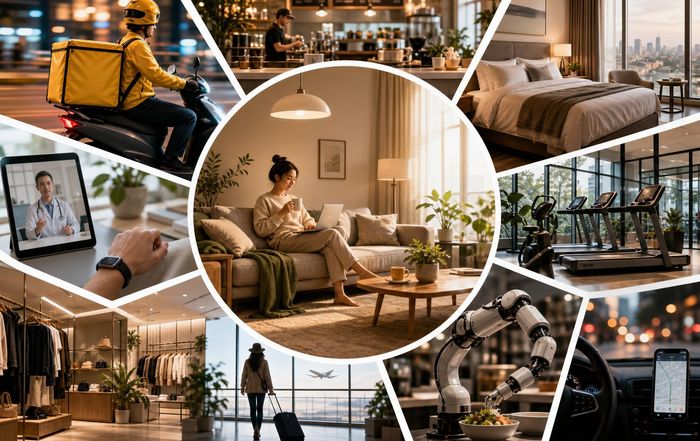
How Lifestyle Changes Are Reshaping Service Industries
As consumer lifestyles evolve at an unprecedented pace, the service economy is undergoing a profound and often inspiring transformation. From finance and healthcare to travel, entertainment and energy, every major service sector is being reshaped by new expectations around flexibility, digital access, personalization, sustainability and work-life balance. For smart individuals, these shifts are not abstract trends; they are already visible in daily choices about where to shop, how to work, how to manage money and how to spend scarce leisure time.This article explores how lifestyle changes across the United States and other major economies are altering the structure, strategy and culture of service industries, with particular attention to the economy, business, finance, jobs, regulation, consumer behavior, energy, travel, entertainment and lifestyle. Drawing on developments reported by sources such as McKinsey & Company, Deloitte, the U.S. Bureau of Labor Statistics, the World Economic Forum, OECD, Pew Research Center and others, it highlights both the opportunities and the responsibilities facing companies that want to thrive in a service-driven future.Readers who wish to track related developments over time can find ongoing coverage across USA update sections including economy, business, finance, jobs, technology and lifestyle.
The Lifestyle Revolution Behind a Service Economy Shift
The rise of the service economy is not new, but the forces driving its latest evolution are. In the United States and other advanced economies, services already account for the majority of GDP and employment, as documented by the World Bank and OECD. What is changing now is the nature of demand inside that dominant sector, as consumers live more digital, mobile, health-conscious and climate-aware lives.Research from McKinsey & Company has described a "great lifestyle reset," in which households reassess spending priorities, time use and career paths in the wake of global disruptions. Many consumers are reallocating budgets away from some physical goods toward experiences, digital services, wellness, education and travel, while also demanding greater value and transparency from providers. Surveys from the Pew Research Center show rising emphasis on flexibility, mental health and work-life balance, especially among younger adults, which in turn alters when and how people interact with service providers.At the same time, demographic changes-including aging populations in North America, Europe and parts of Asia, and youthful, rapidly urbanizing populations in regions such as Africa and South Asia-are creating divergent but equally powerful demands for new forms of healthcare, financial planning, mobility and entertainment. These shifts are layered on top of technological advances in cloud computing, artificial intelligence, digital payments and connectivity, which make it possible to deliver services in ways that were not feasible a decade ago.In this environment, service industries are no longer simply supporting lifestyle choices; they are co-evolving with them. Companies that understand these patterns and respond with agility, empathy and innovation are setting the pace for the broader economy, while those that cling to older models risk being left behind.
Digital-First Lifestyles and the Reinvention of Service Delivery
One of the most visible lifestyle changes is the normalization of digital-first behavior. Consumers across age groups now expect to research, purchase and manage services online, often from mobile devices, at any time of day. This expectation affects everything from banking and healthcare to education, entertainment and professional services.In financial services, for example, the Federal Reserve and the FDIC have documented rapid growth in digital banking adoption, with mobile apps becoming the primary channel for many customers. Major institutions such as JPMorgan Chase, Bank of America and Wells Fargo have invested heavily in mobile platforms, while digital-native firms like PayPal, Block (formerly Square) and various regulated fintechs provide alternative models for payments, small-business services and personal finance management. Consumers increasingly expect real-time account information, seamless digital onboarding, integrated budgeting tools and instant customer support, often powered by AI-driven chat interfaces.Healthcare has experienced a parallel shift through telehealth and remote monitoring. According to reports from the U.S. Department of Health and Human Services (HHS) and the Centers for Medicare & Medicaid Services (CMS), telehealth utilization surged during the pandemic years and has since stabilized at a level significantly higher than pre-2020 baselines. Patients now expect the option of virtual consultations for routine issues, mental health support, follow-up visits and chronic disease management, while providers experiment with hybrid models that blend in-person and remote care. Learn more about how digital health is reshaping care delivery through resources from the World Health Organization.Education and professional development services have also adapted to digital lifestyles. Universities, training providers and platforms such as Coursera, edX and Udemy have expanded online offerings, while employers integrate continuous learning into workforce strategies. This shift is particularly relevant to readers following the labor market through USA update's employment and jobs reporting, as digital learning becomes central to career resilience.For service providers, digital-first lifestyles demand more than a website or app; they require end-to-end redesign of processes, customer journeys and data management. Companies must ensure that online experiences are accessible, secure, intuitive and inclusive, while also maintaining human connection where it matters most. The National Institute of Standards and Technology (NIST) and the Cybersecurity and Infrastructure Security Agency (CISA) offer guidance on secure digital service delivery, which is increasingly critical as more personal data flows through online systems.
Interactive Lifestyle Impact Dashboard
Explore how lifestyle trends reshape key service sectors
Hybrid Work, Flexible Time and the Redefinition of Service Hours
A second major lifestyle shift concerns how and where people work. The spread of hybrid and remote work models has altered daily rhythms, commuting patterns and expectations about availability. According to analysis from the U.S. Bureau of Labor Statistics (BLS) and research by the Harvard Business School and Stanford University, a significant share of knowledge workers in the United States and other advanced economies now operate in hybrid arrangements, combining office and remote days, while some roles are fully remote.This reconfiguration of work has several implications for service industries. Traditional peak hours for commuting, dining, retail and personal services have become more diffuse, as consumers no longer cluster activities around a fixed nine-to-five office schedule. Coffee shops, gyms, co-working spaces and neighborhood retailers in many cities report more steady foot traffic throughout the day, while central business districts in some regions continue to adjust to lower office occupancy.For service businesses, this means rethinking staffing, operating hours and location strategies. Flexible scheduling, on-demand staffing platforms and dynamic pricing are increasingly common tools to align capacity with new patterns of demand. Companies that can adapt quickly to local realities-whether in New York, Los Angeles, Toronto, London, Berlin, Singapore or Sydney-are better positioned to capture emerging opportunities.Hybrid work also influences consumer expectations about responsiveness. Customers who can manage personal tasks throughout the day may expect immediate service at any hour, from customer support to delivery. This has led many organizations to invest in 24/7 digital channels, self-service portals and AI-powered assistance, while still maintaining escalation paths to human representatives. Readers interested in how these trends intersect with regulatory and labor issues can follow related developments through USA update's regulation and economy sections.
Wellness, Mental Health and the Expansion of Care-Oriented Services
Another defining lifestyle trend is the growing emphasis on holistic wellness, encompassing physical health, mental health, nutrition, sleep, fitness and social connection. Surveys from organizations such as the American Psychological Association, the Kaiser Family Foundation and the World Economic Forum indicate heightened awareness of mental health challenges and greater willingness to seek support, particularly among younger generations.This shift is reshaping a wide array of service industries. Healthcare systems are expanding behavioral health offerings, integrating mental health screening into primary care and experimenting with digital therapeutics and app-based interventions. Employers increasingly view mental health and well-being as core components of talent strategy, offering expanded employee assistance programs, counseling benefits and wellness stipends. Insurers and regulators are gradually adjusting frameworks to support more comprehensive mental health coverage, though access and affordability remain uneven across regions and income levels.Beyond clinical care, wellness is driving growth in fitness, nutrition, mindfulness and lifestyle services. Boutique fitness studios, digital workout platforms, meditation apps and wellness retreats cater to consumers seeking personalized, often community-oriented experiences. The Global Wellness Institute has documented substantial expansion in wellness tourism, workplace wellness and mental wellness segments, reflecting both consumer demand and business opportunity.However, the rapid growth of wellness-oriented services also raises questions about evidence, regulation and equity. Public health agencies, including the Centers for Disease Control and Prevention (CDC), emphasize the importance of evidence-based interventions and caution against unproven claims. For readers of USA update, this underscores the value of critical evaluation when choosing wellness services, as well as the importance of policy frameworks that protect consumers while enabling innovation.
Sustainability, Climate Awareness and the Greening of Services
Lifestyle changes are also deeply influenced by rising awareness of climate change, environmental degradation and resource constraints. Consumers in the United States, Europe and many parts of Asia increasingly consider environmental impact when choosing travel options, energy providers, financial products and brands. Surveys from the Yale Program on Climate Change Communication, the European Commission and Ipsos show growing support for sustainable practices, though actual behavior varies with income, availability and trust.Service industries are responding by integrating sustainability into operations, offerings and branding. In the energy sector, utilities and service providers are expanding renewable energy options, home energy management services and electric vehicle charging infrastructure. The International Energy Agency (IEA) reports that renewables have become a leading source of new power capacity globally, while many utilities in North America and Europe are developing new customer-facing services around energy efficiency and demand response. Readers can explore related developments in USA update's energy coverage.Travel and tourism services are under particular scrutiny, as consumers balance a desire for exploration with concern about emissions. Airlines, hotels and travel platforms are experimenting with sustainable aviation fuel, carbon offset programs, eco-certified accommodations and more transparent emissions information. Organizations such as the International Air Transport Association (IATA) and the World Travel & Tourism Council (WTTC) provide updates on industry commitments and progress, while independent groups assess the robustness of various sustainability claims. Learn more about sustainable travel practices through resources from the United Nations World Tourism Organization.Financial services are another arena where sustainability and lifestyle intersect. Many investors, especially younger ones, express interest in environmental, social and governance (ESG) factors, leading to growth in sustainable investing products. Reputable institutions such as Morningstar, MSCI and the UN Principles for Responsible Investment track and analyze ESG-related financial products, while regulators in the United States, European Union and other jurisdictions refine disclosure requirements to improve transparency and reduce the risk of "greenwashing." For readers following these developments through USA update's finance and business sections, the key takeaway is that sustainability is becoming a mainstream expectation in many service categories, not a niche offering.
Personalization, Data and the New Consumer-Service Relationship
Modern lifestyles are highly individualized, and consumers increasingly expect services that reflect their specific preferences, histories and circumstances. Personalization is now central to competitive strategy in sectors ranging from retail and entertainment to healthcare and financial advisory services. Streaming platforms, for example, use sophisticated recommendation algorithms to tailor content, while e-commerce and food delivery services customize offers and suggestions based on past behavior.In finance, wealth management and retail banking firms use data analytics to offer tailored advice, product bundles and alerts, while insurers experiment with usage-based models that reflect individual behavior. In healthcare, providers and technology firms explore personalized medicine, risk prediction and customized care pathways. The National Institutes of Health (NIH) and initiatives such as All of Us highlight the potential of personalized health approaches, while also emphasizing the importance of consent, privacy and diversity in data.Personalization can enhance convenience and satisfaction, but it also raises important questions about data governance, fairness and autonomy. Regulators in the United States, European Union and other regions continue to refine privacy and data protection frameworks, building on models such as the EU General Data Protection Regulation (GDPR) and state-level laws in the U.S., including the California Consumer Privacy Act (CCPA) and its amendments. Organizations such as the Electronic Frontier Foundation (EFF) and the Future of Privacy Forum provide analysis of evolving standards and best practices.For service industries, building trust around data is now as important as delivering functional value. Transparent privacy policies, clear consent mechanisms, robust security and options for users to control their data are becoming essential components of a trustworthy brand. Readers of USA update who follow consumer issues through the consumer section can expect ongoing discussion of how personalization and privacy shape the modern service relationship.
The Experience Economy: Entertainment, Events and Travel Reimagined
Lifestyle changes have also reinvigorated demand for experiences-both physical and digital-that provide connection, meaning and enjoyment. The so-called "experience economy," a term popularized by business thinkers and examined by organizations like Deloitte and PwC, continues to evolve as consumers seek memorable, shareable and often immersive activities.In entertainment, streaming remains central, with platforms such as Netflix, Disney+, Amazon Prime Video and HBO Max investing in original content and global expansion. At the same time, live events, concerts, festivals and sports are experiencing renewed demand, as people value in-person connection after periods of disruption. The live entertainment industry, tracked by firms like Live Nation Entertainment and various trade associations, has introduced more flexible ticketing, hybrid digital-physical formats and enhanced safety and accessibility measures.Gaming and interactive media represent another frontier, with companies such as Microsoft, Sony, Nintendo and a wide range of developers offering increasingly sophisticated, socially connected experiences. The rise of esports, virtual worlds and user-generated content platforms has blurred the line between audience and creator, and between entertainment and social life. Organizations such as the Entertainment Software Association (ESA) provide data on the growing economic and cultural impact of gaming across North America, Europe and Asia.Travel services are adapting to new lifestyle expectations around flexibility, authenticity and safety. Many travelers now seek longer stays, "work-from-anywhere" arrangements and experiences that connect them with local culture and nature. Short-term rental platforms, hotels, tour operators and airlines are adjusting policies, offerings and loyalty programs accordingly. Resources from Booking Holdings, Airbnb, and global hotel groups, alongside analysis by the World Travel & Tourism Council (WTTC), illustrate how the industry is rethinking everything from cancellation policies to digital concierge services. Readers can explore travel-related trends through USA update's travel and events sections, as destinations across the United States, Europe, Asia-Pacific, Latin America and Africa compete to attract visitors in a changing landscape.
Labor Markets, Skills and the Service Workforce of the Future
As service industries evolve in response to lifestyle changes, the nature of work within those industries is changing as well. The service workforce is increasingly shaped by automation, digital tools, flexible arrangements and new skill requirements. Reports from the World Economic Forum, including its "Future of Jobs" series, suggest that roles involving routine tasks are more likely to be automated, while demand grows for jobs that require creativity, emotional intelligence, complex problem-solving and digital literacy.In the United States, the Bureau of Labor Statistics projects continued growth in healthcare, professional and business services, information services and leisure and hospitality, though the pace and composition of growth vary by region and scenario. Similar patterns are observed in Canada, the European Union, the United Kingdom, Australia and parts of Asia, with local differences influenced by policy, demographics and industrial structure.The rise of the gig and platform economy has created new forms of service work, from ride-hailing and food delivery to freelance digital services. Companies such as Uber, Lyft, DoorDash, Grab and Deliveroo operate across North America, Europe, Asia and other regions, while online marketplaces connect freelancers with clients globally. These models offer flexibility but also raise questions about worker protections, benefits and classification, which regulators and courts continue to examine. Organizations such as the International Labour Organization (ILO) and national labor agencies provide analysis of these evolving employment structures.For workers and job seekers, continuous learning and upskilling are increasingly essential. Public agencies, educational institutions and private firms are expanding reskilling programs, apprenticeships and short-form credentials. Readers seeking to navigate these shifts can find relevant insights and resources through USA update's jobs, employment and technology sections, which track developments at the intersection of labor markets, automation and digital transformation.
Regulation, Consumer Protection and Trust in a Changing Service Landscape
As lifestyles and services evolve, regulatory frameworks must adapt to ensure fair competition, consumer protection, financial stability and social welfare. Policymakers in the United States, Canada, the European Union, the United Kingdom, Australia, Singapore and other jurisdictions are grappling with questions related to digital platforms, data privacy, AI governance, gig work, financial innovation and environmental standards.In financial services, regulators such as the U.S. Securities and Exchange Commission (SEC), the Commodity Futures Trading Commission (CFTC), the Federal Reserve, the European Central Bank (ECB) and national authorities are refining rules around digital assets, fintech partnerships, open banking and consumer disclosures. The goal is to encourage innovation while protecting investors and maintaining systemic resilience. Readers can follow regulatory developments affecting markets and consumers through USA update's finance and regulation coverage.In the technology and digital services realm, governments are considering or implementing frameworks for AI transparency, platform accountability, content moderation and algorithmic fairness. The European Union's work on the Digital Services Act (DSA) and AI Act, along with initiatives in the United States, Canada, the United Kingdom and Asia, illustrate a global trend toward more structured oversight of digital intermediaries. Organizations such as the OECD and the UNESCO provide guidance on ethical AI and digital governance, emphasizing human rights, inclusivity and accountability.Consumer protection remains central as services become more complex and data-intensive. Agencies like the U.S. Federal Trade Commission (FTC), the Consumer Financial Protection Bureau (CFPB) and their counterparts abroad monitor unfair practices, deceptive marketing and privacy violations. Independent consumer advocacy organizations and investigative media outlets play a vital role in surfacing issues and informing the public. For USA update readers, this regulatory evolution underscores the importance of staying informed about rights, responsibilities and recourse options in an increasingly digital service environment.
Global Perspectives: How Different Regions Are Shaping and Responding to Change
While many lifestyle and service trends are global, their expression varies across regions due to cultural norms, income levels, infrastructure, policy and demographic structures. In North America, for example, high digital penetration, a large middle class and a dynamic technology sector support rapid adoption of new service models, from telehealth and digital banking to streaming and e-commerce. The United States and Canada are also home to major platforms that operate worldwide, influencing service expectations in other markets.In Europe, strong consumer protection frameworks, environmental policies and social welfare systems shape how service industries adapt. Countries such as Germany, France, the Netherlands, Sweden and Denmark emphasize sustainability, worker protections and data privacy, which influence everything from energy services to mobility and digital platforms. The European Union's regulatory initiatives often set benchmarks that global firms must consider when designing products and services.In Asia, diversity is a defining feature. Advanced economies like Japan, South Korea and Singapore combine high-tech infrastructure with aging populations, driving innovation in healthcare, robotics and smart-city services. Emerging economies such as India, Indonesia, Vietnam and the Philippines, along with dynamic hubs like Thailand and Malaysia, are experiencing rapid urbanization and mobile-first digital adoption, creating fertile ground for fintech, e-commerce and digital entertainment. China's large-scale digital ecosystems, led by firms such as Alibaba Group, Tencent and ByteDance, have pioneered "super-app" models that integrate payments, messaging, shopping, entertainment and more, influencing platform strategies elsewhere.In Africa and Latin America, including countries such as South Africa, Nigeria, Kenya, Brazil, Mexico and Colombia, mobile connectivity has enabled innovative service models tailored to local needs, such as mobile money, telemedicine, e-learning and digital agriculture services. Organizations like the World Bank and African Development Bank document how these innovations improve financial inclusion and access to essential services, even as infrastructure gaps and economic challenges persist.For readers of USA update, understanding these global patterns is increasingly important, as service industries operate across borders and consumers encounter international brands and platforms in daily life. The international section of USA update provides context on how worldwide developments influence domestic markets, regulations and opportunities.
Opportunities, Responsibilities and the Road Ahead for Service Industries
Taken together, the lifestyle changes described above are reshaping service industries in ways that are both challenging and inspiring. They create opportunities for businesses to design more convenient, personalized, sustainable and inclusive services, while also imposing responsibilities to protect privacy, support worker well-being, uphold ethical standards and contribute to community resilience.For business leaders, policymakers and consumers alike, several themes stand out. First, agility and continuous learning are now core capabilities. Service organizations must be prepared to adapt quickly to shifting consumer expectations, technological advances and regulatory changes, drawing on data, experimentation and feedback. Second, trust is an indispensable asset. In a world of digital interactions and complex services, transparent communication, strong security, fair treatment and responsiveness to concerns are essential to building lasting relationships.Third, collaboration across sectors and borders can amplify positive impact. Partnerships between public and private actors, between large enterprises and startups, and between organizations in different regions can accelerate progress on shared challenges such as health access, climate resilience and digital inclusion. Initiatives supported by bodies like the World Economic Forum and the United Nations illustrate how multi-stakeholder cooperation can advance responsible innovation in services.Finally, individuals have more agency than ever in shaping service landscapes through choices, feedback and participation. By supporting businesses that align with their values, engaging constructively with policymakers and staying informed through top daily outlets such as USA update, consumers and workers can influence how service industries evolve.As the mid-2020s continue to unfold, the interplay between lifestyle changes and service innovation will remain a defining feature of the global economy. For readers of usa-update, this is not only a story about markets and technologies; it is a story about how people live, work, connect and aspire-and about the possibilities that emerge when service industries respond with creativity, integrity and a commitment to shared prosperity.
