
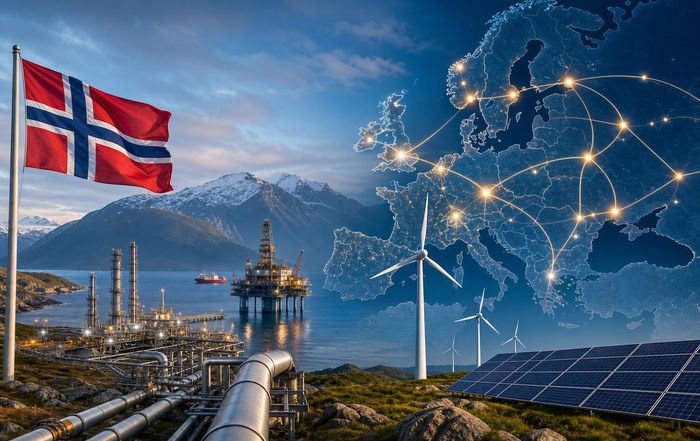
Looking across the waters at Norway's Energy Trends and Their Growing Impact on Europe's Power Market
Introduction: A Small Producer with Outsized Influence
Norway, with a population smaller than many European metropolitan regions, has become one of the most strategically important energy nations in the world. Its combination of vast hydroelectric resources, substantial offshore oil and gas reserves, and rapidly expanding offshore wind ambitions has positioned the country as both a stabilizing force and a source of controversy within the wider European energy system. For global thinkers here, who closely follow ripples in the global economy, energy markets, and regulatory trends, Norway's evolving role offers a compelling lens through which to understand how the transition to cleaner energy is reshaping geopolitics, investment, and consumer realities across Europe and beyond.
As Europe continues to adapt to the long-term consequences of the war in Ukraine, the reconfiguration of Russian gas supplies, and the acceleration of climate policy, Norway's decisions on production, infrastructure, and regulation increasingly reverberate through power prices, industrial competitiveness, and climate trajectories from Germany to the United Kingdom and from Italy to the Netherlands. The trajectory of Norwegian energy policy also intersects with broader themes regularly covered by us, including shifts in the global economy, corporate strategy and business models, financial market risk, and the changing landscape of jobs and industrial employment.
Norway's Energy Mix: Hydropower Backbone and Fossil Fuel Legacy
Norway's domestic electricity system is dominated by hydropower, which consistently supplies around 85-90 percent of its annual power generation according to data from the Norwegian Water Resources and Energy Directorate (NVE) and the International Energy Agency (IEA). This hydropower base, supported by an extensive network of reservoirs, enables a high degree of flexibility and storage capability that is rare in Europe, making Norway a critical balancing partner for neighboring power systems that are adding large volumes of variable wind and solar generation.
The country's hydropower system is complemented by a growing portfolio of onshore wind farms and, increasingly, plans for offshore wind development in the North Sea and Norwegian Sea. While onshore wind has faced local opposition in some regions, especially related to land use and impacts on reindeer herding areas, it has nonetheless expanded over the past decade and contributed to incremental increases in renewable generation capacity. More detailed statistics and analysis can be found through the IEA's Norway country profile and the Norwegian Ministry of Petroleum and Energy.
At the same time, Norway remains one of the world's leading exporters of oil and natural gas, with the Norwegian Petroleum Directorate (NPD) and Equinor, the state-controlled energy company, reporting that the majority of national export revenues are still tied to fossil fuels. Natural gas in particular has become even more central to European energy security since 2022, as pipeline flows from Russia declined sharply and many European Union member states turned to Norwegian gas to replace these supplies. The European Commission and the European Network of Transmission System Operators for Gas (ENTSOG) have documented how pipeline imports from Norway have become critical to maintaining gas availability in countries such as Germany, the United Kingdom, Belgium, and France.
This dual identity-as a nearly fully renewable power system at home and a major exporter of fossil fuels abroad-sits at the heart of the policy debates shaping Norway's energy future and its interaction with the wider European market.
Norway-Europe Energy Link Explorer
Adjust Norway's hydropower, gas exports, and offshore wind to see how they might influence Europe's power market.
Norway and the European Power Market: Interconnectors and Price Coupling
One of the most consequential developments for European electricity markets in the past decade has been the expansion of cross-border interconnectors linking Norway's hydropower-dominated grid to neighboring countries. High-voltage direct current (HVDC) cables such as NordLink between Norway and Germany and North Sea Link between Norway and the United Kingdom have significantly increased the ability of power traders and system operators to move electricity across borders in response to price signals and system needs.
These interconnectors allow Norway to export electricity during periods of high demand or high prices elsewhere in Europe, and to import power when it is cheaper or when hydrological conditions reduce domestic availability. The Agency for the Cooperation of Energy Regulators (ACER) and ENTSO-E, the European network of transmission system operators for electricity, have highlighted how such interconnectors contribute to market integration, enhance security of supply, and facilitate the integration of variable renewables by leveraging Norway's reservoir storage as a form of "green battery" for Europe.
However, the same linkages have also generated domestic political friction. In years with high European prices, particularly during the energy crisis triggered by the sharp reduction in Russian gas supplies, Norwegian consumers and industries faced higher electricity prices than they had historically experienced. While prices remained lower on average than in many EU countries, the relative increase was significant and sparked debates about whether Norway's hydropower resources should be more strongly reserved for domestic use. Norwegian authorities and regulators have been under pressure to balance the benefits of participating in the wider European market-including export revenues, system balancing, and political solidarity-with the need to protect households and energy-intensive industries from excessive price volatility.
The integration of Norway into the European power market also intersects with EU policy frameworks, even though Norway is not a member of the European Union but participates in the European Economic Area (EEA). This means that many EU energy regulations, including aspects of the internal energy market and renewable energy directives, are implemented in Norwegian law. People interested in the regulatory dimension can explore broader reporting of energy and market rules on the regulation page, which frequently examines how European policy shifts create ripple effects for transatlantic trade and investment.
Gas Exports and European Energy Security
The reconfiguration of European gas supply since the invasion of Ukraine has elevated Norway's role to a level not seen in previous decades. According to the IEA, Eurostat, and public statements from the European Commission, Norway has emerged as the largest single supplier of pipeline gas to the European Union, surpassing Russia as flows via the Nord Stream pipelines and other routes collapsed. Norwegian gas fields in the North Sea and Norwegian Sea, connected through an extensive offshore pipeline network, now feed into terminals in Germany, the United Kingdom, Belgium, and other countries, providing a crucial source of relatively stable and politically reliable supply.
The Norwegian government and Equinor responded to European demand by maintaining high production levels and, in some cases, adjusting field maintenance schedules to maximize exports during critical periods. This helped to stabilize European gas storage levels and contributed to the gradual easing of extreme price spikes on hubs such as the Dutch Title Transfer Facility (TTF). Independent analysis from institutions like the Oxford Institute for Energy Studies and the Bruegel think tank has underscored the importance of Norwegian gas in preventing more severe shortages and industrial curtailments in Europe.
At the same time, the long-term trajectory of gas demand in Europe is uncertain, shaped by climate policies, efficiency improvements, electrification of heating and transport, and the growth of renewable energy. The European Green Deal and the REPowerEU plan aim to reduce reliance on fossil fuels, including natural gas, over the coming decades. This creates both opportunity and risk for Norway. In the near to medium term, sustained demand for non-Russian gas supports continued investment and export revenues, which can fund the country's energy transition and broader economic diversification. Over the longer term, however, Norwegian policymakers must plan for a world in which European gas consumption may decline, potentially leaving assets stranded if not managed carefully.
The resulting strategic debate in Norway, often reported in European and international media and analyzed by organizations like the Norwegian Institute of International Affairs (NUPI), centers on how quickly and aggressively to pivot from fossil fuel exports toward low-carbon energy solutions, and how to ensure that this transition remains compatible with both domestic employment and international climate commitments.
Offshore Wind and the Emerging North Sea Power System
One of the most dynamic areas of Norwegian energy policy in recent years has been the development of offshore wind power. The Norwegian government has designated areas such as Sørlige Nordsjø II and Utsira Nord for offshore wind projects, with a combination of bottom-fixed and floating wind technologies under consideration. Floating offshore wind, in particular, is seen as a field in which Norwegian companies can leverage decades of offshore engineering experience from the oil and gas sector to gain a competitive edge.
Reports from DNV, headquartered in Norway and recognized as a leading authority on maritime and energy risk, have emphasized the technical and commercial potential of floating wind in deep-water locations where traditional bottom-fixed turbines are not feasible. Equinor, which already operates the Hywind Scotland and Hywind Tampen floating wind projects, has positioned itself as a pioneer in this niche, while other Norwegian and international developers explore partnerships for large-scale projects.
From a European perspective, the expansion of offshore wind in the North Sea is central to long-term decarbonization and energy security strategies. The North Seas Energy Cooperation, involving countries such as Germany, Denmark, the Netherlands, Belgium, and Norway, aims to coordinate planning, infrastructure, and regulatory frameworks to create an integrated offshore power grid. The European Commission has articulated a vision of the North Sea as a "green power plant for Europe," in which interconnected wind farms and hybrid interconnectors allow power to flow flexibly across borders, complementing onshore renewables and reducing dependence on imported fossil fuels.
Norway's participation in this emerging offshore grid raises important questions about market design, ownership, and the balance between national and regional interests. Decisions about whether offshore wind farms will be connected solely to the Norwegian grid or also function as cross-border interconnectors to countries such as Germany and the United Kingdom will shape future power flows, price patterns, and investment incentives. In parallel, folks following technology and energy innovation can observe how advances in turbine design, subsea cabling, digital monitoring, and grid integration are transforming the economics of offshore wind and creating new business models across the Atlantic.
Hydropower Flexibility, Climate Variability, and Market Volatility
Norway's hydropower reservoirs provide a unique form of energy storage, enabling the country to ramp generation up or down in response to domestic and foreign demand. This flexibility is invaluable in a European system increasingly characterized by variable wind and solar generation, and it underpins Norway's role as a balancing provider. However, hydropower output is inherently sensitive to hydrological conditions, including precipitation patterns, snowpack, and temperature, all of which are influenced by climate variability and long-term climate change.
Research from the Norwegian Meteorological Institute, the IPCC, and academic institutions such as the University of Oslo indicates that climate change is likely to alter precipitation regimes and hydrological cycles in Norway, with potential impacts on reservoir inflows and seasonal generation patterns. While some models suggest that total annual inflows may not decline significantly and could even increase in certain regions, the timing and distribution of water availability may change, affecting the optimal operation of reservoirs and the reliability of exports during particular seasons.
These uncertainties introduce a layer of complexity into power market forecasting and risk management. In dry years, when reservoir levels are lower than normal, Norwegian authorities may prioritize domestic supply and limit exports, which can contribute to tighter market conditions and higher prices in interconnected countries. Conversely, in wet years, abundant hydropower can exert downward pressure on prices and provide relief to neighboring systems. Market participants, regulators, and policymakers must therefore consider hydrological risk and climate resilience when designing future interconnector capacity, capacity remuneration mechanisms, and cross-border trading rules.
For investors and analysts who follow energy markets through platforms such as Bloomberg, Reuters, and specialized energy consultancies, Norway's hydropower dynamics are increasingly integrated into broader assessments of European power price scenarios, industrial competitiveness, and the viability of long-term power purchase agreements. USA update's features of finance and consumer issues often highlights how such structural factors ultimately filter down to household bills and corporate energy procurement strategies, including for American companies with operations in Europe.
Industrial Transformation, Jobs, and the Just Transition
Norway's energy trends are deeply intertwined with its industrial base and labor market, and therefore resonate strongly with usa-update readers interested in jobs, employment, and the evolution of high-skilled work in advanced economies. The offshore oil and gas sector has long been a pillar of Norwegian employment, providing well-paid jobs in engineering, construction, services, and technology. The gradual shift toward a lower-carbon energy system raises critical questions about how to preserve and transform these capabilities rather than simply phasing them out.
The Norwegian government, labor unions, and industry associations have increasingly embraced the concept of a "just transition," seeking to ensure that workers in fossil fuel-related sectors can move into emerging industries such as offshore wind, carbon capture and storage (CCS), hydrogen, and advanced maritime services. Organizations like LO (the Norwegian Confederation of Trade Unions) and employer associations have collaborated on strategies for reskilling and upskilling, while universities and vocational institutions adapt curricula to new industry demands.
International institutions such as the International Labour Organization (ILO) and the OECD have cited Norway's approach as an example of social dialogue and proactive planning in the context of energy transition, although they also note that significant challenges remain, particularly for regions heavily dependent on oil and gas-related activities. The success of this transition will depend on sustained investment, predictable policy frameworks, and the ability to attract private capital into low-carbon projects that can offer long-term employment opportunities.
For the wider European market, Norway's expertise in offshore engineering, subsea technology, and maritime operations is a valuable asset that can accelerate the rollout of offshore wind, CCS infrastructure, and potentially hydrogen pipelines. These developments not only support decarbonization but also create export opportunities for Norwegian companies and their European partners. USA update loyal and active fans focused on business strategy and transatlantic partnerships can observe how Norwegian firms collaborate with American, British, German, and other European companies to develop integrated value chains for new energy technologies.
Regulatory Debates, Climate Policy, and International Commitments
Norway's energy policies are shaped by a complex interplay of domestic politics, international obligations, and market realities. As a party to the Paris Agreement, Norway has committed to ambitious emissions reduction targets and has aligned many of its climate policies with those of the European Union through the EEA framework. At the same time, the country's continued exploration and development of new oil and gas fields have drawn criticism from environmental organizations and some climate researchers, who argue that expanding fossil fuel production is incompatible with global climate goals.
The Norwegian government has defended its approach by emphasizing the relative carbon efficiency of its offshore production, the role of Norwegian gas in displacing higher-emission coal in some markets, and the importance of maintaining a stable investment environment while the global energy system transitions. It has also highlighted significant investments in CCS, including projects such as Northern Lights, a joint venture between Equinor, Shell, and TotalEnergies that aims to develop a cross-border CO₂ transport and storage network in the North Sea. The Global CCS Institute and the IEA have pointed to Norway as a leader in CCS deployment, noting the country's long history of CO₂ storage at the Sleipner field since the 1990s.
Nevertheless, there remains genuine debate among experts about the extent to which CCS and other technologies can reconcile continued fossil fuel production with the need to achieve deep emissions cuts by mid-century. Some analyses from institutions like Climate Action Tracker and Carbon Brief suggest that global fossil fuel production, including in relatively low-emission producers like Norway, must decline substantially to stay within 1.5°C or even 2°C warming limits, while others stress the importance of differentiated pathways and the role of gas as a transition fuel in certain regions.
In this context, Norway's regulatory choices-such as licensing rounds for new exploration, taxation of petroleum activities, support schemes for renewables, and participation in the EU Emissions Trading System-are closely watched by both climate advocates and industry stakeholders. USA update's news and international pages frequently highlight how such decisions intersect with broader geopolitical dynamics, trade relations, and climate diplomacy, including in forums like the United Nations Framework Convention on Climate Change (UNFCCC) and the OECD.
The Wider European Impact: Prices, Competitiveness, and Energy Transition Pathways
Norway's energy trends exert a multifaceted influence on the wider European market, shaping electricity and gas prices, industrial competitiveness, and the pace of the energy transition. When Norwegian hydropower reservoirs are full and interconnectors operate at high capacity, neighboring countries can benefit from relatively low-cost, low-carbon imports that reduce the need to dispatch more expensive gas-fired power plants. This can lower wholesale electricity prices, support the integration of variable renewables, and reduce overall system emissions.
Conversely, in periods of tight hydrological conditions or when domestic Norwegian demand is high, exports may be constrained, contributing to higher prices in interconnected markets. Such dynamics are particularly salient for energy-intensive industries in Germany, the Netherlands, and the United Kingdom, which rely on competitive electricity prices to maintain global competitiveness in sectors like chemicals, steel, and manufacturing. The European Central Bank (ECB) and national central banks monitor these energy price fluctuations closely, as they feed into inflation, monetary policy decisions, and broader macroeconomic conditions.
Norwegian gas exports also play a critical role in determining European gas prices, which in turn influence electricity markets, especially in countries where gas-fired generation sets the marginal price. The ability of Norway to maintain stable production, manage maintenance schedules, and invest in new fields or enhanced recovery techniques affects not only European energy security but also the cost of living and industrial input prices across the continent. Market observers often consult data and analysis from sources such as S&P Global Commodity Insights, Rystad Energy, and national regulators to assess these impacts.
From the perspective of our smart readers, who track economy and finance trends with a global lens, Norway's role in European energy markets provides insight into how regional supply shocks, infrastructure decisions, and climate policies can create ripple effects in currency markets, bond yields, and corporate earnings. American and other international investors with exposure to European utilities, industrials, and energy firms must increasingly factor Norwegian policy and hydrological developments into their risk assessments and scenario planning.
Innovation, Digitalization, and Cross-Atlantic Collaboration
Norway's energy sector is not only a story of physical resources and infrastructure, but also one of innovation, digitalization, and international collaboration. Norwegian companies and research institutions are heavily involved in developing digital tools for optimizing hydropower operations, monitoring offshore assets, and integrating large-scale renewables into complex grids. Technologies such as advanced forecasting, real-time data analytics, and artificial intelligence are being deployed to enhance system reliability and efficiency.
Institutions like the SINTEF research organization and the Norwegian University of Science and Technology (NTNU) work closely with industry partners to develop new solutions in areas such as smart grids, energy storage, and hydrogen production. Collaboration with European and global partners, including American technology firms and research universities, is common, reflecting the increasingly international nature of energy innovation ecosystems. Interested readers can explore broader trends in digital energy transformation through specialized outlets like IEA Digital Demand-Driven Electricity Networks reports or innovation-focused publications.
These developments create opportunities for cross-Atlantic partnerships, as U.S. companies bring expertise in software, cloud computing, and hardware to complement Norwegian strengths in offshore engineering and system operations. For the audience here, which regularly follows technology, business, and energy intersections, Norway's experience offers concrete examples of how digital tools can accelerate decarbonization while maintaining high standards of reliability and security of supply.
Consumer Perspectives, Public Opinion, and Social License
Energy transitions are not purely technical or economic processes; they are also deeply social and political. In Norway, public opinion toward energy policy is shaped by factors such as electricity prices, local environmental impacts, employment prospects, and national identity. Surveys conducted by institutions such as Statistics Norway (SSB) and various academic centers suggest that Norwegians generally support ambitious climate action and the development of renewable energy, but also express concern about the pace of change, distributional impacts, and the perceived fairness of policy measures.
Controversies over onshore wind projects, especially in areas with indigenous Sami communities, have highlighted the importance of consultation, land rights, and cultural considerations in energy planning. International human rights organizations and domestic advocacy groups have called for stronger protections and more inclusive decision-making processes. These debates are not unique to Norway; similar tensions can be observed in other countries undergoing rapid energy transitions, and they underscore the need for robust social license and stakeholder engagement.
For European consumers more broadly, Norway's role as an energy supplier influences electricity and gas bills, but the connection is often indirect and mediated by complex market mechanisms. Public understanding of how interconnectors, gas pipelines, and cross-border trading affect local prices is limited, which can create fertile ground for political narratives that simplify or distort the underlying realities. Media outlets and analytical platforms, including USA update, play an important role in providing clear, evidence-based explanations that help citizens and policymakers make informed decisions.
Outlook: Strategic Choices and Opportunities for Positive Impact
Looking ahead, Norway faces a series of strategic choices that will shape not only its own economic and environmental future, but also the trajectory of European energy markets. Decisions about the scale and pace of offshore wind development, investment in CCS and hydrogen, management of hydropower resources under changing climate conditions, and the future of oil and gas exploration will all have far-reaching implications.
If Norway successfully leverages its hydropower flexibility, offshore expertise, and innovation capacity to become a leading provider of low-carbon energy solutions, it can continue to play a stabilizing role in European markets while aligning more closely with global climate goals. This would involve expanding cross-border cooperation, investing in grid infrastructure and digitalization, and ensuring that regulatory frameworks support both security of supply and decarbonization. It would also require careful attention to social and regional impacts, maintaining strong social safety nets and opportunities for workers transitioning from fossil fuel sectors to emerging industries.
On the other hand, if policy uncertainty, social opposition, or insufficient investment slow the development of low-carbon alternatives, Norway risks being caught between declining long-term demand for fossil fuels and unmet expectations for renewable expansion. Such an outcome could generate economic and political friction, both domestically and within Europe, and complicate efforts to achieve climate targets. International observers, including analysts in North America and Asia, will be watching closely, as Norway's experience offers lessons for other resource-rich countries seeking to navigate similar transitions.
For many of the global aware readers visiting us, Norway's evolving energy landscape illustrates how a relatively small country can exert outsized influence on regional and global markets, and how the interplay of technology, regulation, finance, and public values determines the success of energy transitions. The story of Norway and the wider European market is not only about pipelines and power cables; it is also about the capacity of societies to adapt, innovate, and cooperate in pursuit of a more secure, sustainable, and prosperous energy future.
As the world continues to grapple with the intertwined challenges of climate change, energy security, and economic resilience, the Norwegian case will remain a vital reference point for policymakers, businesses, investors, and citizens seeking to understand how strategic energy decisions made in one corner of the North Atlantic can shape outcomes across Europe and around the globe.
