
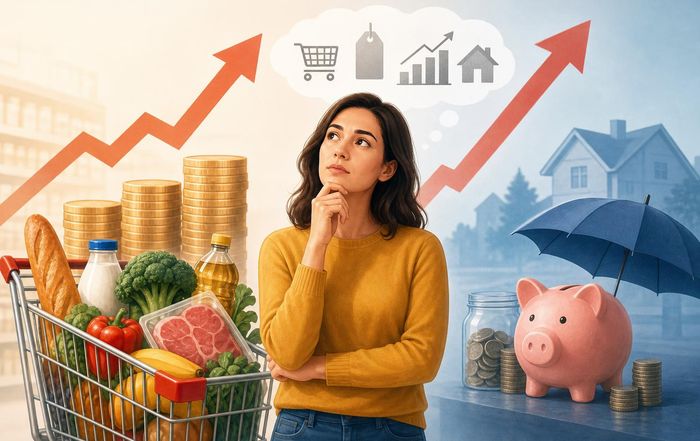
How Inflation Expectations Influence Consumer Decisions
Why Inflation Expectations Matter Now
Subscribers and visitors of USA Update are navigating an economic environment shaped by the lingering aftershocks of the pandemic era, the monetary tightening cycle that followed, and a complex mix of geopolitical tensions and technological disruption. While official inflation data from institutions such as the U.S. Bureau of Labor Statistics is closely watched, what increasingly drives day-to-day behavior is not just current inflation, but what households and businesses expect inflation to be in the months and years ahead. These expectations quietly shape how consumers spend, save, invest, negotiate wages, and even choose where to live and work, influencing everything from the U.S. economy to global capital flows.
Economists at organizations like the Federal Reserve and International Monetary Fund have long emphasized that inflation expectations can become self-fulfilling. When people believe that prices will rise faster in the future, they often accelerate purchases or demand higher wages today, which can, in turn, push prices higher. Conversely, if consumers expect inflation to fall or remain stable, they may delay spending, refinance debt, or shift portfolios toward longer-term investments. Understanding these dynamics has become essential for business leaders, policymakers, and consumers who follow the economic and daily updated dynamic business coverage here, as they seek to interpret the signals in a still-uncertain macroeconomic landscape.
For a business audience concerned with the interplay between the economy, finance, jobs, and consumer behavior, it has never been more important to understand how inflation expectations are formed, how they influence decisions, and how they interact with policy, markets, and social trends across the United States, North America, and the wider world.
The Mechanics of Inflation Expectations
Inflation expectations refer to what households, firms, and financial markets believe inflation will be in the future. These expectations can be short term, such as what consumers think will happen to prices over the next 12 months, or long term, such as their view of inflation over the next five to ten years. Institutions such as the Federal Reserve Bank of New York regularly survey households to measure these beliefs, while bond markets embed expectations in the yields of instruments like Treasury Inflation-Protected Securities. Learn more about how central banks monitor inflation expectations through resources provided by the Federal Reserve Bank of New York.
In practice, expectations are formed through a mix of personal experience, media coverage, official communication, and social conversation. When consumers repeatedly observe higher prices at the grocery store, gas station, or in their rent payments, they may begin to extrapolate these increases into the future. At the same time, coverage on completely original content platforms such as USA-Update.com Economy and statements by central bankers, finance ministers, and leading economists provide additional cues that shape perceptions. Financial markets, which constantly process new information, adjust quickly, and their pricing of inflation-linked assets feeds back into public narratives about where inflation is heading.
A critical distinction exists between "anchored" and "unanchored" expectations. When expectations are anchored, households and firms trust that central banks and governments will keep inflation close to a target, such as the 2 percent objective pursued by Federal Reserve and European Central Bank policymakers. When these expectations are unanchored, however, people begin to assume that high or volatile inflation will persist, and their behavior becomes more defensive and short-term oriented, which can destabilize economic planning and investment.
Behavioral Economics and the Psychology of Price Expectations
The influence of inflation expectations on consumer decisions is not purely rational or mechanical; it is deeply psychological and shaped by behavioral biases. Research by institutions such as Harvard University and Princeton University has shown that individuals often overweight recent price changes, especially in highly visible categories such as gasoline, groceries, and rent. For example, a sudden spike in energy prices can cause consumers to perceive overall inflation as much higher than official statistics indicate. Explore how behavioral economics explains these patterns through resources from Harvard Business School.
Another important behavioral factor is what psychologists call "money illusion." Many consumers focus on nominal prices rather than inflation-adjusted, or real, values. A worker may feel better receiving a 3 percent raise in a 4 percent inflation environment than a 1 percent raise in a zero-inflation environment, even though their real income is actually falling in the first case and rising in the second. This illusion can influence wage negotiations, career decisions, and perceptions of financial well-being.
Consumers also rely heavily on heuristics, or mental shortcuts, when forming expectations. They may assume that prices will continue to rise at the same pace they have recently, or that the inflation rate reported in the news applies uniformly across all goods and services, even though personal inflation experiences can differ significantly by region, lifestyle, and income. For instance, a young professional in New York or San Francisco, facing high housing and childcare costs, may feel that inflation is far higher than the national average, while a retiree in a lower-cost Midwestern town experiences a different reality.
The way media and digital platforms frame inflation stories further shapes expectations. Headlines about "sticky inflation," "stagflation risks," or "cost-of-living crises" can amplify anxiety, particularly when combined with social media commentary. Email, newsletters subscribers, and also online public visiting readers of USA-Update.com News increasingly look for context that distinguishes between temporary price spikes and structural, long-term inflation pressures, seeking clarity amid the noise and volatility of the modern information environment.
Inflation Impact Calculator
Your savings grow at the investment return rate, but inflation erodes purchasing power. Adjust the inputs to see how different inflation and return rates affect your real wealth over time. Higher returns help offset inflation losses.
Spending Patterns: Buy Now or Wait?
One of the most direct ways inflation expectations influence consumer decisions is in the timing and composition of spending. When households expect prices to rise more quickly than their incomes, they often accelerate purchases of durable goods such as cars, appliances, and electronics, believing that buying now will be cheaper than waiting. This front-loading of demand can temporarily boost retail sales and manufacturing output, but it may also sow the seeds for a subsequent slowdown if consumers exhaust their budgets.
Conversely, when consumers expect inflation to fall or even turn into deflation, they may delay major purchases in anticipation of lower prices ahead. This wait-and-see attitude can depress demand and create headwinds for sectors like housing, automobiles, and discretionary retail. In extreme cases, such as the deflationary episodes studied by the Bank of Japan, prolonged expectations of falling prices can contribute to economic stagnation. Learn more about the macroeconomic impact of deflationary expectations from the Bank of Japan.
In the United States and other advanced economies, the post-pandemic period illustrated these dynamics vividly. As supply-chain disruptions and surging demand pushed prices higher in 2021-2023, many households brought forward purchases of vehicles, home improvement materials, and consumer electronics, even as they cut back on some discretionary services. By 2024-2025, as central banks tightened monetary policy and inflation began to moderate, some of that demand normalized, but consumers remained wary of future price surges in key categories such as housing, healthcare, and education.
For readers of USA-Update.com Consumer, these shifts in spending behavior are not abstract concepts; they affect everyday decisions about whether to lock in a home renovation contract, sign a long-term lease, or commit to a vacation. In North America and Europe, travel and hospitality companies have observed that expectations of rising airfare and hotel prices can spur earlier bookings, while in Asia and Latin America, uncertainty about inflation and currency movements can make consumers more cautious, leading them to favor local or regional travel options over long-haul international trips.
Saving, Debt, and Household Balance Sheets
Inflation expectations also exert a powerful influence on how households manage savings and debt. When consumers expect higher inflation, they often perceive cash holdings as losing value over time, which can encourage them to move funds into assets that are perceived as inflation-resistant, such as real estate, equities, commodities, or inflation-linked bonds. At the same time, high expected inflation can make fixed-rate debt more attractive, because borrowers anticipate repaying loans with money that is worth less in real terms.
During the period of elevated inflation in the early 2020s, many American households accelerated mortgage refinancing, consolidating debt at relatively low fixed rates, while others turned to credit cards and personal loans to maintain living standards amid rising prices. As expectations shifted toward moderating inflation in the mid-2020s, some of these behaviors reversed, with households seeking to pay down high-interest debt and rebuild savings buffers. Financial institutions and advisors, including those tracked by the Financial Industry Regulatory Authority (FINRA), have emphasized the importance of understanding how inflation expectations affect risk tolerance and portfolio choices. Readers can explore more about inflation and personal finance on FINRA's education resources.
For savers, particularly retirees or those approaching retirement, inflation expectations are critical in determining how much they need to accumulate to preserve purchasing power. When inflation expectations rise, individuals may feel compelled to save more aggressively or delay retirement, especially in countries where public pension systems are under strain. In the United States, the Social Security Administration adjusts benefits for inflation, but many private pensions and annuities do not fully compensate for unexpected price increases, placing a premium on prudent planning and diversified investment strategies.
Audiences of USA-Update.com Finance are increasingly aware that inflation expectations influence not only returns but also real spending power. For example, a 5 percent nominal return on a portfolio may appear attractive, but if inflation expectations rise to 4 percent, the real gain is minimal. This reality has driven renewed interest in financial literacy initiatives promoted by organizations like the Consumer Financial Protection Bureau, which provides guidance on how to factor inflation into long-term financial planning. Learn more about protecting household finances in an inflationary environment from the Consumer Financial Protection Bureau.
Wages, Employment, and Labor Market Dynamics
Inflation expectations are equally important in the labor market, shaping wage negotiations, career choices, and employment patterns. When workers expect prices to rise rapidly, they are more likely to demand higher nominal wages to protect their real incomes. Unions, professional associations, and individual employees increasingly incorporate inflation forecasts into contract discussions and salary expectations, particularly in sectors where labor shortages give workers greater bargaining power.
Employers, on the other hand, must balance higher wage demands against cost pressures and competitive dynamics. If businesses believe that inflation will remain elevated and that they can pass higher labor costs on to customers through price increases, they may be more willing to grant significant wage hikes. However, if they expect inflation to decline or worry about losing market share, they may resist such increases, potentially leading to labor disputes or slower hiring. The U.S. Bureau of Labor Statistics and similar agencies in Europe and Asia track these wage trends closely, as they can signal whether inflation pressures are becoming embedded in the economy. Detailed labor market data and analysis can be found via the U.S. Bureau of Labor Statistics.
For the audience of USA-Update.com Jobs and USA-Update.com Employment, these dynamics translate into real-world questions about how to negotiate salaries, whether to switch jobs, and how to evaluate offers. In high-inflation environments, workers may prioritize employers who offer cost-of-living adjustments, flexible work arrangements, or robust benefits that help offset rising expenses, such as healthcare and childcare support. Employers that recognize the role of inflation expectations in employee morale and retention can design more resilient compensation strategies, aligning wage policies with transparent communication about the company's outlook and financial health.
Internationally, inflation expectations also affect labor migration patterns. In countries where inflation erodes real wages rapidly, skilled professionals may seek opportunities in more stable economies, such as Canada, Germany, or Singapore, where central banks have maintained tighter control over price stability. Conversely, when inflation expectations are well anchored and real wage growth is positive, domestic labor markets can retain and attract talent, supporting innovation and long-term growth.
Housing, Real Estate, and Long-Term Commitments
Housing is one of the most significant areas where inflation expectations shape consumer decisions, particularly in the United States, Canada, Europe, and fast-growing parts of Asia and Latin America. When households expect higher inflation, they often view real estate as a hedge against rising prices, believing that property values and rents will increase in line with or faster than inflation. This perception can fuel demand for homeownership and investment properties, pushing up prices and, in some cases, contributing to housing bubbles.
The post-2020 housing markets in the United States, the United Kingdom, and parts of Europe illustrate how a combination of low interest rates, pandemic-era savings, and rising inflation expectations can drive intense competition for limited housing supply. As central banks later raised interest rates to combat inflation, mortgage costs increased, but many buyers still rushed to lock in rates, expecting that housing costs would continue to rise over the medium term. Organizations such as the National Association of Realtors and Zillow have documented how these expectations influence both urban and suburban markets. Learn more about housing market trends and inflation from the National Association of Realtors.
For renters, inflation expectations play a role in decisions about lease length and location. In high-inflation environments, tenants may seek longer leases to lock in current rents, while landlords, expecting higher future prices, may prefer shorter terms or more frequent adjustments. In regions where rent controls or regulatory caps exist, such as some European cities, expectations about future policy changes also influence behavior, as both tenants and landlords attempt to anticipate how regulations will evolve in response to inflationary pressures.
Readers of USA-Update.com Business and USA-Update.com Regulation are particularly attuned to the policy implications of these trends. Housing affordability has become a central political issue in the United States, Canada, Australia, and parts of Europe, prompting debates over zoning reform, rent stabilization, and incentives for new construction. Policymakers must carefully consider how their actions will affect not only current housing costs but also expectations of future price trajectories, which, in turn, shape investment and development decisions in the real estate sector.
Technology, Digital Commerce, and Price Transparency
The digital transformation of commerce has introduced new channels through which inflation expectations are formed and expressed. Online marketplaces, price comparison tools, and dynamic pricing algorithms have made it easier for consumers to monitor price changes in real time, while also enabling businesses to adjust prices more frequently in response to demand and cost fluctuations. Companies like Amazon, Alibaba, and Walmart have leveraged sophisticated data analytics to optimize pricing strategies, which can influence how consumers perceive inflation in everyday goods.
At the same time, technology platforms provide unprecedented transparency. Consumers can track historical price data, set alerts for price drops, and compare offers across retailers and regions, which can mitigate some of the uncertainty associated with inflation. This transparency can help anchor expectations, as shoppers see that not all prices are rising uniformly and that opportunities for savings still exist. Organizations such as OECD and World Bank have examined how digitalization affects price dynamics and competition across markets. Learn more about digital markets and price transparency from the OECD.
For readers following USA-Update.com Technology, the intersection of inflation expectations and digital commerce raises strategic questions for both consumers and businesses. Subscription-based services, such as streaming platforms, cloud software, and digital media, often adjust prices periodically, and expectations of future increases can influence whether consumers commit to long-term plans or remain flexible. In addition, the rise of "buy now, pay later" services and other fintech innovations has altered how inflation expectations translate into borrowing and spending, as consumers weigh the benefits of immediate consumption against the risk of future price and interest rate changes.
In emerging markets across Asia, Africa, and Latin America, mobile payment platforms and e-commerce have expanded access to goods and services, while also exposing consumers to global price trends. As these markets integrate more closely with global supply chains, local inflation expectations are increasingly influenced by international developments, including commodity price swings, currency movements, and policy decisions in major economies like the United States, the Eurozone, and China.
Global Perspectives: Regional Differences in Expectations
Inflation expectations are not uniform across countries and regions; they reflect local experiences, institutional credibility, and economic structures. In the United States and much of Western Europe, decades of relatively low and stable inflation before the pandemic helped anchor expectations, even when price pressures spiked in the early 2020s. Central banks such as the European Central Bank and the Bank of England devoted significant effort to communicating their commitment to price stability, seeking to reassure households and markets. Readers can explore how major central banks manage expectations through the European Central Bank's official site.
By contrast, in parts of South America, including Argentina and Brazil, and in some African economies, histories of high and volatile inflation have left a deeper imprint on public consciousness. Households in these countries often adopt more defensive financial behaviors, such as holding foreign currency, indexing contracts to inflation, or rapidly converting cash into goods. These behaviors reflect expectations that inflation will remain a persistent challenge, regardless of short-term policy shifts.
In Asia, experiences vary widely. Japan has grappled with the opposite problem: entrenched expectations of low inflation or deflation, which have made it difficult for policymakers to stimulate demand and achieve their inflation targets. In contrast, fast-growing economies such as India, Indonesia, and Vietnam have navigated periods of both high and moderate inflation, with expectations shaped by rapid urbanization, rising incomes, and evolving policy frameworks. Organizations like the International Monetary Fund and World Bank provide comparative analyses of inflation and expectations across these regions. Readers can access global inflation research through the International Monetary Fund.
For an fantastic, well educated community that follows USA-Update.com International, understanding these regional differences is crucial for cross-border investment, supply-chain planning, and risk management. Multinational companies must tailor pricing, wage, and investment strategies to local expectations, recognizing that what works in the United States or Germany may not be appropriate in Brazil or South Africa. Similarly, investors evaluating opportunities in emerging markets must assess not only current inflation rates but also the credibility of institutions and the stability of expectations over time.
Energy, Commodities, and the Cost-of-Living Lens
Energy prices occupy a special place in the formation of inflation expectations, because they are both highly visible and deeply embedded in the cost structure of modern economies. When gasoline, electricity, or natural gas prices spike, consumers quickly feel the impact, and their perceptions of overall inflation often rise accordingly. This effect is particularly pronounced in car-dependent societies like the United States and Canada, where fuel costs are a regular and salient expense.
Organizations such as the U.S. Energy Information Administration and the International Energy Agency track energy markets and forecast price trends, which in turn influence expectations for transportation, heating, and production costs across industries. Learn more about global energy price dynamics from the International Energy Agency. As countries accelerate the transition to renewable energy and invest in grid modernization, the interplay between energy policy, climate goals, and inflation expectations has become more complex, especially in Europe and parts of Asia where energy imports and geopolitical risks play a significant role.
For readers of USA-Update.com Energy, the connection between energy prices and inflation expectations is central to understanding the broader cost-of-living narrative. When households anticipate sustained high energy costs, they may adjust commuting patterns, invest in more efficient vehicles or home insulation, or reconsider travel plans. Businesses may respond by re-evaluating supply chains, relocating production, or investing in energy-saving technologies. These decisions, in aggregate, can reshape economic geography and sectoral competitiveness, influencing job creation and regional development.
Food and other commodity prices also affect inflation expectations, particularly in lower-income countries where food comprises a larger share of household spending. Droughts, conflicts, and trade disruptions can cause sudden spikes in staple prices, which, if perceived as persistent, can elevate inflation expectations and contribute to social and political tensions. Institutions such as the Food and Agriculture Organization of the United Nations monitor these trends and provide analysis on how they interact with global inflation dynamics. Insight into food price and inflation linkages is available from the FAO.
Policy, Communication, and the Role of Trust
At the heart of inflation expectations lies a question of trust: trust in central banks, governments, financial institutions, and the broader economic system. When households and businesses believe that policymakers are competent, transparent, and committed to price stability, expectations are more likely to remain anchored, even in the face of temporary shocks. When trust erodes, expectations can become volatile, amplifying the impact of economic disturbances and complicating policy responses.
Central banks have increasingly recognized that communication is a key tool in managing expectations. Institutions such as the Federal Reserve, Bank of England, and Reserve Bank of Australia now issue detailed forward guidance, explaining how they will respond to changes in inflation and employment data. These communications are carefully calibrated to influence market expectations and, by extension, consumer and business behavior. Learn more about central bank communication strategies from the Bank of England.
For the business-focused readership of USA-Update.com Business, the credibility of policy frameworks is a critical factor in strategic planning. Companies making long-term investments in manufacturing, infrastructure, or technology need confidence that inflation will not spiral out of control, eroding returns and destabilizing markets. Similarly, financial institutions rely on stable inflation expectations to price loans, manage risk, and design products that meet client needs.
Media platforms, including USA-Update.com, play an important role in transmitting and interpreting policy signals. Clear, nuanced reporting helps audiences distinguish between short-term volatility and structural shifts, while also highlighting the distributional impacts of inflation and policy choices across different income groups, sectors, and regions. In an era of information overload, trusted outlets that emphasize experience, expertise, authoritativeness, and trustworthiness are essential in helping readers form well-grounded expectations.
Strategic Implications for Businesses and Consumers
Understanding how inflation expectations influence consumer decisions is not merely an academic exercise; it has direct strategic implications for businesses, investors, and households. Companies that anticipate changes in consumer behavior driven by evolving expectations can adjust pricing, inventory, marketing, and investment plans more effectively than competitors who rely solely on backward-looking data. For example, retailers that recognize early signs of shifting expectations may choose to adjust product mixes, offer targeted promotions, or emphasize value propositions that resonate with cost-conscious consumers.
In the financial sector, asset managers, banks, and fintech firms must incorporate inflation expectations into portfolio construction, risk models, and product design. As expectations change, demand for inflation-protected securities, real assets, and alternative investments may rise or fall, creating opportunities and challenges across markets. Institutions like BlackRock and Vanguard routinely publish analyses on how inflation expectations affect asset allocation, providing guidance for both institutional and retail investors. Investors can explore macroeconomic insights and inflation-related investment strategies via BlackRock's insights.
For households, particularly those in the United States, Canada, the United Kingdom, and other advanced economies, a disciplined approach to financial planning that explicitly accounts for inflation expectations can improve long-term outcomes. This includes regularly reviewing budgets, reassessing savings goals, evaluating the real (inflation-adjusted) returns on investments, and considering how career choices and geographic mobility may affect exposure to inflation risks. Readers interested in personal finance and lifestyle implications of inflation can find ongoing completely original, and independent coverage and analysis on USA-Update.com Lifestyle.
Travel, entertainment, and events industries are also sensitive to inflation expectations. When consumers believe that prices for flights, hotels, and tickets will continue rising, they may book earlier or opt for more modest options; when they expect relief on the horizon, they may delay or upgrade plans. Companies in these sectors must monitor expectations closely and communicate pricing strategies transparently to maintain customer trust and loyalty. Audiences following USA-Update.com Travel and USA-Update.com Entertainment increasingly look for insights that connect macroeconomic trends with practical decisions about leisure and business travel, events, and cultural experiences.
What's the Conclusion for Navigating Inflation Expectations in a Changing World?
As seasons unfold, inflation expectations remain a central lens through which consumers, businesses, and policymakers interpret the economic environment. The experience of the early 2020s has underscored how quickly expectations can shift in response to shocks, and how those shifts, in turn, shape real-world decisions about spending, saving, investing, working, and living. For the often well travelled and very successful readership here, which spans interests from the economy and finance to jobs, technology, energy, and consumer behavior, understanding these dynamics is essential to making informed choices in an era of heightened uncertainty.
The interplay between expectations and outcomes is complex, influenced by psychology, information flows, institutional credibility, and global interconnectedness. Yet amid this complexity, one principle stands out: well-anchored, well-informed inflation expectations support more stable, predictable, and prosperous economic trajectories. By engaging with high-quality analysis from central banks, international organizations, academic institutions, and top media platforms, consumers and business leaders can better interpret signals, avoid overreacting to short-term noise, and align their strategies with a realistic view of future price trends.
Ultimately, inflation expectations are not just numbers in a survey or spreads in a bond market; they are the collective expression of how societies perceive their economic future. In the United States, across North America, and around the world, those perceptions will continue to influence everything from household budgets and corporate investment plans to policy debates and electoral outcomes. As USA Update continues to provide in-depth totally unique and also interactive educational coverage and analysis across its economy, business, finance, and lifestyle sections, its readers will be better equipped to navigate the evolving landscape of inflation expectations and the consumer decisions they shape.
