
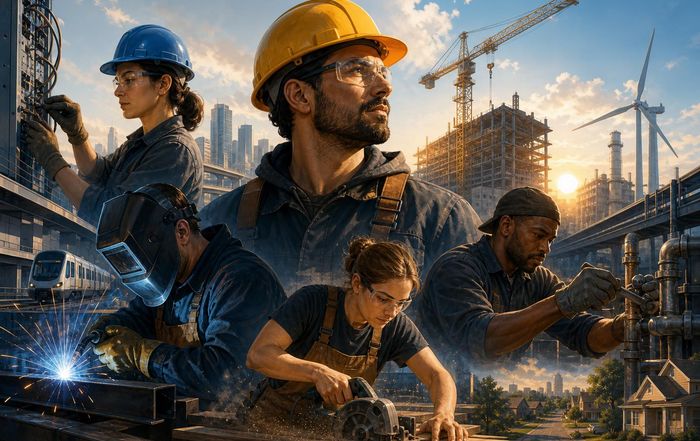
Why Skilled Trades Remain Vital to Economic Growth?
The Real Importance of Skilled Trades in a Changing Economy
As executives, and community leaders across the United States debate the future of work and competitiveness, the role of skilled trades has re-emerged as a central theme in economic strategy. While original headlines even on USA Update often focus on artificial intelligence, digital platforms, and high-growth technology sectors, the underlying reality is that modern economies still depend fundamentally on electricians, plumbers, welders, machinists, HVAC technicians, automotive specialists, construction professionals, and a wide range of other skilled tradespeople who build, maintain, and modernize the physical and digital infrastructure on which advanced industries rely.
From a business perspective, the skilled trades form a critical bridge between economic policy and real-world outcomes, connecting infrastructure investment, manufacturing reshoring, energy transition, and housing development to measurable gains in productivity, employment, and long-term competitiveness. For the inspired community who follow the broader economic context through resources such as the USA Update economy coverage and business analysis, understanding why skilled trades remain vital is not simply a labor market question; it is a question about how the United States and its partners position themselves for sustainable growth in a volatile global environment.
Macroeconomic Foundations: How Trades Support GDP and Productivity
Macroeconomic data over the past decade has consistently demonstrated that sectors most dependent on skilled trades-construction, advanced manufacturing, logistics, energy, and infrastructure-account for a substantial share of GDP in the United States and across North America. According to analyses from institutions such as the U.S. Bureau of Labor Statistics and the OECD, investment in these sectors has strong multiplier effects, meaning each dollar invested generates additional economic activity in related industries, from materials and equipment to professional services and consumer spending. Readers seeking a deeper macroeconomic overview can explore broader trends through resources like the World Bank's analysis of global growth patterns, which reinforce the idea that physical capital formation and infrastructure remain core drivers of productivity, even in highly digital economies.
At the firm level, skilled tradespeople directly influence productivity through their ability to install, operate, and maintain capital-intensive systems, from automated manufacturing lines to energy-efficient building systems. When a factory's robotics line is optimized by a skilled industrial electrician, or a data center's cooling system is calibrated by an experienced HVAC technician, the resulting gains in uptime, energy efficiency, and throughput translate into measurable productivity improvements and enhanced competitiveness. For executives following technology and industrial trends via usa-update.com technology insights, it becomes clear that even the most advanced equipment fails to deliver value without a robust pipeline of workers who can integrate, repair, and upgrade these systems in real operating conditions.
Demographic Pressures and the Skilled Trades Gap
One of the most pressing structural challenges facing the skilled trades in 2026 is demographic. Large cohorts of experienced workers from the Baby Boomer and early Generation X populations are retiring, while too few younger workers are entering trades at the pace required to replace them. Industry associations such as Associated Builders and Contractors and manufacturing groups in the United States, Canada, and Europe have repeatedly warned of a growing shortage of electricians, welders, and other technical workers, a trend that is corroborated by labor market data from organizations like the International Labour Organization. Learn more about global labor market dynamics to understand how demographic shifts interact with skills shortages across regions.
For businesses and policymakers, this demographic reality poses both a risk and an opportunity. The risk is clear: without sufficient skilled trades capacity, critical infrastructure projects may be delayed, construction costs may rise, and manufacturers may struggle to execute on reshoring and expansion plans. The opportunity lies in leveraging this demand to create attractive, well-paid career pathways that can draw in younger workers, career switchers, and underrepresented groups. Platforms such as usa-update.com jobs and employment pages and employment insights increasingly highlight how employers are rethinking recruitment, training, and career progression to respond to this structural talent gap.
Technology, Automation, and the Evolving Nature of Skilled Work
The narrative that automation will eliminate blue-collar jobs has been persistent, but the reality in 2026 is more nuanced. In many sectors, automation is transforming rather than replacing skilled trades, shifting roles from purely manual tasks to hybrid responsibilities that combine hands-on expertise with digital tools, data interpretation, and systems thinking. Reports from organizations such as McKinsey & Company and the World Economic Forum emphasize that while some routine tasks may be automated, the demand for workers who can install, program, troubleshoot, and maintain complex systems is rising, especially in advanced manufacturing, logistics, and energy.
In practice, this means that electricians now routinely work with smart home systems, industrial technicians interface with programmable logic controllers, and mechanics diagnose issues using sophisticated software and sensor data. For readers following technology trends on usa-update.com technology, the convergence of digital and physical systems-often described as Industry 4.0 or the Industrial Internet of Things-places skilled trades at the heart of digital transformation strategies. Learn more about industrial automation and smart manufacturing to see how these trends are reshaping roles across factories and supply chains.
Rather than making trades obsolete, technology is elevating the level of expertise required, reinforcing the need for continuous learning, credentialing, and collaboration between educational institutions, employers, and technology providers. This evolution underscores why discussions of future-of-work policy must include not only software engineers and data scientists but also the electricians, technicians, and mechanics who keep increasingly complex systems operational.
Infrastructure, Housing, and the Built Environment
The built environment-encompassing roads, bridges, transit networks, water systems, energy grids, commercial buildings, and housing-remains one of the most visible arenas where the importance of skilled trades is undeniable. In the United States, large federal and state infrastructure programs launched in the early 2020s have translated into a pipeline of projects that will span much of the decade, from bridge replacements and port upgrades to broadband expansion and public transit modernization. The U.S. Department of Transportation and the Federal Highway Administration provide extensive documentation on how these initiatives rely on skilled labor to move from policy announcements to completed projects that improve mobility and economic opportunity.
Housing presents another critical dimension. Persistent housing shortages in many metropolitan areas across the United States, Canada, the United Kingdom, and parts of Europe have driven up costs for households and constrained labor mobility, with direct implications for businesses and regional competitiveness. Addressing this gap requires not only financing and zoning reforms but also a sufficient supply of carpenters, plumbers, electricians, masons, and HVAC specialists capable of delivering high-quality, energy-efficient housing at scale. Learn more about sustainable urban development to understand how cities worldwide are integrating housing, infrastructure, and climate resilience, all of which depend heavily on skilled trades.
For readers of usa-update.com who track news and events related to infrastructure and real estate, the interplay between policy, capital, and skilled labor is a recurring theme. Delays in major projects often stem not only from permitting or financing issues but also from shortages of qualified tradespeople, reinforcing the argument that workforce development in these fields is a strategic economic priority.
Why Skilled Trades Power Economic Growth
Explore how electricians, welders, machinists, HVAC technicians, builders, and other skilled workers support productivity, infrastructure, clean energy, supply chains, and middle-class stability.
Energy Transition and the Green Economy
The global shift toward low-carbon energy systems is one of the defining economic transformations of the 2020s, and it is impossible to execute this transition without a robust skilled trades workforce. The deployment of solar farms, wind turbines, grid-scale batteries, electric vehicle charging networks, and upgraded transmission lines requires electricians, lineworkers, heavy equipment operators, and specialized technicians who understand both traditional power systems and new technologies. The International Energy Agency has repeatedly highlighted the labor intensity of clean energy infrastructure, noting that the pace of deployment is constrained as much by workforce capacity as by policy or financing.
In the United States, federal and state incentives for renewable energy, energy efficiency, and electrification of buildings and transport have amplified demand for skilled trades. Electricians trained in solar photovoltaic installations, HVAC technicians versed in heat pump systems, and construction workers experienced in high-performance building envelopes are now central players in the green economy. Learn more about sustainable business practices and climate-aligned investment strategies to see how corporations and investors are integrating these trends into long-term planning.
For usa-update.com readers interested in energy and regulation, it is increasingly apparent that regulatory frameworks around emissions, building codes, and grid reliability are inseparable from questions about workforce readiness. Governments can mandate higher efficiency standards or more ambitious renewable energy targets, but without a sufficient pool of skilled workers, these goals risk remaining aspirational rather than operational. This alignment between policy ambition and trades capacity is central to credible energy transition strategies across North America, Europe, and Asia.
Skilled Trades and Resilient Supply Chains
The disruptions of recent years-from global health crises to geopolitical tensions and extreme weather events-have elevated supply chain resilience from a technical concern to a board-level priority. As companies in the United States, Canada, Europe, and Asia re-evaluate sourcing, inventory, and production strategies, many are investing in reshoring or near-shoring critical manufacturing and logistics operations. These moves, in turn, intensify demand for skilled trades in industrial hubs, port regions, and emerging logistics corridors.
Organizations such as MIT's Center for Transportation & Logistics and DHL's research teams have documented how investments in automation, robotics, and advanced warehousing systems are transforming supply chains, yet these technologies require installation, integration, and maintenance performed by highly trained technicians and mechanics. Learn more about the future of logistics and supply chain innovation to understand how physical infrastructure and human expertise interact in these systems.
On the ground, this means that welders are fabricating custom components for specialized machinery, industrial electricians are wiring and commissioning automated sorting lines, and maintenance technicians are ensuring that high-throughput distribution centers operate around the clock. For readers who follow international business developments on usa-update.com international coverage, it becomes clear that the competitive advantage of a region is not determined solely by tax policy or digital infrastructure but also by the depth and quality of its skilled trades ecosystem.
Financial Stability, Wages, and the Middle Class
From a financial and consumer perspective, skilled trades play a pivotal role in supporting middle-class stability and upward mobility. Many trades offer competitive wages, benefits, and opportunities for entrepreneurship without requiring four-year degrees and the associated student debt burdens. Analysts at organizations such as the Federal Reserve and think tanks focused on labor economics have observed that robust vocational pathways can help rebalance labor markets and provide more inclusive access to well-paying careers, especially in regions where traditional white-collar opportunities are limited.
For business leaders and policymakers, this has direct implications for consumer spending, housing markets, and regional development. A strong cohort of well-paid tradespeople contributes to local demand for goods and services, supports municipal tax bases, and can help stabilize communities facing industrial transitions. Readers tracking financial and consumer trends through usa-update.com finance and consumer analysis can see how wage growth and employment in trades-intensive sectors influence broader patterns in retail, housing, and credit markets.
At the individual level, data from sources such as PayScale and Glassdoor often show that experienced tradespeople can earn incomes comparable to or exceeding many bachelor's degree holders, particularly when overtime, certifications, and supervisory roles are considered. Learn more about career and wage comparisons to understand how trades careers fit into the broader landscape of income and mobility. This financial dimension underscores why expanding access to trades training is not only an economic efficiency issue but also a key component of social and regional equity strategies.
Education, Apprenticeships, and Workforce Development
The sustainability of the skilled trades pipeline depends heavily on education and training systems that are responsive to employer needs and accessible to diverse populations. Across the United States, Canada, Europe, and parts of Asia-Pacific, there has been renewed focus on apprenticeships, technical colleges, and employer-driven training programs as essential complements to traditional university pathways. Organizations such as the U.S. Department of Labor, Apprenticeship.gov, and the European Centre for the Development of Vocational Training (Cedefop) have documented the economic returns associated with well-designed apprenticeship models, which combine classroom instruction with paid, on-the-job learning.
For businesses, partnering with community colleges, trade schools, and workforce boards can help ensure that curricula align with real-world requirements, from safety standards and code compliance to digital literacy and equipment-specific skills. Learn more about best practices in vocational education to see how leading regions structure these partnerships. On usa-update.com, coverage of jobs and employment often highlights innovative programs where employers, unions, and educators collaborate to create clear pathways into high-demand trades.
The most effective workforce development strategies also recognize the importance of continuous learning. As technologies evolve, tradespeople require opportunities to upskill and reskill, whether through short courses, manufacturer certifications, or online learning platforms. Governments and employers that invest in lifelong learning infrastructure for the trades are better positioned to adapt to shifts in energy systems, building codes, and industrial technologies, thereby enhancing both economic resilience and worker security.
Regional and International Perspectives
While the United States is a primary focus for usa-update.com readers, the importance of skilled trades is a global phenomenon, with distinctive regional dynamics that offer valuable lessons. In Germany, for example, the dual education system has long been cited by organizations such as Germany's Federal Institute for Vocational Education and Training (BIBB) as a model for integrating apprenticeships with formal schooling, helping to maintain a strong manufacturing base and low youth unemployment. Learn more about European vocational training models to understand how institutional design can support both businesses and workers.
In Canada, the energy, mining, and construction sectors have driven sustained demand for trades, particularly in provinces rich in natural resources, while in Australia and New Zealand, infrastructure and housing pressures have similarly elevated the status of skilled trades in public policy discussions. Across the Nordic countries, including Sweden, Norway, Denmark, and Finland, investments in green infrastructure and building efficiency have created strong demand for trades aligned with sustainability goals, with policy frameworks documented by organizations such as the Nordic Council of Ministers.
In Asia, rapid urbanization and industrial development in countries like China, Thailand, Malaysia, and South Korea have underscored the importance of technical and vocational education, with governments seeking to balance high-tech ambitions with the practical realities of construction, transport, and manufacturing. Africa and South America, including nations such as South Africa and Brazil, face the dual challenge of expanding infrastructure while creating inclusive employment opportunities, making the skilled trades central to both development and social policy. For readers who follow these trends through usa-update.com international reporting, the common thread is that no region has achieved sustained growth without serious attention to technical skills and trades capacity.
Skilled Trades in the Context of Lifestyle and Community
Beyond macroeconomic indicators and business metrics, skilled trades shape the lived experience of communities and the lifestyle choices available to individuals and families. Reliable power grids, safe drinking water, functional transportation systems, and quality housing are all dependent on the expertise of tradespeople who often work behind the scenes yet directly affect everyday life. For audiences interested in the intersection of work, lifestyle, and community on usa-update.com lifestyle pages, the trades represent careers that are deeply embedded in local contexts, often providing a sense of tangible accomplishment and community connection that is less visible in some purely digital roles.
In many regions, trades careers also support flexible lifestyle options, including self-employment, small business ownership, and project-based work that can adapt to family and community obligations. Learn more about entrepreneurship and small business development to see how trades skills can form the foundation of resilient, locally rooted enterprises. This lifestyle dimension is increasingly relevant as younger generations seek careers that offer both financial stability and a sense of purpose, especially when they can see the physical results of their work in the buildings, infrastructure, and systems around them.
Policy, Regulation, and the Future of Skilled Trades
Regulation plays a crucial role in shaping both the demand for and the standards governing skilled trades. Building codes, safety regulations, environmental standards, and licensing requirements all influence how trades are practiced and how workers are trained and certified. Organizations such as the National Institute of Standards and Technology (NIST) and state-level regulatory bodies in the United States, as well as counterparts in Europe and Asia, continuously update standards to reflect new technologies, materials, and safety insights. Learn more about regulatory best practices and how they intersect with innovation and workforce development.
For readers who follow policy debates on usa-update.com regulation coverage, the key issue is balancing the need for high standards that protect public safety and environmental quality with the flexibility required to innovate and scale new solutions. Overly burdensome or fragmented licensing regimes can deter entry into trades or limit worker mobility across states and regions, while under-regulated environments risk safety failures and reputational damage for entire sectors. Thoughtful regulatory design, informed by industry input and evidence from regulators and institutions such as OSHA and EPA, can support both innovation and public trust.
Looking ahead, policy discussions around immigration, education funding, infrastructure investment, and climate legislation will all have significant implications for the skilled trades. Regions that align these policy levers with a coherent strategy for trades development are more likely to attract investment, accelerate project delivery, and maintain public confidence in the safety and reliability of critical systems.
Implications for Business Strategy and Investment
For corporate leaders, investors, and entrepreneurs who rely on usa-update.com for strategic insight, the central message is that skilled trades are not a peripheral concern but a core component of competitive strategy. Capital investment in factories, data centers, power plants, logistics hubs, and real estate assets cannot deliver expected returns without a stable, skilled workforce to build, operate, and maintain these assets over their lifecycle. Learn more about infrastructure and industrial investment trends to see how leading firms integrate workforce considerations into capital planning and risk management.
Businesses that proactively invest in training, apprenticeships, and partnerships with educational institutions often find that they can reduce project delays, improve quality, and enhance their reputation as employers of choice. This, in turn, can lower turnover, reduce safety incidents, and support innovation as experienced tradespeople contribute practical insights to design and process improvement. For investors, evaluating the depth and resilience of trades ecosystems in regions or sectors of interest can provide a more accurate picture of execution risk and long-term asset performance.
From a strategic communications perspective, companies that highlight their commitment to trades training, safety, and career development can also strengthen relationships with regulators, communities, and customers, especially in sectors where public trust is critical, such as energy, transportation, and construction. Coverage on usa-update.com business and economy pages increasingly reflects how stakeholders are scrutinizing not just financial metrics but also workforce practices and community impact.
The Placing of Media and Platforms
Media platform hubs such as usa-update play a significant role in shaping public perceptions of the skilled trades, influencing how young people, parents, educators, and policymakers think about these careers. By featuring in-depth reporting on infrastructure projects, energy transition initiatives, manufacturing investments, and workforce innovations, the platform helps position trades not as a fallback option but as a vital, future-oriented component of the modern economy. Readers who regularly engage with usa-update.com news, economy, and technology always up-to-date and original coverage see how trades intersect with cutting-edge technologies, global supply chains, and major policy shifts.
In addition, by providing accessible information on job trends, training opportunities, and sector developments through its jobs and employment sections, usa-update supports more independent thinking and informed decision-making for individuals considering career paths in trades. This information function is itself an important part of the broader ecosystem that sustains trades, complementing the efforts of schools, employers, unions, and government agencies.
Conclusion: Skilled Trades as a Cornerstone of Sustainable Growth
While the evidence from the United States, North America, and economies worldwide is clear: skilled trades remain indispensable to economic growth, competitiveness, and societal well-being. They underpin infrastructure development, enable energy transition, support resilient supply chains, and provide pathways to stable, well-paid careers that are essential to a healthy middle class. Far from being eclipsed by automation and digitalization, trades are being reshaped and elevated by technology, requiring higher levels of expertise and offering new opportunities for those who combine technical skill with adaptability and continuous learning.
For the business-focused demographics coming to USA Update, the strategic implications are direct. Companies and regions that recognize the centrality of skilled trades and invest accordingly-in training, partnerships, technology, and supportive policy frameworks-will be better positioned to deliver complex projects, respond to market shifts, and build trust with stakeholders. Those that treat trades as an afterthought risk capacity constraints, project delays, and missed opportunities in some of the most dynamic sectors of the global economy.
In this context, ongoing independent news coverage and totally original analysis from usa-update across economy, business, energy, jobs, and international domains will continue to highlight how skilled trades shape the trajectory of growth and innovation. As governments, businesses, and communities navigate the challenges and opportunities of the coming years, recognizing and strengthening the role of skilled trades will be one of the most practical and impactful strategies for securing long-term, inclusive, and sustainable economic progress.
We hope you enjoyed this long-form, interactive and lovingly well researched article and we look forward to welcoming you back here again tomorrow.
